






Transformer Trips Immediately After Power-On: Who’s Causing the Trouble?
Transformer Trips Immediately After Power-On: Who’s Causing the Trouble?
As a transformer operator, you may have encountered this issue: the equipment is newly installed, but it trips instantly during the first power-on. This not only leads to production downtime but may also cause safety hazards. So, what exactly causes this problem? Is it an issue with the transformer itself, or are external factors “causing trouble”?
1. Common Causes of Transformer Tripping
Transformer tripping upon power-on is usually caused by electrical faults, abnormal loads, or malfunctioning protection systems. According to the IEC 60076 standard, transformers are designed with multiple protection mechanisms, and tripping is a normal function of these mechanisms to prevent equipment damage or safety incidents. Below, we break down the main causes in detail.
1.1 Insulation Failure and Short Circuit Issues
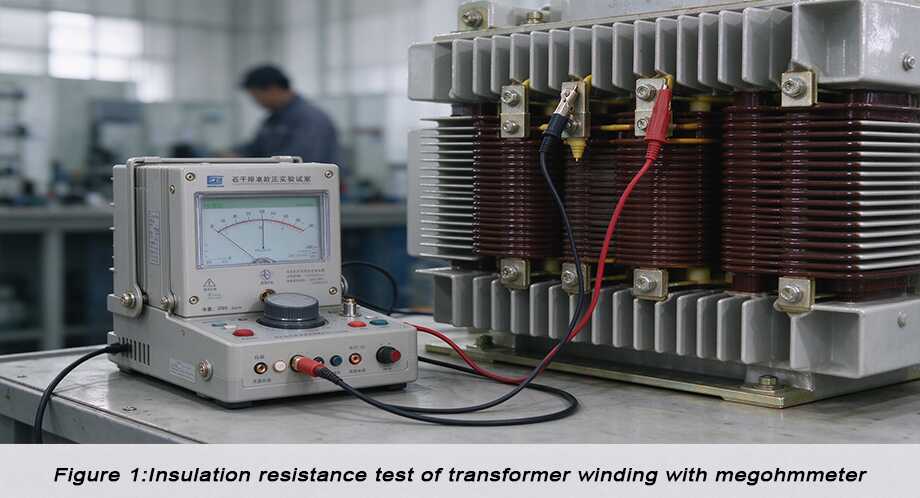
Insulation failure is one of the most common reasons for transformer tripping, potentially leading to direct short circuits or ground faults. When transformer windings or insulating materials age, become damp, or suffer mechanical damage, their insulation resistance decreases, causing abnormal currents.
1.1.1 Impact of Insulation Aging
Transformer insulating materials (such as oil-impregnated paper) gradually degrade over long-term operation due to thermal, electrical, and chemical stress. According to the Arrhenius equation, the rate of insulation aging increases exponentially with temperature:
Aging rate ∝ e^(-Ea/kT)
where Ea is the activation energy
k is Boltzmann’s constant
T is the absolute temperature
When the insulation resistance falls below the threshold specified in IEC 60076-3 (typically 1 MΩ), leakage current increases and may trigger overcurrent protection devices, causing a trip. For example, if the transformer is stored in a humid environment, moisture infiltration reduces the dielectric strength of the insulation, leading to an instantaneous short circuit during power-on.
Solution: Conduct regular insulation resistance tests (e.g., using a megohmmeter) and ensure the transformer is stored in a dry environment. This approach is effective because testing can detect insulation degradation early, while a dry environment slows moisture penetration, maintaining insulation performance.
1.1.2 External Short Circuit or Overload
Short circuits in external circuits or sudden load increases can cause a sharp rise in current, exceeding the transformer’s rated capacity. According to Ohm’s Law:
I = V / Z
When load impedance Z suddenly decreases (e.g., during a short circuit where Z → 0), current I tends toward infinity, triggering overcurrent protection. Common scenarios include downstream equipment failures or wiring errors.
Solution: Install circuit breakers or fuses and calibrate the settings of protection devices. These measures are effective because breakers can quickly cut off the circuit when current exceeds limits, preventing transformer overheating and damage.
1.2 Protection System Malfunctions
Transformer protection systems (such as differential protection and overtemperature protection) may malfunction due to improper settings or interference, leading to unnecessary tripping.
1.2.1 Differential Protection Malfunction
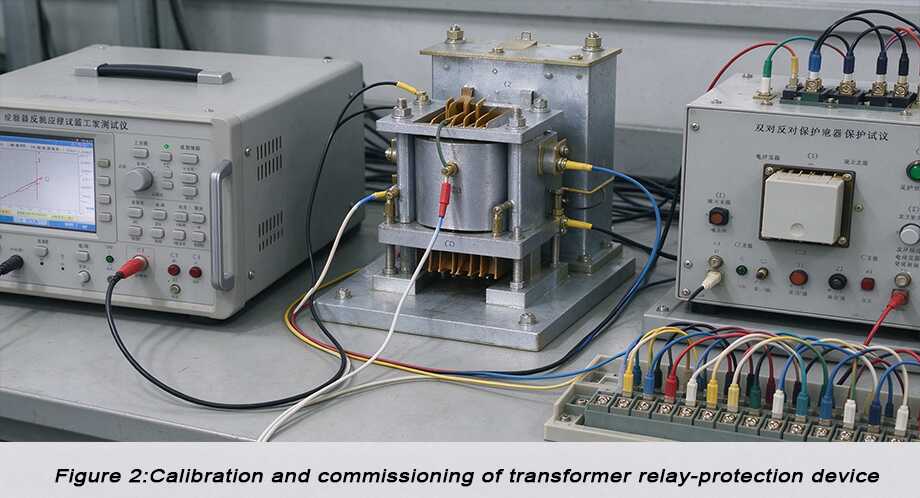
Differential protection detects internal faults by comparing the input and output currents of the transformer. If current transformers (CTs) are wired incorrectly or have mismatched ratios, the balance current is distorted, causing a false trip.
Solution: Calibrate CT parameters and check wiring polarity. This measure is effective because ensuring accurate current signals prevents the protection system from misjudging faults.
1.2.2 Overtemperature Protection Activation
Transformer overheating may result from cooling system failures or excessive ambient temperatures. Overtemperature protection devices (such as thermal relays) automatically trip when winding temperatures exceed the safe threshold (typically 150°C).
Solution: Check the operation of cooling fans or oil pumps and improve ventilation conditions. This is effective because restoring the cooling system reduces temperature rise and avoids thermal breakdown of insulation.
2. Diagnosis and Troubleshooting Steps
To quickly identify the cause of tripping, a systematic diagnostic process is recommended. The table below summarizes common fault types and corresponding measures:
| Fault Type | Possible Causes | Diagnostic Tools | Solution |
| Insulation Fault | Dampness, Aging | Megohmmeter, Dielectric Loss Tester | Drying Treatment, Replace Insulation |
| External Short Circuit | Load Fault, Wiring Error | Clamp Meter, Circuit Breaker | Inspect Downstream Circuits, Rewire |
| Protection Malfunction | CT Setting Error, High Temperature | Protection Relay Calibrator | Recalibrate Protection, Improve Cooling |
2.1 Preventive Measures Before Power-On
Prevention is better than cure. Before the first power-on of a transformer, the following checks can significantly reduce the risk of tripping:
(1)Insulation Test: Use a megohmmeter to measure the winding-to-ground insulation resistance, ensuring it complies with IEC 60076-3 standards (typically > 1 MΩ).
(2)Load Check: Gradually increase the load to avoid sudden full-load application. This is because gradual power-on allows the transformer and circuit to transition smoothly, reducing current surges.
(3)Protection Verification: Test the functionality of protection devices to ensure their settings match the transformer parameters. This measure is effective because correct protection settings allow accurate operation during actual faults, rather than false trips.
Conclusion
Transformer tripping upon power-on is not a mysterious phenomenon but is caused by insulation failure, abnormal loads, or protection system issues. By understanding these causes and implementing preventive measures—such as regular insulation testing and calibrating protection devices—you can significantly reduce tripping incidents and ensure stable equipment operation. Remember, every trip is the equipment “speaking”; listening and responding promptly will ensure your transformer serves efficiently and reliably for years to come.
Contact
LuShan, est. 1975, is a Chinese professional manufacturer specializing in power transformers and reactors for 50+ years. Leading products are single-phase transformer, three-phase isolation transformers, electrical transformer, distribution transformer, step down and step up transformer, low voltage transformer, high voltage transformer, control transformer, toroidal transformer, R-core transformer; DC inductors, AC reactors, filtering reactor, line and load reactor, chokes, filtering reactor, and intermediate, high-frequency products.
Our power transformers and reactors are widely used in 10 application areas: rapid transit, construction machinery, renewable energy, intelligent manufacturing, medical equipment, coal mine explosion prevention, excitation system, vacuum sintering(furnace), central air conditioning.
Know more about power transformer and reactor: www.lstransformer.com.
If you would like to obtain customized solutions for transformers or reactors, please contact us.
WhatsApp:+86 13787095096
Email: marketing@hnlsdz.com

