
 EN
EN
 FR
FR DE
DE ES
ES
How to Restore Dampened Insulation in Transformers in Humid Environments? —In-Depth Comparison Between Hot Oil Circulation and Vacuum Drying Processes
How to Restore Dampened Insulation in Transformers in Humid Environments?
—In-Depth Comparison Between Hot Oil Circulation and Vacuum Drying Processes
Humid environments are a major enemy of transformer insulation systems. When moisture penetrates insulating paperboard and insulating oil, it significantly reduces their electrical strength and mechanical performance, leading to partial discharge or even insulation breakdown accidents. If you observe a drop in insulation resistance or an increase in the dielectric loss factor (Tanδ), efficient and reliable drying treatment becomes critical to restoring safe operation. This article provides a detailed comparison of two mainstream drying techniques—hot oil circulation and vacuum drying—explaining their principles, characteristics, and applicable scenarios to help you make an informed decision.
Content
1. Accurate Diagnosis: Confirming the Degree of Insulation Dampness is the First Step
Before performing any drying process, accurately diagnosing the condition and extent of insulation dampness is crucial, as it determines the choice of drying method and parameter settings.
● Key Diagnostic Parameters and Standards:
(1)Insulation Resistance (IR) and Polarization Index (PI):Measuring the insulation resistance between windings and windings-to-ground is the most basic and quickest detection method (typically using a 2500V or 5000V megohmmeter). According to the IEEE 43 standard, the Polarization Index (PI = R10min / R1min) is more effective in eliminating temperature effects and assessing the actual insulation condition. A PI value below 2.0 is generally considered a clear warning sign of dampened or degraded insulation.
(2)Dielectric Loss Factor (Tanδ) and Capacitance:Measured using a Schering bridge or modern automatic Tanδ testers. Moisture significantly increases the Tanδ value of cellulose insulation (values above 0.5% indicate possible dampness, while values above 1% suggest severe dampness). Monitoring capacitance changes helps assess moisture uniformity or localized defects.
(3)Moisture Content in Oil:Determined precisely using the Karl Fischer coulometric method per IEC 60422 or ASTM D1533 (ppm level). While oil moisture does not fully represent solid insulation moisture, the two maintain a dynamic balance. Excessive moisture in oil (e.g., >25 ppm) is a key indicator of overall insulation dampness.
(4)Oil Breakdown Voltage (BDV):Pure, dry oil has a very high breakdown voltage (>60 kV). Moisture and impurities significantly reduce BDV (<30 kV typically indicates dampness or contamination). Testing follows IEC 60156 or ASTM D1816.
Test Parameter | Testing Standard | Reference Threshold (Warning) | Primary Issue Indicated |
Insulation Resistance (IR)/Polarization Index (PI) | IEEE 43 | PI < 2.0 | Overall insulation dampness or degradation |
Dielectric Loss Factor (Tanδ) | IEC 60247 | > 0.5% (possible dampness), >1% (severe dampness) | Increased insulation loss (moisture, aging byproducts) |
Moisture Content in Oil | IEC 60422, ASTM D1533 | > 20-30 ppm (typical warning threshold) | Oil dampness, indirectly reflecting solid insulation risk |
Oil Breakdown Voltage (BDV) | IEC 60156, ASTM D1816 | < 30 kV | Reduced oil insulation strength due to moisture/impurities |
Table 1: Key Diagnostic Parameters and Reference Thresholds for Transformer Insulation
● Diagnostic Guidance:Based on these parameters, you can determine whether dampness is superficial or deeply penetrated. Mild dampness (e.g., only oil moisture exceeds limits, PI close to 2) may be suitable for hot oil circulation. Moderate to severe dampness (PI significantly <2, Tanδ sharply elevated) strongly recommends vacuum drying.
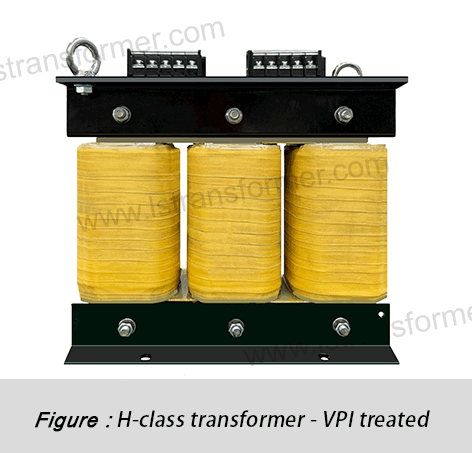
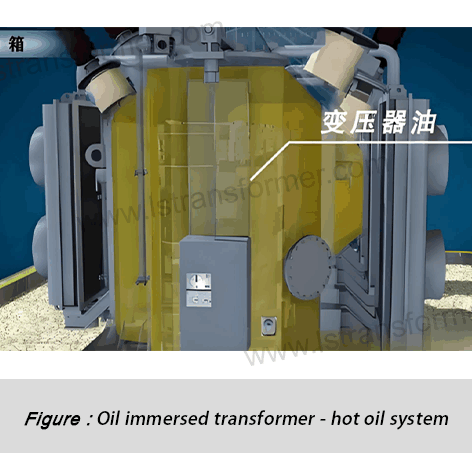
2. Hot Oil Circulation Drying: Principles and In-Depth Analysis
● Principle: Uses heated (65-85°C), dry, low-moisture insulating oil (typically from an oil processing unit) circulated continuously inside the transformer tank. The hot, dry oil contacts dampened solid insulation (paperboard, paper cylinders, winding wire insulation), transferring heat via conduction and convection. This heats the internal moisture, providing energy for migration. Due to the significant moisture gradient between the dry oil and damp insulation, water molecules spontaneously diffuse from high-concentration areas (inside the insulation) to low-concentration areas (circulating oil). The moisture is carried away by the oil to an external vacuum oil purifier (heated, vacuumed, and filtered) before being pumped back into the transformer.
● Advantages:
(1)Simple operation, readily available equipment: Primarily relies on standard vacuum oil purifiers (with heating) and circulation pipelines, making it easy to implement on-site.
(2)Lower operational risk: The process typically stays below the transformer’s rated oil temperature (<85°C), minimizing thermal stress on critical components like electromagnetic windings and reducing insulation aging risks.
(3)Cost-effective:No need for large vacuum tanks or complex equipment, making labor and rental costs significantly lower than vacuum drying.
● Limitations:
(1)Drying efficiency bottleneck:Moisture removal speed is limited by diffusion rates within solid insulation. Oil flow mainly affects surface layers, making deep drying slow or incomplete, especially for thick insulation or tightly packed winding areas.
(2)Long processing time: Achieving ideal results (especially deep drying) may take days or even weeks of continuous circulation, requiring extended power outages.
(3)Dependence on oil quality and processing capacity:The dryness of circulating oil and the purifier’s efficiency directly impact results. Degraded oil or inefficient processing can hinder effectiveness.
● Best Applications: Mild dampness (e.g., elevated oil moisture but solid insulation remains stable), preventive maintenance, supplementary drying after vacuum drying, or minor drying during routine oil maintenance for large transformers.
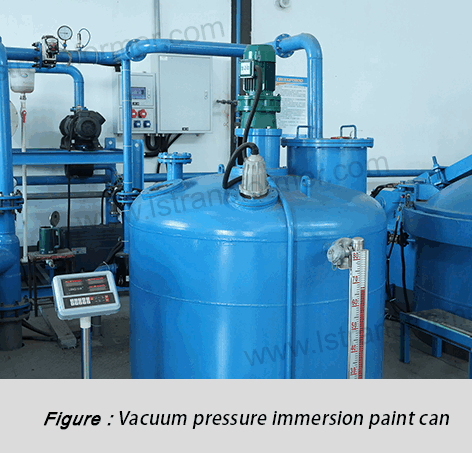
3. Vacuum Drying Process: Principles and In-Depth Analysis
● Principle:A phased physical process centered on boiling point reduction and enhanced diffusion:
(1)Preheating phase: Uses hot oil circulation or low-voltage current in windings (rarely hot air) to heat the transformer core (windings and insulation) uniformly to 90-110°C. This provides vaporization energy for moisture without significant removal. Uniform heating prevents localized overheating.
(2)Vacuum dehydration phase (core):While maintaining temperature, a high vacuum (<100 Pa, ideally <10 Pa) is applied inside the transformer tank. This drastically lowers water’s boiling point.
Scientific basis for boiling point reduction:
The saturated vapor pressure (P) and temperature (T) relationship is approximated as:
ln(P) ≈ A - B/T
(where A, B are material constants).
Under vacuum, reduced environmental pressure (P_env) lowers the boiling temperature (T_boil) where P_sat = P_env.
Examples:
(1)At atmospheric pressure (101.3 kPa), water boils at 100°C.
(2)At 1 kPa absolute pressure, boiling point ≈7°C.
(3)At 0.1 kPa (100 Pa), boiling point ≈-20°C.
Thus, at 90°C core temperature and 100 Pa vacuum, liquid water in insulation pores violently vaporizes. Crucially, moisture migration shifts from slow liquid diffusion to rapid vapor diffusion and permeation flow.
The strong pressure gradient (ultra-low vacuum vs. near-atmospheric pressure inside insulation) drives vapor from deep within the insulation to the tank space. Vacuum pumps continuously remove vapor, maintaining low vapor pressure for sustained drying. This phase removes most moisture far faster than hot oil circulation.
● Advantages:
(1)Deep and thorough drying: Efficiently removes moisture from thick or deep insulation, achieving moisture levels as low as 0.5% (factory standard), restoring >90% of electrical and mechanical strength.
(2)Faster drying time: Under ideal parameters (temperature, vacuum), deep drying typically completes in days to a week—much faster than hot oil circulation for severe dampness.
(3)Quantifiable results: Moisture removal is tracked via condenser output, vacuum stability, and endpoint criteria (e.g., no condensation for hours with stable vacuum).
● Limitations:
(1)High equipment and technical demands:Requires large vacuum pumps (rotary vane + roots), precision vacuum sensors, condensers, high-power heaters, and airtight seals. Operators need expertise.
(2)Higher costs:Equipment rental/purchase and labor expenses are greater.
(3)Strict process control:Uneven heating risks insulation damage; insufficient vacuum or leaks hinder efficiency; poor sealing allows moisture re-entry. Rigorous monitoring is essential.
(4)Safety risks: High temperature and vacuum challenge tank structural integrity and sealing.
Feature | Hot Oil Circulation Drying | Vacuum Drying |
Core Driver | Moisture gradient diffusion (solid-oil) | Boiling point reduction + pressure-driven vapor diffusion/permeation |
Primary Target | Surface/superficial layers | Deep/core insulation |
Temperature Range | 65-85°C (oil) | 90-110°C (core) |
Key Environment | Atmospheric pressure | High vacuum (<100 Pa, optimal <10 Pa) |
Drying Speed | Slow (diffusion-limited), days to weeks | Fast (vapor-driven), days to a week |
Drying Depth | Limited, poor for deep/severe dampness | Extremely deep, factory-level dryness |
Equipment Complexity | Low (standard purifier + pipes) | High (vacuum pumps, heaters, condensers, monitors) |
Technical Skill | Moderate | High (requires expertise) |
Cost | Lower | Higher |
Main Risks | Low overheating risk, but may under-dry deep layers | Local overheating, tank deformation, seal failure (strict control needed) |
Best For | Mild dampness, preventive care, post-vacuum supplement | Moderate-severe dampness, new transformers, post-overhaul deep drying |
Table 2: Core Comparison Between Hot Oil Circulation and Vacuum Drying
4. How to Choose the Right Drying Method?
The decision hinges on accurately diagnosing dampness severity and assessing on-site conditions:
● Prioritize vacuum drying for:
(1)Confirmed moderate-severe dampness: PI << 2.0, Tanδ >> 1%, high oil moisture with solid insulation degradation.
(2)Critical or large power transformers: Where maximum insulation recovery and long-term reliability are non-negotiable.
(3)Planned overhauls or new installations: Standard procedure to restore like-new insulation.
(4)Severe water ingress or prolonged high-humidity exposure:Deep moisture penetration.
● Consider hot oil circulation for:
(1)Mild dampness with flexible downtime: Only oil parameters are off, PI ≈ 2.0, slight Tanδ rise, and ample time for slow drying.
(2)Post-vacuum supplement: After vacuum drying, hot oil circulation balances oil-paper moisture and removes residual traces.
(3)Resource or site constraints: Lack of vacuum equipment or unsuitable conditions.
Key reminder: Professional supervision, strict parameter control, and proper endpoint judgment are critical. Incorrect settings, vacuum leaks, or premature termination can cause failure or damage. Always engage qualified, experienced service providers.
In Summary
Humidity’s threat to transformer insulation cannot be ignored. Choosing between hot oil circulation and vacuum drying depends on dampness depth and severity. Hot oil circulation, with its simplicity and lower risk, suits mild dampness or preventive care. For moderate-severe cases or factory-standard recovery, vacuum drying is the gold standard—its physics-based efficiency (boiling point reduction, pressure-driven diffusion) ensures long-term reliability.
When facing insulation dampness, conduct comprehensive tests (IR/PI, Tanδ, oil moisture, etc.), use data to assess severity, and consult professional engineers. Align the method with your transformer’s condition, site constraints, and budget to safeguard your power assets.
Contact Us
LuShan, est.1975, is a Chinese professional manufacturer specializing in power transformers and reactors for50+ years. Leading products are single-phase transformer, three-phase isolation transformers,electrical transformer,distribution transformer, step down and step up transformer, low voltage transformer, high voltage transformer, control transformer, toroidal transformer, R-core transformer;DC inductors, AC reactors, filtering reactor, line and load reactor, chokes, filtering reactor, and intermediate,high-frequency products.
Our power transformers and reactors are widely used in 10 application areas: rapid transit, construction machinery, renewable energy, intelligent manufacturing, medical equipment, coal mine explosion prevention , excitation system, vacuum sintering(furnace), central air conditioning.
Know more about power transformer and reactor :www.lstransformer.com.
If you would like to obtain customized solutions for transformers or reactors, please contact us.
WhatsApp:+86 17267488565
Email:[email protected]