
 EN
EN
 FR
FR DE
DE ES
ES
What Are the Special Process Requirements for Center Tap Termination in High-Frequency Transformers?
What Are the Special Process Requirements for Center Tap Termination in High-Frequency Transformers?
High-frequency transformers play a critical role in modern electronic devices, especially in switch-mode power supplies, inverters, and RF circuits. The center tap, as a key design feature of high-frequency transformers, directly impacts their performance, efficiency, and reliability. This article explores the special process requirements for center tap termination in high-frequency transformers, helping design engineers and manufacturers optimize product performance while meeting international standards and industry best practices.
Content
1. Basic Concept and Importance of Center Tap in High-Frequency Transformers
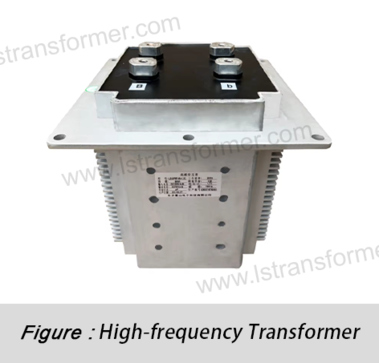
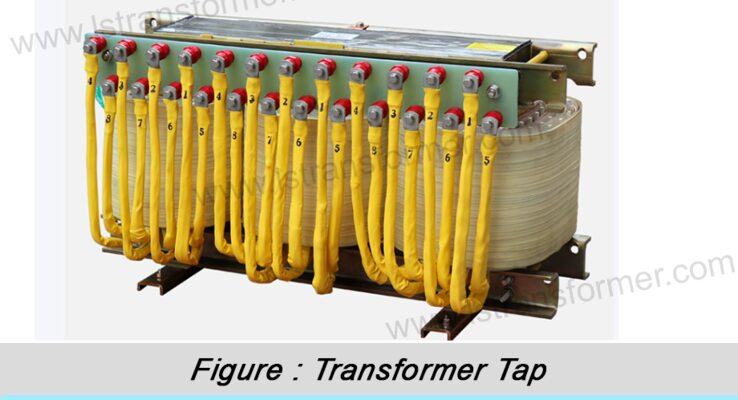
Compared to low-frequency transformers, high-frequency transformers (HFTs) typically operate at frequencies above 20kHz, with some applications reaching MHz levels. A center tap refers to an additional terminal connected to the midpoint of a transformer winding. This design allows the transformer to provide symmetrical bidirectional output voltages or achieve specific circuit topologies.
In high-frequency applications, the center tap is particularly important. In push-pull converters, it serves as the common connection point for two switching transistors. In full-wave rectifier circuits, it simplifies diode configurations. For differential signal transmission, it provides excellent common-mode noise rejection. According to IEEE Std C57.110-2018, high-frequency transformer designs must account for additional losses due to the skin effect and proximity effect, and proper center tap termination can optimize these loss distributions.
2. Symmetry Control Process for Center Tap Termination
Symmetry is the most critical process requirement for center taps in high-frequency transformers, as it directly affects output voltage balance and circuit stability. In practice, symmetry control involves three dimensions: electrical symmetry, geometric symmetry, and thermal symmetry.
● Electrical Symmetry:Requires the exact same number of turns on both sides of the center tap. For multi-layer windings, each layer should maintain identical turn counts. For example, in a typical 4-layer secondary winding, the center tap should be placed between the 2nd and 3rd layers to ensure symmetry. Research shows that a turn deviation exceeding 0.5% can cause DC bias in push-pull circuits, increasing the risk of core saturation.
Parameter | Traditional Winding | Optimized Winding |
Symmetry Deviation | >3% | <0.5% |
Proximity Effect Loss | Higher | 30% Lower |
Manufacturing Difficulty | Medium | High |
● Geometric Symmetry:Involves precise control over the
Table 1: Comparison of Center Tap Winding Symmetry
physical layout of windings:
The optimized method uses "bifilar winding" technology, where two insulated wires are wound simultaneously for the windings on both sides of the center tap, ensuring perfect geometric symmetry. Although this increases winding difficulty, it reduces asymmetry to below 0.5% and lowers proximity effect losses by up to 30%.
3. Process Requirements for Minimizing High-Frequency Losses
High-frequency transformer losses mainly include winding losses (copper loss) and core losses (iron loss), with center tap termination significantly affecting winding losses. At high frequencies, the skin depth (δ) is determined by:
δ = √(ρ/πμf)
Where:
ρ = conductor resistivity (Ω·m)
μ = permeability (H/m)
f = operating frequency (Hz)
For copper at 100kHz, the skin depth is only 0.21mm, meaning current flows primarily near the conductor surface. As a current convergence point, the center tap termination process must incorporate the following optimizations:
● Multi-Layer Interleaved Connection:For Litz wire windings, the center tap should use a "fan-out" connection (Figure 2) to ensure equal lengths for all strands, avoiding uneven current distribution. Tests show this can reduce AC resistance by 15-20%.
● 3D Thermal Path Design:The center tap, as a heat concentration zone, should align with cooling paths. A "stepped" thermal transition—gradually increasing wire diameter from fine to thick—avoids hot spots caused by abrupt cross-section changes. Per IEC 61558-2-16, temperature differences in the center tap area should not exceed 5K during thermal tests.
● Electromagnetic Field Balancing:Windings on both sides of the center tap should be wound in strict mirror symmetry (alternating clockwise and counterclockwise directions) to cancel leakage fields. According to Faraday’s law, this symmetry generates opposing induced EMFs, reducing net leakage inductance:
Leakage ∝ (N²/h)·(a + b/3)
Where:
N = turns
h = winding height
a = inter-winding distance
b = winding thickness.
Symmetrical winding minimizes the effective distance (a).
4. Special Insulation and Voltage Withstanding Requirements
Center tap termination poses unique insulation challenges, especially in high-voltage or high-altitude applications. Per UL/IEC 60601-1 (medical devices), high-frequency transformer center taps must meet these insulation requirements:
● Multi-Layer Composite Insulation:Center tap leads passing through winding layers require a three-layer system:
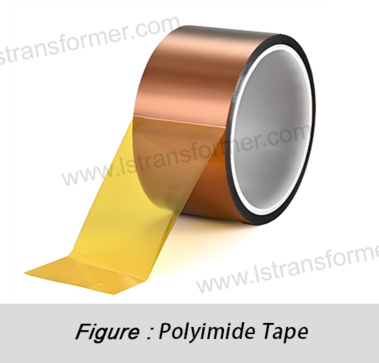
(1)Inner:0.05mm polyimide tape
(2)Middle:Epoxy-impregnated fiberglass cloth
(3)Outer:Teflon sleeve
This combination meets dielectric strength (>3kV/mm) and flexibility requirements.
● Potential Gradient Control:The center tap’s voltage difference with winding ends follows a linear distribution. A "tapered transition" design (Figure 3) gradually increases insulation thickness with voltage difference, avoiding electric field concentration. Per Paschen’s law:
Vb = B·pd / ln(A·pd) - ln[ln(1+1/γ)]
Where:
A, B = gas constants
γ = secondary electron emission coefficient.
Proper design increases partial discharge inception voltage by over 30%.
● Environmental Protection:For harsh environments, center tap termination requires:
(1)Plasma cleaning (removes contaminants)
(2)Silane coupling agent coating (enhances adhesion)
(3)Hydrophobic nano-coating (contact angle >110°)
Per ASTM D7866, this extends salt spray resistance from 500 to 2000 hours.
5. Mechanical Reliability and Stress Relief Processes
High-frequency transformers endure electromagnetic forces, thermal stress, and vibration. The center tap, as a weak point, requires reinforcement:
● Strain Relief:Center tap leads should include an "S"-shaped stress relief loop (Figure 4) with curvature radius:
R ≥ 10d (d = wire diameter)
This reduces bending stress by 60-70%, passing MIL-STD-810G vibration tests (10-2000Hz, 5Grms).
● Thermal-Mechanical Matching:Materials should have matched coefficients of thermal expansion (CTE):
(1)Conductor:Silver-plated copper (CTE 17ppm/°C)
(2)Insulation:PTFE (CTE 100ppm/°C)
(3)Transition:Silicone rubber (CTE 300ppm/°C)
This gradient CTE design eliminates >80% thermal stress.
● Micro-Motion Protection:For long-term reliability:
(1)Recessed solder pads (reduce cantilever length)
(2)SAC305 solder alloy
(3)Reinforced adhesive dots (diameter ≥2× wire diameter)
Per JIS C5401, this extends mechanical life to 100,000 thermal cycles.
6. Special Testing and Validation Requirements
Center tap processes require targeted testing:
● Dynamic Balance Test:
Use a network analyzer to measure:
(1)Inductance deviation (<2%)
(2)Q-value difference (<15%)
(3)Self-resonant frequency shift (<5%) Test frequencies should cover the operating range (e.g., 100kHz–10MHz).
● Partial Discharge Test:
Per IEC 60270, at 1.5× rated voltage:
(1)Partial discharge (<5pC)
(2)Discharge rate (<1/cycle) Test with the center tap in worst-case conditions (e.g., bent).
● Accelerated Aging Test:
Combined environmental stress testing:
Stress Type | Test Parameters | Pass Criteria |
Temperature Cycling | -40°C to +125°C, 500 cycles | ΔR <5% |
Vibration | 20G, 100 hours | No damage |
Humidity | 85°C/85%RH, 1000 hours | IR >100MΩ |
Table 2: Comprehensive reliability test requirements
In Summary
Center tap termination in high-frequency transformers is a key factor affecting overall performance, requiring balanced consideration of electromagnetic design, thermal management, mechanical reliability, and manufacturability. With the rise of wide-bandgap semiconductors (e.g., GaN, SiC), higher operating frequencies demand even stricter center tap processes.
Manufacturers should monitor updates to international standards (e.g., IEC 62368-1:2023) and optimize processes using simulation (e.g., finite element analysis) and testing. For specialized applications (e.g., aerospace or medical implants), custom solutions may be needed.
For more on high-frequency transformer optimization or application-specific guidelines, contact our technical team. We offer UL, CE, and RoHS-compliant solutions for your most demanding requirements.
Contact Us
LuShan, est.1975, is a Chinese professional manufacturer specializing in power transformers and reactors for 50+ years. Leading products aresingle-phase transformer, three-phase isolation transformers,electrical transformer,distribution transformer, step down and step up transformer, low voltage transformer, high voltage transformer, control transformer, toroidal transformer, R-core transformer;DC inductors, AC reactors, filtering reactor, line and load reactor, chokes, filtering reactor, and intermediate,high-frequency products.
Our power transformers and reactors are widely used in 10 application areas: rapid transit, construction machinery, renewable energy, intelligent manufacturing, medical equipment, coal mine explosion prevention , excitation system, vacuum sintering(furnace), central air conditioning.
Know more about power transformer and reactor :www.lstransformer.com.
If you would like to obtain customized solutions for transformers or reactors, please contact us.
WhatsApp:+86 17267488565
Email:marketing@hnlsdz.com