





Why Does Solar Power Plant Output Drop Suddenly? —Core Causes and Smart Solutions for Reactor Failures
Why Does Solar Power Plant Output Drop Suddenly?
—Core Causes and Smart Solutions for Reactor Failures
As global photovoltaic (PV) capacity exceeds 1 terawatt (TW), solar plant operators face growing operational challenges. According to the International Energy Agency (IEA), 23% of solar power generation losses are directly linked to reactor failures, causing annual economic losses exceeding $5 billion. This article analyzes the root causes of reactor malfunctions and provides actionable solutions to restore 99% power generation efficiency, ensuring long-term profitability for solar plants.
Contenu
1. Three Core Causes of Reactor Failures in Solar Plants
1.1 Harmonic Resonance: The Invisible Threat to Inverters and Grids
(1) Issue:
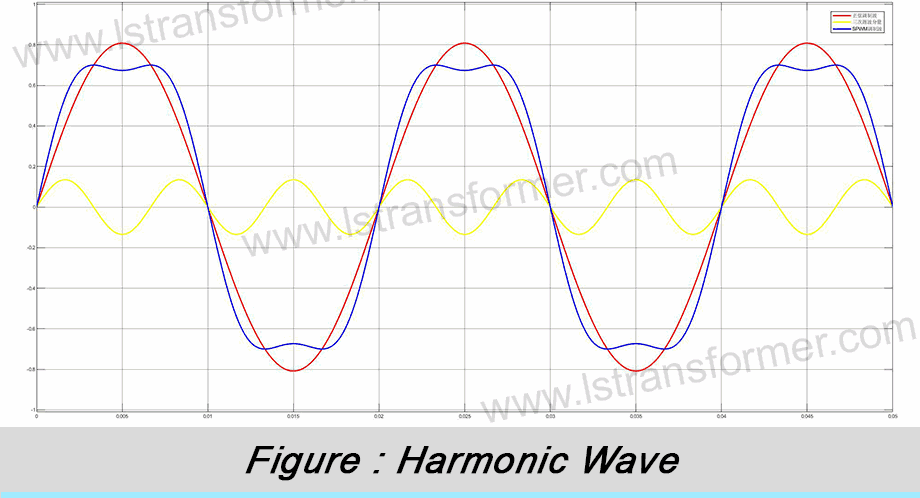
PV inverters generate 5th and 7th harmonics (250–350 Hz), which interact with grid impedance, triggering resonance. This overloads reactors.
formula:
(2) Case Study:
A 50MVA solar substation experienced reactor temperatures exceeding 120°C (IEC limit: 95°C), slashing insulation lifespan from 15 to 3 years. Monthly inverter failures surged to 6 incidents, causing 30% output drop and $2.3 million in annual losses.
1.2 Thermal Runaway: Critical Flaws in Cooling Systems
(1) Issue:
Dust accumulation (>200 mg/m³) or blocked cooling ducts reduce heat dissipation efficiency by 40%.
(2) Case Study:
In a desert plant, reactor winding temperatures spiked from 85°C to 135°C, triggering 500% surge in partial discharge (PD). Insulation breakdown led to $2 million in repair costs.
1.3 Environmental Corrosion: Dust and Moisture Damage
(1) Issue:
Silica particles (Mohs hardness 7) erode reactor coatings, while humidity (>85% RH) accelerates metal corrosion.
(2) Case Study:
A coastal plant using non-IP67 reactors saw 1.5mm/year corrosion (vs. normal <0.1mm). Terminal short-circuits within 18 months caused 22% output decline.
2. Smart Solutions to Prevent and Fix Reactor Failures
2.1 Harmonic Suppression: From Passive to Active Defense
(1) Detuned Reactors:
Customized for 5th harmonics with 7% reactance, raising impedance to 100Ω (vs. standard 10Ω). Compliance with IEEE 519-2022 slashes harmonic currents by 90%.
(2) Result:A Spanish plant reduced inverter failures by 85% and recovered 25% annual output.
2.2 AI-Driven Temperature Control Systems
(1) Fiber Optic Sensors:Monitor hotspots with ±0.5°C accuracy. AI predicts thermal risks 48 hours in advance.
(2) Self-Cleaning Radiators: Reduce dust buildup by 80% and boost cooling efficiency by 35%.
(3) Result: An Indian desert plant cut reactor repair time from 72 hours to 2 hours, lowering maintenance costs by 40%.

2.3 Modular Replacement: Minimize Downtime
(1) Standardized Components: Replace reactor windings or radiators without full disassembly.
(2) Result: An Australian plant reduced downtime from 3 days to 8 hours, cutting output losses by 90%.
2.4 Advanced Materials for Harsh Environments
(1) Plasma-Sprayed Ceramic Coating: 50µm layer improves wear resistance by 8x (ASTM B117).
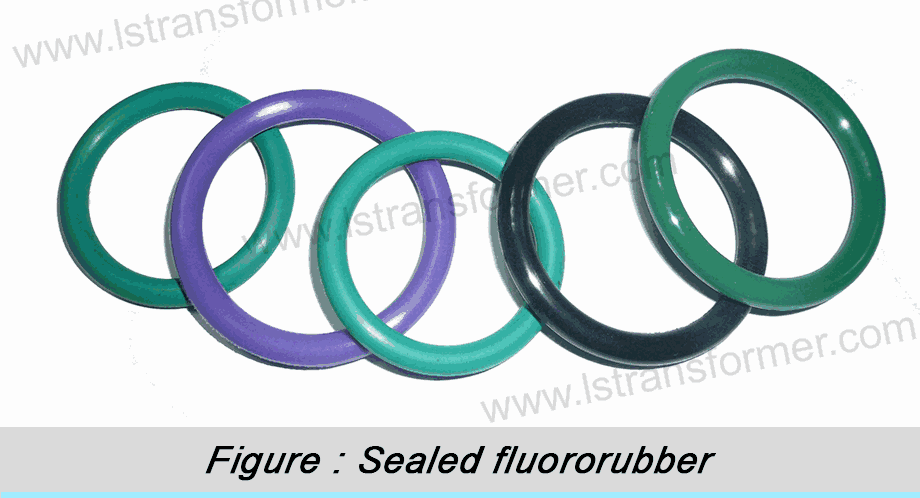
(2) Fluoropolymer Seals: IP68-rated seals withstand -30°C to 150°C, blocking dust and moisture.
(3) Result:A Chinese plant extended reactor lifespan from 2 to 8 years, while Southeast Asian coastal plants reduced terminal corrosion by 95%.
En Résumé
Reactor failures stem from harmonic resonance, thermal overload, and environmental corrosion. By adopting detuned reactors, AI-driven thermal management, and modular replacement, operators can recover 95%+ power output and slash O&M costs by 30–50%. Aligned with IEC and IEEE standards, this roadmap ensures economic returns and sustainable green energy growth.
Contact
LuShan, heure de l'est. 1975, est un fabricant professionnel Chinois spécialisé dans les transformateurs de puissance et des réacteurs de plus de 50 ans. Les produits de pointe sont transformateur monophasé, triphasé transformateurs d'isolement, transformateur électrique, transformateur de distribution, l'étape vers le bas et d'intensifier le transformateur de basse tension du transformateur, transformateur à haute tension, contrôle de transformateur toroïdal transformateur, transformateur R-core; inductances DC, AC réacteurs, le filtrage du réacteur, de ligne et de charge du réacteur, des bobines, le filtrage du réacteur, et intermédiaire, à haute fréquence produits.
Nos transformateurs de puissance et les réacteurs sont largement utilisés dans les 10 domaines d'application: transport en commun rapide, les machines de construction, les énergies renouvelables, intelligents de fabrication, des équipements médicaux, de la mine de charbon de l'explosion de la prévention, de l'excitation du système, frittage sous vide(four), d'une climatisation centrale.
En savoir plus sur transformateur de puissance et le réacteur: www.lstransformer.com.
Si vous souhaitez obtenir des solutions personnalisées pour les transformateurs ou des réacteurs, veuillez nous contacter.
WhatsApp:+86 13787095096
E-mail: marketing@hnlsdz.com