
 EN
EN
 FR
FR DE
DE ES
ES
How to Perform Online Monitoring of Winding Partial Discharge? —UHF Sensor Solution Design
How to Perform Online Monitoring of Winding Partial Discharge?
—UHF Sensor Solution Design
Transformers are the core equipment of power grids, and the insulation health of their windings directly determines grid operation safety. Statistics from the International Council on Large Electric Systems (CIGRE) show that insulation degradation is the leading cause of transformer failures, accounting for over 70% of cases. Partial discharge (PD) is the most sensitive early indicator of insulation degradation. Traditional offline detection methods (such as the IEC 60270 standard pulse current method) cannot capture the true discharge characteristics during operation.
Content
1.Limitations of Traditional Online Monitoring Methods and the Rise of UHF Technology
● Challenges of the Pulse Current Method in Online Applications:
This method, based on the IEC 60270 standard, measures transient voltages across a detection impedance to quantify discharge magnitude (in picocoulombs, pC). However, in substations, transformers and connected equipment form a vast electrical network, generating wideband electromagnetic interference (e.g., corona discharge, switching operations, power electronics noise) with frequencies ranging from tens of kHz to hundreds of MHz. These interference signals often overwhelm genuine PD signals, resulting in poor signal-to-noise ratios and significantly reduced detection sensitivity and reliability.
● Field Challenges of the Acoustic Method:
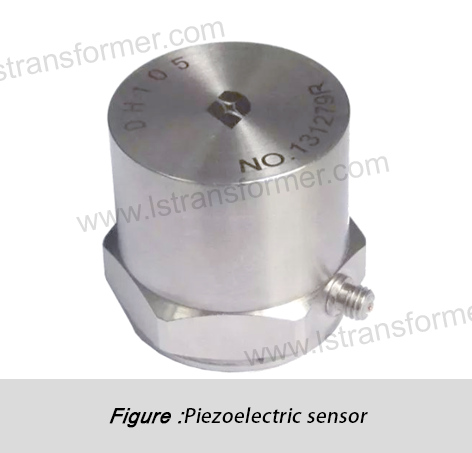
The acoustic method detects ultrasonic waves (20kHz–300kHz) generated by PD to locate discharge sources. However, inside an operating transformer, complex structures like insulation oil, paperboard, and windings cause sound waves to attenuate severely, especially at higher frequencies. Additionally, operational noise (e.g., core magnetostriction, cooling fans) often overlaps with PD signals, making extraction and accurate localization difficult.
● Breakthrough Advantages of the UHF Method (Physical Layer):
The UHF method detects electromagnetic waves (300MHz–3GHz) emitted by PD. Its key advantages include:
(1)Natural Noise Immunity:Substation interference (e.g., corona, switching) is concentrated below 100MHz, while UHF signals experience minimal interference due to the transformer's Faraday cage effect.
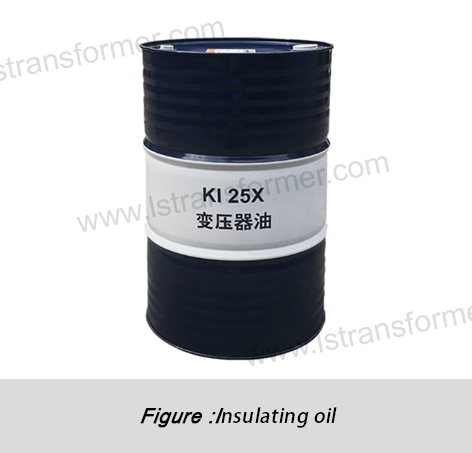
(2)Low Propagation Loss:UHF waves attenuate less in oil-paper insulation compared to ultrasonic waves, enabling detection over several meters.
2. Core Design Considerations for UHF Sensors
● Frequency Band Selection and Optimization (Key Trade-offs):
The choice of UHF frequency band impacts sensitivity, noise immunity, and sensor feasibility. Key factors include:
(1)Sensitivity vs. Noise:PD energy peaks between 300MHz–1.5GHz. Higher frequencies (>1.5GHz) suffer greater attenuation.
(2)Antenna Size:Antenna dimensions must match the wavelength (λ = c / (f × √εr)). For 800MHz in oil-paper (εr ≈ 2.3), λ ≈ 0.22m, allowing compact designs (5–10cm).
Factor | Low Band (300–500MHz) | High Band (700–1500MHz) | Recommended Range |
Signal Attenuation | Lower, longer range | Higher (∝ f²), shorter range | 300–800MHz |
Noise Immunity | Susceptible to switching noise | Lower background noise | 500–1500MHz |
Antenna Size | Larger (λ/4 ≈ 0.58m for 300MHz) | Compact (λ/4 ≈ 0.055m for 1.5GHz) | 700–1500MHz |
Pulse Resolution | Lower time resolution | Higher, better for waveform analysis | >500MHz |
Optimal Range | 500MHz–1GHz |
● Sensor Types and Installation Locations:
(1)Internal Sensors (Optimal but Requires Planning):
Embedded in insulation oil or near windings for minimal signal loss. Ideal for new transformers or retrofits. Locations: winding pressure plates, riser flanges.
(2)External Sensors (Practical Solutions):
– Oil Valve Sensors: Installed on sampling valves, leveraging them as waveguides.
– Bushing Tap or GIS Sensors: Use capacitive coupling at bushing ground leads.
– Tank-Mounted Sensors:Non-invasive but less sensitive due to metal shielding.
● Sensitivity and Directionality Optimization:
(1)Antenna Gain and Matching:Maximize gain/bandwidth with designs like fractal or patch antennas (VSWR < 2:1).
(2)Directional Patterns: Focus on high-risk areas (e.g., HV winding ends) using phased arrays or reflectors.
(3)Low-Noise Amplification:Integrated LNAs (NF < 3dB, 20–40dB gain) enhance signal-to-noise ratios.
3. UHF Online Monitoring System Architecture and Key Technologies
● Signal Processing Pipeline (Physical to Information Layer):
(1)UHF Signal Capture:Convert EM waves to electrical signals (µV–mV).
(2)Low-Noise Amplification: Boost signals before noise intrusion.
(3)Bandpass Filtering: Remove out-of-band interference (e.g., radio signals).
(4)High-Speed ADC:Sample at ≥1GSPS to preserve pulse details (Nyquist: 3–5× highest frequency).
(5)Digital Signal Processing (DSP):
–Noise reduction via wavelet transforms.
–Feature extraction: amplitude, pulse width, phase, rise time.
(6)AI Diagnosis:Classify PD types (e.g., corona, voids) using SVM, CNN, etc.
● Multi-Sensor Localization (TDOA Method):
For large transformers, use 4+ sensors to use 4+ sensors
to solve:
√[(x−xᵢ)² + (y−yᵢ)² + (z−zᵢ)²] − √[(x−x₁)² + (y−y₁)² + (z−z₁)²] = v × Δtᵢ₁
Requires nanosecond time sync (IEEE 1588 PTP) and
known oil propagation speed (~1.5e8 m/s).
● System Integration and Standards Compliance:
(1)Hardware:Smart sensors, PTP networks, edge servers.
(2)Software: Real-time DSP, AI diagnostics, IEC 61850/Modbus interfaces.
Metric | Target | Standard | Notes |
Min Detectable PD (pC) | <100 pC (internal), <500 pC (external) | IEC TS 62478 | Sensitivity depends on sensor placement |
Dynamic Range | >60 dB | IEEE C57.127 | Critical for strong/weak PD detection |
Frequency Range | 300MHz–1.5GHz | CIGRE WG D1.11 | Covers primary PD energy |
Time Sync Accuracy | <±1 ns (TDOA) | IEEE 1588 (PTP) | Essential for multi-sensor localization |
4. Value and Implementation of UHF Online Monitoring
UHF PD monitoring enables:
(1)Early Warning: Detect insulation flaws before catastrophic failures.
(2)Precise Diagnosis:Classify PD types via PRPD patterns and localization.
(3)Predictive Maintenance: Reduce unplanned outages and extend asset life.
In Summary
UHF sensors offer a robust solution for online PD monitoring, combining high sensitivity, noise immunity, and AI-driven diagnostics. Global leaders like Siemens and Hitachi Energy deploy UHF systems for smart grid resilience. Advances in edge computing and machine learning will further enhance this technology, ensuring safer, more reliable power networks worldwide.
Contact Us
LuShan, est.1975, is a Chinese professional manufacturer specializing in power transformers and reactors for50+ years. Leading products are single-phase transformer, three-phase isolation transformers,electrical transformer,distribution transformer, step down and step up transformer, low voltage transformer, high voltage transformer, control transformer, toroidal transformer, R-core transformer;DC inductors, AC reactors, filtering reactor, line and load reactor, chokes, filtering reactor, and intermediate,high-frequency products.
Our power transformers and reactors are widely used in 10 application areas: rapid transit, construction machinery, renewable energy, intelligent manufacturing, medical equipment, coal mine explosion prevention , excitation system, vacuum sintering(furnace), central air conditioning.
Know more about power transformer and reactor :www.lstransformer.com.
If you would like to obtain customized solutions for transformers or reactors, please contact us.
WhatsApp:+86 17267488565
Email:[email protected]