
 EN
EN
 FR
FR DE
DE ES
ES
How to Solve Excessive Contact Resistance at Wire Connection Points? —Comprehensive Analysis and Systematic Solutions
How to Solve Excessive Contact Resistance at Wire Connection Points?
—Comprehensive Analysis and Systematic Solutions
In modern power systems and electronic equipment, the performance of transformers and reactors directly depends on the quality of their electrical connections. Excessive contact resistance, a seemingly minor issue, is actually a primary cause of equipment failure, reduced energy efficiency, and even safety accidents. This article will systematically analyze the mechanisms behind excessive contact resistance and provide a complete set of solutions. Integrating the latest standards from the International Electrotechnical Commission (IEC) and the Institute of Electrical and Electronics Engineers (IEEE), along with practical engineering experience, we aim to help you thoroughly resolve this common yet highly hazardous technical challenge.
Content
1. Causes and Comprehensive Impact of Contact Resistance
The essence of contact resistance is the additional impedance encountered when current passes through the interface of conductor connections. Its formation mechanism can be summarized into three core aspects:
● Interface Material and Condition Factors
Oxidation and contamination of conductor surfaces are the primary causes of increased contact resistance. Copper conductors form composite oxide layers of Cu₂O (resistivity ~10³Ω·cm) and CuO (resistivity ~10⁸Ω·cm) in air, while aluminum conductors develop an Al₂O₃ film with resistivity as high as 10¹⁴Ω·cm. These oxide layers act as insulating barriers, transforming ideal metal-to-metal contact into current paths through a few microscopic conductive spots. Research shows that when an oxide layer is present, the effective conductive area may be only 1%-5% of the apparent contact area.
The mechanical condition of the contact surface is also critical. Insufficient surface roughness, flatness, or parallelism can significantly reduce the actual contact area. According to the Greenwood-Williamson contact theory, when two rough surfaces come into contact, only a few micro-asperities bear the load, creating notable constriction resistance. In engineering practice, a flatness deviation exceeding 0.1mm can increase contact resistance by over 30%.
● Connection Structure and Mechanical Factors
Contact pressure is another key parameter determining connection quality. Ideally, contact resistance follows the relationship R ∝ F⁻ⁿ (where n is typically 0.5-0.7), meaning insufficient pressure leads to nonlinear resistance growth. Common pressure-related issues in practice include:
(1)Insufficient bolt torque: For example, an M10 bolt connecting copper busbars requires 25-30Nm torque, but actual installation may only achieve 15-20Nm.
(2)Spring connector aging: After long-term service, spring stress relaxation can reduce initial pressure by 20%-40%.
(3)Thermal cycling effects:The differing expansion coefficients of copper (17×10⁻⁶/℃) and aluminum (23×10⁻⁶/℃) cause connection pressure to fluctuate with temperature changes.
Insufficient pressure also exacerbates micro-motion wear. Mechanical vibrations or electromagnetic forces during operation can cause tiny relative movements (<100μm) at contact surfaces, repeatedly wearing away protective oxide layers, exposing fresh metal, and accelerating oxidation—a vicious cycle.
● Environmental and Electrochemical Factors
Electrochemical corrosion is particularly severe in humid environments. When two dissimilar metals (e.g., copper-aluminum connections) come into contact, a galvanic cell with a potential difference of 0.65V forms, where aluminum, as the anode, corrodes preferentially. The corrosion product Al(OH)₃ has extremely high resistivity, and its volumetric expansion further weakens contact pressure. Data shows that unprotected copper-aluminum connections in humid environments can experience a 10-20-fold increase in contact resistance within two years.
Environmental pollutants like salt spray, industrial gases (SO₂, H₂S), and dust also accelerate degradation. For instance, substation connectors in coastal areas have a 3-5 times higher failure rate due to salt deposition compared to inland areas. Standards such as IEC 61238 and IEEE Std 837 provide detailed protection requirements for these challenges.
Environmental Condition | Typical Annual Resistance Increase | Primary Degradation Mechanism |
Dry indoor | 2%-5% | Mild oxidation |
Standard outdoor | 10%-20% | Oxidation + contamination |
Industrial area | 25%-40% | Chemical corrosion |
Coastal region | 50%-100% | Electrochemical corrosion |
High-temperature environment | 15%-30% | Thermal aging |
Table 1: Comparison of contact resistance growth rates under different environmental conditions
2. Systematic Solutions: From Prevention to Repair
● Optimizing Connection Processes
Surface treatment is fundamental to ensuring good connections. We recommend a three-step process:
(1) Mechanical abrasion to remove oxide layers (use 120-180 grit sandpaper for copper, stainless steel brushes for aluminum).
(2) Chemical cleaning to remove grease (use specialized cleaners instead of common solvents).
(3) Application of conductive paste (anti-oxidation paste with zinc powder for copper, special paste with metal fillers for aluminum). This combination can reduce initial contact resistance by 40%-60%.
Connection process control requires strict adherence to standardized procedures. For bolted connections, use a cross-tightening sequence and apply torque in stages (e.g., 30% → 60% → 100% of standard torque). Calibrated torque wrenches are critical—studies show manual wrenches can have torque errors up to ±30%. For crimped connections, ensure:
(1) Precise matching of dies to conductor cross-sections.
(2)Proper crimp position (3-5mm from insulation ends).
(3) Complete hexagonal or oval deformation after crimping.
Material selection should follow the "like metals preferred, dissimilar metals isolated" principle. For unavoidable dissimilar metal connections, use transition joints (e.g., copper-aluminum adapters) or special treatments (e.g., tin-plated aluminum). In corrosive environments, silver- or tin-plated copper connectors are recommended, offering 3-5 times better contact resistance stability than bare copper.
● Advanced Monitoring and Condition Assessment
Use a four-wire micro-ohmmeter with a test current ≥100A for accuracy. Recommended steps:
(1)Measure and record ambient temperature.
(2)Apply stable test current for 30-60 seconds.
(3)Record voltage drop.
(4)Calculate resistance (R=V/I) and apply temperature correction.
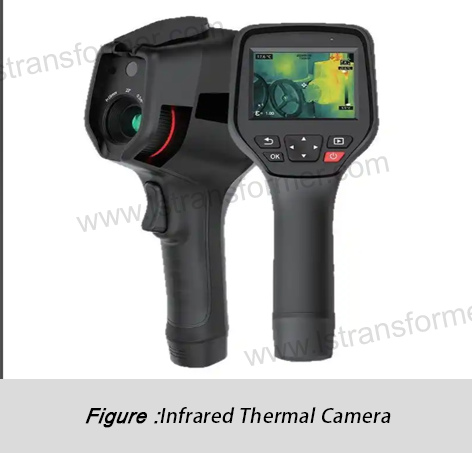
● Infrared Thermography
Infrared thermography is a vital tool for preventive maintenance. Regular scans establish baseline temperature distributions, enabling anomaly detection. Per IEC 60502, connection point temperature rise should not exceed 30K above ambient. Include infrared inspections in quarterly maintenance plans, focusing on:
(1)Local hotspots with >10K
(2)>15K among same-batch connections.
(3)Persistent temperature rise trends.
● Smart Monitoring Systems
Smart monitoring systems represent the future. Wireless temperature sensors (sampling every 1-5 minutes) at critical points, combined with big data platforms, enable:
(1)Real-time resistance/temperature tracking.
(2)Degradation trend prediction.
(3)Automatic anomaly alerts.
(4)Maintenance decision support.
● Maintenance and Repair Strategies
For connections with increased resistance, we recommend phased actions:
● Early-stage degradation (<50% resistance increase):
(1)Re-tighten connections (increase torque by 10%-15%).
(2)Clean and reapply conductive paste.
(3)Increase monitoring frequency (e.g., monthly).
● Mid-stage degradation (50%-200% resistance increase):
(1)Fully disassemble the connection.
(2)Thoroughly clean surfaces (lightly abrade if needed).
(3)Replace damaged parts (e.g., deformed washers, corroded bolts).
(4)Use enhanced conductive materials (e.g., nano-filler pastes).
(5)Reassemble and torque to standard.
● Severe degradation (>200% resistance increase or overheating signs):
(1)Replace the entire connection assembly.
(2)Assess adjacent components for damage.
(3)Upgrade connection method (e.g., higher-grade connectors).
(4)Analyze root causes and improve system design.
For critical connections in high-value equipment, preventive replacement is advised. For example, offshore wind farm transformer connectors are typically replaced every 5-7 years, even if functional. This strategy avoids costly unplanned downtime.
In Summary
Resolving excessive contact resistance at wire connections requires systematic engineering and lifecycle management.
From design, prioritize like-metal connections with 20%-30% extra contact area and maintenance accessibility. During installation, enforce three essentials: calibrated tools, surface treatment (abrasion + cleaning + conductive paste), and detailed records (torque, resistance, temperature). In operation, establish a "detect-analyze-prevent" loop with quarterly infrared scans (≤30K rise) and annual micro-ohmmeter tests (≤15% resistance increase). For mid-stage degradation (50%-200% increase), apply stepped solutions: re-tightening → surface renewal → part replacement → connection upgrades.
Adhering to IEC 61238 and IEEE Std 837 can reduce connection losses by 0.5%-1.5% (saving thousands of kWh annually in large substations) and cut failure rates by over 25%. Combining preventive maintenance (e.g., 5-7-year replacement cycles) with smart monitoring (wireless sensors + AI analytics) extends equipment lifespan by 30%-50% and fundamentally controls safety risks.
Contact Us
LuShan, est.1975, is a Chinese professional manufacturer specializing in power transformers and reactors for50+ years. Leading products are single-phase transformer, three-phase isolation transformers,electrical transformer,distribution transformer, step down and step up transformer, low voltage transformer, high voltage transformer, control transformer, toroidal transformer, R-core transformer;DC inductors, AC reactors, filtering reactor, line and load reactor, chokes, filtering reactor, and intermediate,high-frequency products.
Our power transformers and reactors are widely used in 10 application areas: rapid transit, construction machinery, renewable energy, intelligent manufacturing, medical equipment, coal mine explosion prevention , excitation system, vacuum sintering(furnace), central air conditioning.
Know more about power transformer and reactor :www.lstransformer.com.
If you would like to obtain customized solutions for transformers or reactors, please contact us.
WhatsApp:+86 17267488565
Email:[email protected]