
 EN
EN
 FR
FR DE
DE ES
ES
Why Do European Customers Prefer Halogen-Free Cables? —The Impact of Environmental Regulations on Cable Procurement
Why Do European Customers Prefer Halogen-Free Cables?
—The Impact of Environmental Regulations on Cable Procurement
With the growing global awareness of environmental protection, the European market has imposed increasingly stringent eco-friendly requirements on electrical and electronic products. As a manufacturer or purchaser of transformers and reactors, understanding why European customers prefer halogen-free cables is crucial. This article delves into how environmental regulations influence cable procurement decisions, explores the technical advantages of halogen-free cables, and analyzes the impact of this trend on the transformer industry.
Content
1. European Environmental Regulations and Halogen-Free Cable Requirements
Europe is one of the regions with the strictest environmental regulations globally. Its regulatory framework imposes key restrictions on halogen content in cables through the following directives:
● RoHS Directive (Restriction of Hazardous Substances):While RoHS initially did not explicitly restrict halogens, its 2011/65/EU amendment strengthened controls on hazardous substances in electrical and electronic products, laying the groundwork for halogen-free requirements.
● REACH Regulation (Registration, Evaluation, Authorization, and Restriction of Chemicals):
This regulation requires manufacturers to register and assess the risks of chemical substances, driving the industry to reduce the use of harmful materials like halogenated flame retardants.
● IEC 61249-2-21 Standard:
This international standard clearly defines the technical parameters for "halogen-free," stipulating that the content of individual halogens (fluorine, chlorine, bromine, iodine) must be below 900 ppm, with total halogen content under 1500 ppm.
These regulations collectively form the regulatory backdrop for the European market's preference for halogen-free cables. Fundamentally, European legislators act based on the "precautionary principle"—taking preventive measures even before scientific evidence fully confirms hazards. This explains why Europe leads other regions in this field.
When halogen-containing cables burn, they release highly toxic substances like dioxins and furans. Research shows these compounds are bioaccumulative and may cause endocrine disruption and cancer even at extremely low concentrations. For example, the 1990s Belgian dioxin contamination incident made Europe particularly wary of halogenated products. Thus, European customers choose halogen-free cables not only for compliance but also for corporate social responsibility and long-term risk management.
2. Technical Advantages and Performance of Halogen-Free Cables
A comparison between halogen-free cables and traditional halogenated cables can be clearly illustrated through the following performance parameters:
Performance Metric | Halogen-Free Cables | Traditional Halogenated Cables | Testing Standard |
Halogen Content | <1500 ppm | >5000 ppm | IEC 61249-2-21 |
Smoke Density During Combustion | Ds(4.0) ≤ 300 | Ds(4.0) ≥ 600 | IEC 61034-2 |
Toxicity of Combustion Gases | LC50 > 40 mg/L | LC50 < 15 mg/L | ISO 5659-2 |
Long-Term Operating Temperature | 105–150°C | 70–90°C | IEC 60216 |
Dielectric Strength | ≥20 kV/mm | ≥18 kV/mm | IEC 60243-1 |
Table 1: Performance Comparison Between Halogen-Free and Traditional Cables
● Technical Analysis
From a technical perspective, the advantages of halogen-free cables stem from their unique formulations. Traditional PVC cables rely on chlorine (about 30% content) for flame retardancy, whereas halogen-free cables typically use metal hydroxides like aluminum or magnesium as flame retardants. These materials decompose endothermically at high temperatures (endothermic reaction equation: Al(OH)3 → Al2O3 + 3H2O - endothermic), while releasing water vapor to dilute oxygen, achieving a dual flame-retardant mechanism.
● Transformer Applications
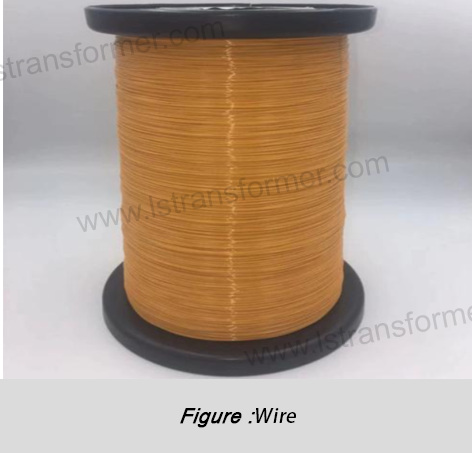
In transformer applications, the long-term benefits of halogen-free cables are particularly evident. Their higher operating temperature tolerance (tested per IEC 60216) ensures greater safety during overloads, while low smoke density (reduced by over 50%) provides more evacuation time in case of fire. Research by the University of London confirms that using halogen-free cables can extend "available evacuation time" from 2 minutes to over 15 minutes, a key reason why European critical infrastructure projects mandate their use.
3. Impact of Eco-Friendly Cables on Transformer Design and Application Solutions
Transformer manufacturers face several technical challenges when adopting halogen-free cables, but these can be turned into product advantages through scientific design:
● Insulation System Adjustments: Halogen-free cables typically have a dielectric constant (ε) 15–20% higher than PVC, requiring recalibration of electric field distribution. Using finite element analysis software (e.g., COMSOL), engineers can optimize winding structures to meet IEC 60076 standards. In practice, interlayer capacitance can be optimized using the formula:
C = (ε0*εr*A)/d
Where:
C = interlayer capacitance
0 = vacuum permittivity
r = relative permittivity
A = conductor surface area
d = insulation distance
Adjusting εr requires corresponding increases in d or decreases in A to maintain stable capacitance.
● Thermal Design Improvements:Halogen-free materials have a thermal conductivity (λ) about 0.3 W/mK higher than PVC, improving heat dissipation. Studies by France's EDF Group show that leveraging this property can reduce transformer temperature rise by 5–8K, extending lifespan or increasing overload capacity by 10%. Typical solutions include wider oil duct spacing and honeycomb-style radiators.
● Cost Optimization Strategies:Although halogen-free cables cost 20–30% more upfront, their lifecycle costs are lower. Data from Germany's TÜV certification shows that for a 500 kVA distribution transformer, the initial cost increases by €800 when using halogen-free cables, but the higher efficiency and lower disposal costs recover this investment within 5 years.
Cost Item | Traditional Transformer (€) | Halogen-Free Transformer (€) | Difference Analysis |
Material Cost | 12,000 | 14,500 | +20.8% |
Energy Loss Cost (10 years) | 8,200 | 7,500 | -8.5% |
Disposal Cost | 1,500 | 800 | -46.7% |
Total Cost (10 years) | 21,700 | 22,800 | +5.1% |
Environmental Compliance Savings | 0 | 2,000 | Fully offsets cost increase |
Table 2: Lifecycle Cost Analysis of Halogen-Free Transformers (500 kVA Example)
4. EU Market Access Requirements and Global Trends
Europe's environmental requirements for transformers are shifting from "encouraged" to "mandatory." According to the latest revision of EU 2019/1021 (POPs Regulation), starting in 2025, all electrical equipment entering the European market must meet halogen-free requirements.
However, implementation standards vary slightly across EU countries, requiring purchasers to pay close attention:
(1) Germany: Requires additional DIN VDE 0472 testing
(2) France: Requires NF EN 50575 certification.
(3) Nordic Countries: Demand stricter toxicity testing (NS11888 standard).
Globally, halogen-free requirements are becoming mainstream. While China's GB/T 19666-2019 and the U.S. UL 94V-0 standards do not fully ban halogens, they have established "low-halogen" tiers. Google search data shows that the global search volume for "halogen-free transformer" grows by 45% annually, with the fastest growth in Southeast Asia (78%), indicating that this requirement will soon become a baseline for international trade.
In Summary
European customers' preference for halogen-free cables stems from a combination of environmental regulations, technical advantages, and long-term cost benefits. For transformer manufacturers, early adoption of halogen-free technology is strategically significant:
(1) Product Development: Establish halogen-free product lines per IEC 62975 standards, focusing on the 200 kVA+ segment, where price sensitivity is lower but environmental performance is prioritized.
(2)like TÜV Eco Label or EPEAT registration.
(3)Marketing: Highlight eco-friendly attributes on websites and materials, using terms like "low-smoke zero-halogen (LSZH)."
The influence of environmental regulations will continue to deepen, and halogen-free requirements may soon extend to transformer oil, cores, and other components. Companies should form cross-departmental environmental compliance teams, monitor regulatory updates on platforms like EUR-Lex, and turn compliance challenges into market opportunities. As the President of the International Electrotechnical Commission stated: "Future electrical equipment will compete not only on efficiency but also on sustainability." This trend is already evident in Europe and is rapidly spreading worldwide.
Contact Us
LuShan, est.1975, is a Chinese professional manufacturer specializing in power transformers and reactors for50+ years. Leading products are single-phase transformer, three-phase isolation transformers,electrical transformer,distribution transformer, step down and step up transformer, low voltage transformer, high voltage transformer, control transformer, toroidal transformer, R-core transformer;DC inductors, AC reactors, filtering reactor, line and load reactor, chokes, filtering reactor, and intermediate,high-frequency products.
Our power transformers and reactors are widely used in 10 application areas: rapid transit, construction machinery, renewable energy, intelligent manufacturing, medical equipment, coal mine explosion prevention , excitation system, vacuum sintering(furnace), central air conditioning.
Know more about power transformer and reactor :www.lstransformer.com.
If you would like to obtain customized solutions for transformers or reactors, please contact us.
WhatsApp:+86 17267488565
Email:[email protected]