
 EN
EN
 FR
FR DE
DE ES
ES
Why Do Amorphous Alloy Transformers Require Flexible Lead Connections? — Stress Relief Solutions for Lead Wires
Why Do Amorphous Alloy Transformers Require Flexible Lead Connections?
— Stress Relief Solutions for Lead Wires
In the global power industry’s pursuit of higher energy efficiency, amorphous alloy transformers have emerged as a star technology for energy conservation and emission reduction, thanks to their ultra-low no-load losses (60%-80% lower than traditional silicon steel transformers). However, the unique physical properties of this revolutionary material also pose special challenges for transformer design and manufacturing, particularly in stress control at the lead wire connections. This article delves into why flexible connection solutions are essential, the scientific principles behind them, and practical implementation methods to enhance the reliability and longevity of power equipment.
Content
1. Core Challenge: The Combined Effects of Brittleness in Amorphous Alloy Strips and Operational Stress
The heart of an amorphous alloy transformer is its core, made of ultra-thin (approximately 25-30 microns) molten alloy rapidly cooled to form a non-crystalline metal strip (common grades include Metglas® 2605SA1). This process grants it exceptional soft magnetic properties but also inherent weaknesses:
(1)Extreme Brittleness:Amorphous alloy strips are highly hard (Vickers hardness of 900-1100 HV) and extremely brittle, with fracture toughness far lower than conventional silicon steel. Bending, twisting, or impact loads can easily initiate microcracks, leading to core fragmentation.
(2)Significant Magnetostriction: Under alternating magnetic fields, amorphous alloys exhibit pronounced magnetostriction (length changes can be several times greater than silicon steel). Fluctuations in magnetic flux density due to load variations cause the core to undergo continuous "breathing"-like cyclic expansion and contraction (at frequencies of 100Hz/120Hz and their harmonics).
(3)Operational Vibration and Noise: Magnetostriction combined with electromagnetic forces results in higher vibration acceleration (1.5-2 times that of traditional cores) and noise levels. Persistent mechanical vibration is a major contributor to fatigue failure at lead wire connection points.
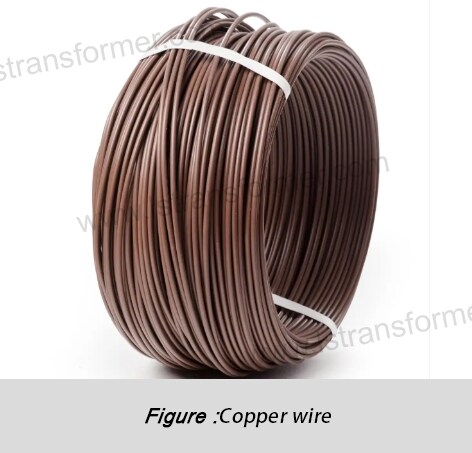
Disastrous Consequences of Rigid Lead Connections:
Directly welding or rigidly clamping the high- or low-voltage copper/aluminum lead wires (typically large in cross-section and stiff) to the amorphous core or clamps creates a stress concentration point:
(1)Stress Transmission Path: The core’s intense magnetostriction and vibration are directly transferred to the fragile amorphous strips via rigid connections.
(2)Cyclic Fatigue Damage:Alternating stresses at the strip edges or weld heat-affected zones can initiate fatigue cracks. Additionally, thermal expansion stresses from winding temperature changes add extra load through rigid leads.
(3)Failure Modes:Ultimately, this leads to core edge fragmentation, root weld fractures, insulation damage, or even inter-turn short circuits, resulting in costly field failures or factory repairs.
Property | Amorphous Alloy (Metglas® 2605SA1) | Silicon Steel (30P105) | Impact Difference |
Saturation Flux Density (T) | 1.56 | 2.03 | Higher excitation current or larger volume requirements |
Magnetostriction Coefficient (ppm) | 27 - 30 | 3 - 7 | Significantly increased vibration and noise |
Vickers Hardness (HV) | 900 - 1100 | 150 - 250 | Extreme brittleness, poor resistance to bending/impact |
Strip Thickness (mm) | 0.025 - 0.03 | 0.27 - 0.35 | More susceptible to mechanical damage |
Fracture Toughness (MPa√m) | ≈ 1 | ≈ 50 | Very low crack resistance |
Table 1: Key Physical Properties of Amorphous Alloy vs. Silicon Steel
2. Core Solution: Stress Relief Mechanisms of Flexible Connection Systems
The core design principle of flexible connections is to introduce a controlled "buffer layer" or "decoupling segment" between the fragile amorphous core/clamps and rigid lead conductors. This system effectively isolates and dissipates stress through multiple physical mechanisms:
(1)Vibration Isolation and Attenuation:
– Principle: Flexible components (e.g., corrugated copper tubes, multi-layer laminated soft copper sheets, or special braided wires) have low axial stiffness and high radial/bending flexibility. Their natural frequency is designed to be far below the core’s main vibration frequency (100Hz/120Hz) and winding electromagnetic force frequencies (typically twice the line frequency or higher).
– Effect: According to vibration transmission theory, when the natural frequency of the flexible segment is much lower than the excitation frequency, vibration transmissibility is significantly reduced, forming an effective low-frequency isolation barrier. High-frequency vibration energy is absorbed by internal damping (e.g., molecular friction, grain boundary slip) and converted into heat.
– Result: Optimized flexible connections can reduce vibration acceleration at lead wire roots by over 60%.
(2)Thermal Expansion Stress Compensation:
– Principle: Load changes cause winding temperature fluctuations. The thermal expansion coefficient of copper/aluminum conductors (α ≈ 16-23 × 10⁻⁶ /°C) is much higher than that of core materials (amorphous alloy α ≈ 8-12 × 10⁻⁶ /°C, steel clamps α ≈ 11-13 × 10⁻⁶ /°C).
– Effect: The flexible segment’s axial compliance allows free expansion/contraction, absorbing length differences (ΔL) due to temperature variations and preventing thermal stress buildup (stress σ ≈ E · α · ΔT). This is critical for high-capacity transformers or applications with severe temperature swings (e.g., solar/wind power).
(3)Shock Load Buffering (Installation/Transport):
– Principle: Flexible elements extend the impact duration (Δt) under sudden forces (e.g., transport shocks, installation collisions), reducing peak impact force (F) per the momentum theorem (F · Δt = m · Δv).
– Effect: Protects brittle amorphous core strips and lead wire welds from instantaneous overload damage.
Stress Type | Affected Components | Flexible Connection Mechanism | Outcome | Standard Reference |
Magnetostriction Vibration | Core edges, lead welds | Low stiffness isolation & high damping | >60% vibration reduction, fatigue prevention | IEEE C57.100 (Vibration Test) |
Electromagnetic Vibration | Lead roots, insulation | Decouples high-frequency vibration paths | Reduces insulation wear, extends lifespan | IEC 60076-16 (Sound Level Test) |
Thermal Expansion Stress | Lead welds, clamp joints | Free axial expansion compensates ΔL | Eliminates stress concentration | IEEE C57.91 (Thermal Aging) |
Shock Loads (Transport) | Core structure, leads | Elastic deformation buffers peak force | Ensures safe transport/installation | IEC 60076-11 (Transport Test) |
Noise Transmission | Overall acoustic performance | Blocks solid-borne noise paths | Achieves lower noise levels | IEC 60076-10 (Noise Limits) |
Table 2: Key Advantages of Flexible Connection Solutions
3. Implementation of Flexible Connections and Technical Considerations
●Corrugated Tube Expansion Joints:
– Structure: Thin-walled corrugated tubes made of oxygen-free copper (OFC) or stainless steel, welded to fixed flanges and conductors.
– Advantages: Excellent axial compensation (±10mm+), high temperature/corrosion resistance, long lifespan (10,000+ cycles).
– Applications: Ideal for high-current, large-temperature-range environments (e.g., wind power transformers).
– Design: Must calculate current-carrying capacity, pressure (oil-immersed environments), and fatigue life (Goodman curve). Optimize corrugation shape, wall thickness, and wave count.
●Multi-Layer Soft Copper Laminations:
– Structure: Stacked thin electrolytic copper foils (0.1mm-0.3mm), precision-punched, cleaned, and bonded at ends via brazing or bolting.
– Advantages: Uniform current distribution, high radial flexibility, cost-effective.
– Applications: Common in low/medium-voltage distribution transformers.
– Design: Ensure proper insulation between layers, anti-loosening bolts, and secure fastening to prevent vibration-induced wear.
●Special Braided Wires (Litz Wire):
– Structure: Bundles of fine, insulated copper wires woven together.
– Advantages: Extreme flexibility, low skin effect, ideal for high-frequency applications.
– Applications: Used in high-frequency or extreme-bend scenarios, though lower in current capacity.
– Design: Require external protection (e.g., heat shrink tubing) against mechanical damage.
●Key Installation Guidelines for Flexible Connections:
(1)Freedom of Movement: Ensure adequate space for free deformation (expansion, bending) between fixed points. Avoid taut installations.
(2)Bend Radius Control: Adhere to minimum bend radius (typically ≥10× thickness) to prevent material fatigue.
(3)Insulation Protection: Reliable insulation (e.g., molded rubber, high-quality tape) must meet IEC 60076-3 or IEEE C57.12.00 standards.
(4)Mechanical Fixing: Use vibration-resistant clamps and elastic washers to prevent displacement or wear.
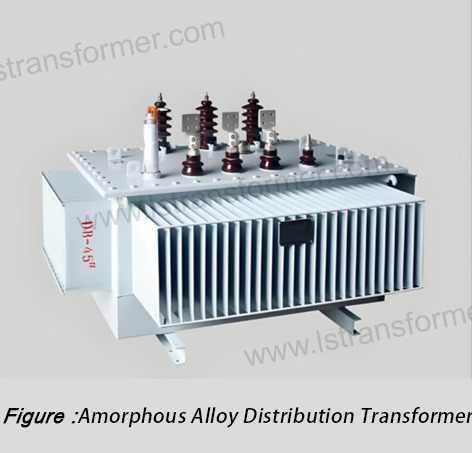
4. Comprehensive Benefits of Flexible Connections
●Enhanced Reliability:
Prevents stress-induced core fragmentation and lead wire failures, ensuring the transformer’s designed lifespan (25-30 years). Critical for remote (e.g., off-grid) or high-importance installations (e.g., hospitals, data centers).
●Improved Noise Control:
Reduces solid-borne noise transmission from core to tank, helping meet stringent noise standards (e.g., IEC 60076-10) for urban areas.
●Long-Term Cost Savings:
While flexible connections add 1%-3% to initial costs, they drastically reduce field repairs, downtime, and replacement expenses. Coupled with amorphous transformers’ energy savings (payback in 1-3 years), the ROI is exceptional.
In Summary
Amorphous alloy transformers represent the future of high-efficiency power distribution. However, their brittle cores demand more than simple electrical connections—they require robust stress management. Flexible connection solutions, through vibration isolation, thermal stress compensation, and shock buffering, provide indispensable mechanical protection.
Selecting and correctly implementing optimized flexible connections, while adhering to technical standards, is key to unlocking the full potential of amorphous transformers—ensuring decades of reliable, maintenance-free operation. Leading manufacturers (e.g., Siemens Energy, Hitachi ABB, Schneider Electric) standardize these solutions in premium products, continually advancing their performance. For users prioritizing quality, efficiency, and reliability, understanding this critical detail is paramount.
Contact Us
LuShan, est.1975, is a Chinese professional manufacturer specializing in power transformers and reactors for50+ years. Leading products are single-phase transformer, three-phase isolation transformers,electrical transformer,distribution transformer, step down and step up transformer, low voltage transformer, high voltage transformer, control transformer, toroidal transformer, R-core transformer;DC inductors, AC reactors, filtering reactor, line and load reactor, chokes, filtering reactor, and intermediate,high-frequency products.
Our power transformers and reactors are widely used in 10 application areas: rapid transit, construction machinery, renewable energy, intelligent manufacturing, medical equipment, coal mine explosion prevention , excitation system, vacuum sintering(furnace), central air conditioning.
Know more about power transformer and reactor :www.lstransformer.com.
If you would like to obtain customized solutions for transformers or reactors, please contact us.
WhatsApp:+86 13787095096
Email:[email protected]