
 EN
EN
 FR
FR DE
DE ES
ES
Comprehensive Guide to Transformer Startup Procedures in -30°C Extreme Cold Environments: Ensuring Safe and Reliable Operations
Comprehensive Guide to Transformer Startup Procedures in -30°C Extreme Cold Environments: Ensuring Safe and Reliable Operations
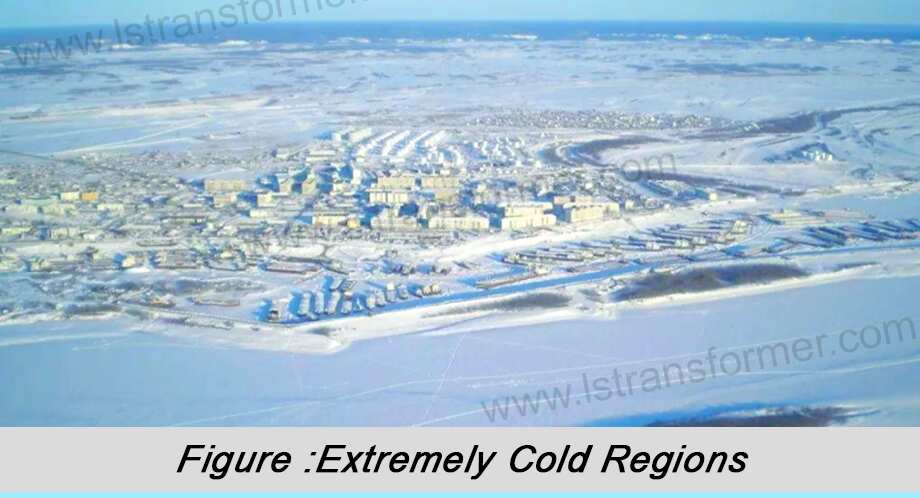
When temperatures plummet to -30°C, starting a standard transformer becomes a formidable challenge. Risks include insulating oil thickening like honey, winding contraction leading to structural stress, and metal components becoming brittle due to low-temperature brittleness. These issues can range from equipment damage to severe electrical accidents. This guide provides an in-depth analysis of transformer startup protocols in extreme cold, ensuring safe and reliable operations in frigid regions such as Canada, Scandinavia, and Russia.
Content
1. Core Threats of Extreme Cold to Transformer Startup: Mechanisms and Consequences
● Insulating Oil Flow Crisis and Heat Dissipation Failure
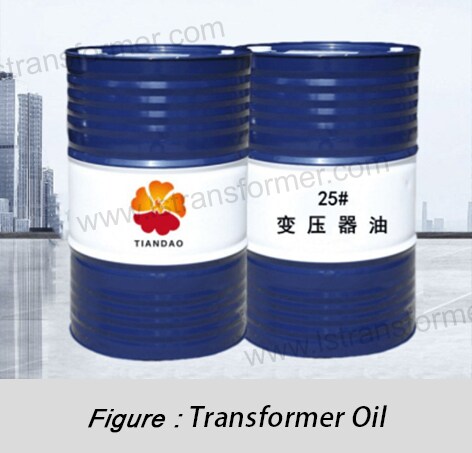
(1)Phenomenon and Mechanism: At -30°C, conventional transformer oil (e.g., No. 10 oil) becomes highly viscous, nearing a semi-solid state. This is due to reduced molecular motion and increased intermolecular forces under low temperatures.
(2)Direct Consequence: Thickened oil cannot circulate effectively between windings and radiators, leading to localized hot spots.
(3)Cascading Risks: Localized overheating accelerates insulation material degradation (e.g., paperboard, crepe paper), reducing dielectric strength and potentially causing inter-turn or inter-layer short circuits. Temperature monitoring shows stagnant oil zones can be 30°C hotter than normal areas.
● Winding and Structural Stress Damage
(1)Phenomenon and Mechanism: Copper/aluminum windings and steel cores contract significantly at low temperatures (copper’s linear expansion coefficient: ~17×10⁻⁶/°C; steel: ~12×10⁻⁶/°C). Differential contraction rates between materials or parts (e.g., inner vs. outer windings) create internal stress.
(2)Direct Consequence: Stress concentration distorts windings, displaces insulation blocks, or loosens connections.
(4)Cascading Risks: Mechanical damage becomes irreversible, compromising long-term reliability.
● Low-Temperature Brittleness of Materials
(1)Phenomenon and Mechanism:Metals (especially certain steels) lose ductility and become brittle below their "ductile-to-brittle transition temperature."
(2)Direct Consequence: Critical components (tanks, flanges, welds) may fracture under normal mechanical loads (e.g., electromagnetic forces).
(3)Cascading Risks: Structural failures can cause oil leaks, internal short circuits, or catastrophic disintegration.
2. Detailed Safety Protocols for Transformer Startup at -30°C
● Oil Selection and Management: Ensuring Flowability
(1)Standards:Use ASTM D3487 (IEC 60296)-compliant oils.
(2)Key Parameter – Pour Point: For -30°C, select oils with a pour point ≤-45°C (e.g., ultra-low-temperature naphthenic No. 45 oil or synthetic ester oil).
(3)Testing:Regular oil tests (ASTM D97/IEC 61868) validate performance.
Oil Type | Min. Operating Temp. (°C) | Pour Point (≤°C) | Viscosity @40°C (mm²/s) | Standards | Notes |
Standard Naphthenic (No. 10) | >-10 | -30 | ≤11.0 | ASTM D3487/IEC 60296 | Unsuitable for extreme cold |
Naphthenic (No. 25) | -20 to -30 | -45 | ≤12.0 | ASTM D3487/IEC 60296 | Common for cold climates |
Naphthenic (No. 45) | -30 to -45 | -60 | ≤15.0 | ASTM D3487/IEC 60296 | Ultra-low-temperature oil |
Silicone Oil | -40 to -50 | -55 to -65 | ≤50.0 | - | Specialty use, high cost |
Synthetic Ester Oil | -50 to -60 | -60 to -70 | ≤35.0 | IEC 61099/IEEE C57.147 | Eco-friendly, superior performance, costly |
Table 1: Low-Temperature Transformer Oil Comparison (ASTM/IEC Standards)
● Preheating and Controlled Thermal Cycling
– Requirement: Never start a cold transformer at full load. Preheat until key parts (windings, oil) reach >0°C (ideally >+5°C).
– Methods:
(1)Short-Circuit Heating: Apply 10–30% rated voltage to the HV side with LV shorted. Limit current to 50–70% of rated value; keep temperature rise <5°C/hour.
(2)Hot Oil Circulation:Use external heaters to pump and warm oil (60–70°C) before reintroducing it to the tank.
● Gradual Loading and Temperature Monitoring
– Requirement: Incrementally increase load while monitoring temperatures (top oil, hotspot).
– Procedure:
(1)Initial Load:25–30% rated load for 30–60 minutes.
(2)Step Increases:Raise load by 20–25% increments, allowing 30+ minutes between steps.
(3)Final Load:Reach 90–100% after stability confirmation.
Phase | Goal | Load (% Rated) | Duration (min) | Key Metrics | Target Outcome |
Preheating | Core warming | 0% (short-circuit/oil heating) | 90–360+ | Winding/oil temp. (>0°C), rise rate (<5°C/h) | Uniform temperature rise |
Initial Load | Verify oil flow | 25–30% | 30–60 | Top oil temp., radiator ΔT (>15°C) | Stable oil circulation |
Increment 1 | Increase thermal load | 50% | 30–60 | Temp. rise rate (<10°C/h), hotspot | Improved circulation |
Increment 2 | Near-normal operation | 75% | 30–60 | All temp. parameters | Stabilized performance |
Full Load | Target operation | 90–100% | Continuous | All operational metrics | Rated operation |
Table 2: Step-by-Step Transformer Startup in -30°C Environments
● Preventive Maintenance and Design Adaptations
– Maintenance:
(1)Oil Testing:Perform dissolved gas analysis (DGA) per IEC 60567/ASTM D3612 to detect faults (H₂, CH₄, C₂H₂).
(2)Seal Checks: Inspect gaskets, valves, and flanges for leaks.
(3)Heater Validation: Test oil/winding heaters (IEEE C57.91/IEC 60076-7).
– Design:
(1)Low-Temperature Materials:Use ASTM A20/EN 10225-certified steels with sub-zero toughness.
(2)Redundant Heating: Install backup heaters for critical sites.
(3)Enhanced Insulation:Opt for Nomex® or similar cold-resistant materials.
3. Thermal Balance Equation in Cold Environments
The core principle is balancing heat generation (P_loss) and dissipation (P_dissipated):
(1)P_loss = Copper losses (I²R) + Iron losses (constant) + Stray losses.
(2)P_dissipated depends on oil viscosity and radiator efficiency.
Challenge at -30°C:High oil viscosity reduces P_dissipated, causing dangerous heat accumulation if loaded prematurely.
Solution: Preheating restores oil flow; gradual loading ensures P_loss ≤ P_dissipated at all times.
In Summary
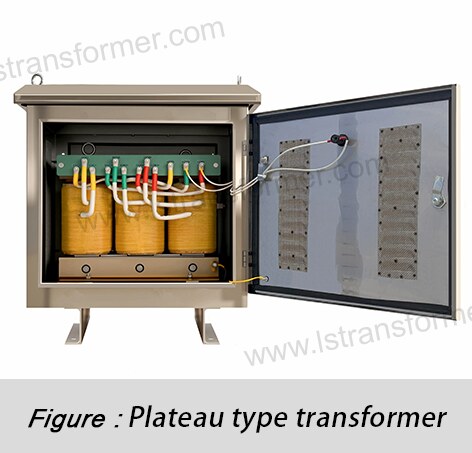
Starting transformers at -30°C demands strict adherence to IEC 60076, IEEE C57, and ASTM standards. From selecting pour point-compliant oils to controlled preheating, incremental loading, and real-time monitoring—every step is critical. By following this guide, operators can ensure safe startups and reliable power delivery in the harshest climates.
For customized -30°C transformer startup solutions or IEC/IEEE-certified products, contact our global technical support team.
Contact Us
LuShan, est.1975, is a Chinese professional manufacturer specializing in power transformers and reactors for50+ years. Leading products are single-phase transformer,three-phase isolation transformers,electrical transformer,distribution transformer, step down and step up transformer, low voltage transformer, high voltage transformer, control transformer, toroidal transformer, R-core transformer;DC inductors, AC reactors, filtering reactor, line and load reactor, chokes, filtering reactor, and intermediate,high-frequency products.
Our power transformers and reactors are widely used in 10 application areas: rapid transit, construction machinery, renewable energy, intelligent manufacturing, medical equipment, coal mine explosion prevention , excitation system, vacuum sintering(furnace), central air conditioning.
Know more about power transformer and reactor :www.lstransformer.com.
If you would like to obtain customized solutions for transformers or reactors, please contact us.
WhatsApp:+86 17267488565
Email:[email protected]