
 EN
EN
 FR
FR DE
DE ES
ES
Copper-Clad Aluminum Wire in Transformers:Can It Replace Pure Copper? What Are the Cautions for Specific Applications?
Copper-Clad Aluminum Wire in Transformers:Can It Replace Pure Copper? What Are the Cautions for Specific Applications?
Driven by the dual goals of global energy efficiency improvement and cost optimization, the transformer manufacturing industry is actively exploring new material applications. Copper-clad aluminum (CCA) wire, a composite material that combines cost advantages with conductive performance, has garnered significant attention in transformer design in recent years. According to standards such as IEC 60317-32 and ASTM B566, CCA wire has established a complete regulatory framework. However, its suitability in transformers remains controversial. This article provides an in-depth analysis of the technical characteristics of CCA wire, explores its feasibility as a replacement for pure copper wire, and highlights key scenarios where caution is required. It serves as a comprehensive reference for transformer designers and procurement decision-makers.
Content
1. Basic Properties and Advantages of Copper-Clad Aluminum Wire
The core structure of CCA wire consists of an aluminum core coated with a copper layer through metallurgical bonding, effectively combining the complementary properties of both metals. Microscopically, the copper layer typically accounts for 10-30% of the cross-sectional area and is firmly bonded to the aluminum core via cold welding or thermal diffusion processes, achieving an interfacial shear strength of over 60 MPa. This composite structure offers the following advantages:
(1)Balanced Conductivity: While aluminum’s conductivity is only 61% that of copper (based on IACS), the skin effect in high-frequency applications causes current to concentrate on the conductor’s surface. CCA wire leverages this phenomenon, allowing current to flow primarily through the highly conductive copper layer. According to Maxwell’s equations, the skin depth (δ) is calculated as:
δ = √(2ρ/ωμ)
Where:
ρ= resistivity
ω= angular frequency
μ= permeability
At 1 kHz, the skin depth of copper is approximately 2.1 mm, meaning that in properly sized CCA wire, most current flows through the copper layer, significantly reducing overall AC resistance.
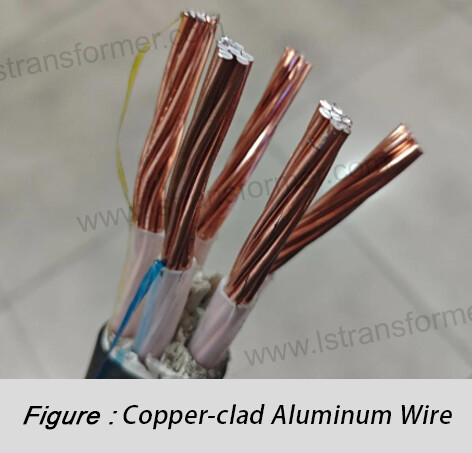
(2) Improved Mechanical Properties:Pure aluminum wire suffers from insufficient mechanical strength (70-100 MPa tensile strength), whereas CCA wire achieves 150-200 MPa. The copper layer not only enhances strength but also restrains plastic deformation in the aluminum core. Additionally, the copper layer improves solderability, eliminating the need for special flux in aluminum wire soldering.
(3) Cost and Weight Savings:Current international market prices (LME data) show copper is about 3.5 times more expensive than aluminum. Using CCA wire can reduce material costs by 30-50%. Moreover, aluminum’s density (2.7 g/cm³) is only 30% that of copper, reducing transformer weight by 20-25%—a critical advantage for large power transformers in transport and installation.
Property | CCA Wire (15% Cu Layer) | Pure Copper Wire | Testing Standard |
DC Resistivity (20°C) | 2.65×10⁻⁸ Ω·m | 1.72×10⁻⁸ Ω·m | IEC 60468 |
Tensile Strength | 180 MPa | 220 MPa | ASTM B558 |
Density | 3.32 g/cm³ | 8.96 g/cm³ | ISO 1183 |
Material Cost | ~40% lower | Benchmark | LME Market Prices |
Table 1: Comparison of CCA Wire and Pure Copper Wire Properties
2. Suitable Applications for CCA Wire in Transformers
CCA wire performs well in specific transformer types, but its suitability depends heavily on operating conditions and design requirements. Based on IEEE Std C57.18.10 and IEC 60076 standards, along with practical case studies, the following scenarios are ideal for CCA wire:
(1) High-Frequency Electronic Transformers
Switch-mode power transformers (e.g., PC power supplies, LED drivers) typically operate at 20 kHz–200 kHz. At these frequencies, skin depth reduces to 0.15–0.5 mm, meaning over 90% of current flows through the copper layer in 1 mm diameter CCA wire. Tests show that at 100 kHz, properly designed CCA windings have only 8–12% higher losses than pure copper, but costs are 35% lower. Companies like TDK and Murata have adopted this technology in some high-frequency transformers.
(2) Low-Voltage Distribution Transformers
For 400V or lower distribution transformers, where efficiency requirements are moderate (η ≥ 95%) but cost sensitivity is high, CCA wire offers excellent value. This is especially true for applications with load factors below 50%. Studies by Eskom (South Africa) show that using CCA wire in transformers below 630 kVA reduces total ownership cost (TOC) by 18–22% over 15 years, thanks to material savings and lower transport/installation costs.
(3) Temporary or Mobile Power Equipment
In weight-sensitive applications like portable transformers or mobile substations, CCA wire’s lightweight advantage shines. The U.S. military’s MIL-STD-704F standard confirms that reducing weight by 1 kg saves about $150 in transport fuel costs. Since such equipment is typically used for short durations (3–5 years), long-term aluminum creep is not a concern.
(4)Tropical Climate Applications
In high-temperature, high-humidity environments (e.g., Southeast Asia, Africa), CCA wire outperforms pure copper in corrosion resistance. The galvanic corrosion potential difference between copper and aluminum (0.2V) is lower than that between copper and oxides (0.4V). Field tests by TNB Malaysia show that CCA transformers in coastal areas exhibit 30–40% slower winding corrosion rates than pure copper.
3. Key Scenarios Requiring Caution and Technical Limitations
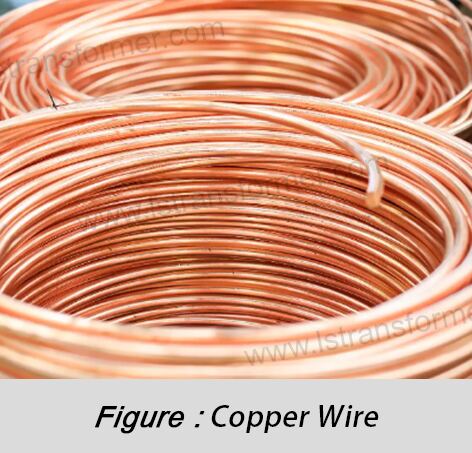
Despite its advantages, CCA wire has limitations in demanding conditions, where improper use may lead to performance degradation or premature failure. According to CIGRE TB 642, the following scenarios require special caution:
● High-Voltage, High-Capacity Power Transformers
Transformers rated ≥110 kV or ≥50 MVA demand exceptional mechanical strength and long-term stability. CCA wire faces three challenges here:
(1)Aluminum creep causes winding deformation under prolonged stress—Larson-Miller calculations show aluminum’s creep is 3–5× higher than copper’s after 100,000 hours at 80°C.
(2)Short-circuit currents (up to 25× rated current) may exceed CCA wire’s capacity, which is typically 15–20% lower than pure copper.
(3)Thermal cycling induces micro-cracks at the copper-aluminum interface, increasing contact resistance over time.
● Extreme Temperature Environments
Arctic (-40°C) or desert (>55°C) conditions accelerate CCA wire degradation. Aluminum’s higher resistivity temperature coefficient (0.00429/°C vs. copper’s 0.00393/°C) causes greater resistance fluctuations. High temperatures also promote brittle CuAl₂ intermetallic formation. Sintef (Norway) tests show CCA wire’s fatigue life is only 1/3 of pure copper under -50°C to +80°C cycling.
● High Harmonic Distortion Grids
Industrial grids with THD > 15–20% introduce additional eddy losses. Due to the aluminum core, CCA wire’s eddy loss coefficient (kₑ) is 1.3–1.8× higher than copper’s:
P_eddy = kₑ·(f·Bₘ·d)²/ρ
Where:
f=frequency
Bₘ=flux1density
d = conductor size
For THD > 8%, CCA transformers may exceed temperature limits.
● High Overload Demand Applications
CCA wire’s thermal capacity is ~60% lower than copper, causing faster temperature rise during overloads. Hydro-Québec (Canada) tests show CCA transformers heat 40% faster at 150% load, limiting their use in industrial settings requiring frequent overloads.
Risk Factor | Risk Level | Key Parameters | Mitigation Measures |
Long-Term Mechanical Stress | High | Aluminum creep rate, interface strength | Limit to ≤25 MVA capacity |
Thermal Cycling | Medium-High | Thermal expansion mismatch | Avoid environments with >50°C daily swings |
Harmonic Content | Medium | Eddy loss coefficient | Derate by 15% for THD > 5% |
Short-Circuit Current | High | Yield strength, tensile strength | Increase short-circuit impedance by 10% |
High Overload Needs | Medium | Thermal time constant | Design overload capacity at 70% of copper |
Table 2: Risk Assessment for CCA Wire in Different Scenarios
4. Techno-Economic Analysis for Replacement Decisions
Deciding whether to replace pure copper with CCA wire requires a systematic cost-benefit analysis. The International Transformer Committee recommends evaluating:
● Lifecycle Cost Analysis
Beyond material costs, consider:
(1)Energy loss costs due to higher resistance:
E_loss = (I²·R_CCA - I²·R_Cu)·LF·H·CE
Where
LF = load factor
H = operating hours
CE = electricity cost.
(2)Maintenance costs (CCA transformers need more frequent inspections).
(3)End-of-life scrap value (copper’s recycling value is 2–3×aluminum’s).
● Efficiency vs. Environmental Trade-offs
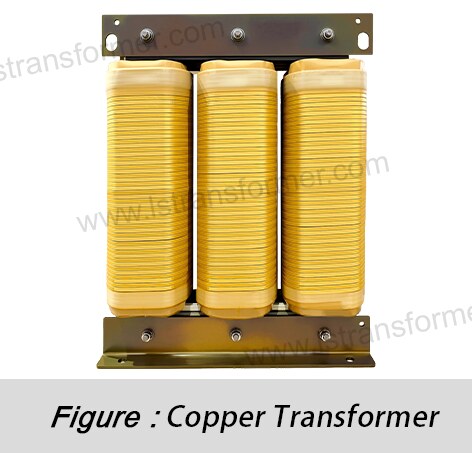
While CCA transformers are 0.3–0.8% less efficient, their production energy (~15 kWh/kg) is far lower than copper’s (~50 kWh/kg). The EU Ecodesign Directive 548/2014 suggests accepting minor efficiency losses for lower carbon footprints in manufacturing.
● Reliability Engineering (FMEA)
Evaluate:
(1)Difficulty in detecting copper-aluminum interface failures.
(2)Severity of failure consequences.
(3)Compatibility with existing protection systems.
Recommendation: Use CCA wire cautiously in systems with N-1 redundancy.
● Compliance with Standards
Standards vary by region:
(1)IEEE Std C57.18.10 (North America) permits CCA wire under specific conditions.
(2)GB/T 1094.6 (China) requires additional type testing.
(3)Export products must meet DNV GL, UL, or other certifications.
In Summary
CCA wire shows strong potential as a replacement for pure copper in small-to-medium transformers, high-frequency applications, and cost-sensitive projects. However, its use must be based on rigorous techno-economic assessments. Key recommendations:
(1)Prioritize CCA wire for:
– 1 kVA–2.5 MVA distribution transformers.
– Electronic transformers operating >10 kHz.
(2)Stick to pure copper for:
– High-voltage (≥66 kV), high-capacity (≥50 MVA), or high-overload (>120%) applications.
– Extreme environments.
(3)Design adjustments for CCA wire:
– Increase cooling margins by 10–15%.
– Use low-thermal-resistance insulation.
– Reinforce winding supports to compensate for lower mechanical strength.
(4)Maintenance protocols for CCA transformers:
– Check contact resistance every 2 years.
– Inspect winding tightness every 5 years.
– Monitor hotspot temperatures (recommend fiber-optic sensors).
As CCA metallurgy and interface technologies advance (e.g., nanocrystalline copper layers, gradient composites), performance barriers in high-end transformers may be overcome. Designers should monitor updates to ASTM B976/B976M standards and validate new solutions to balance reliability and cost-effectiveness.
Contact Us
LuShan, est.1975, is a Chinese professional manufacturer specializing in power transformers and reactors for50+ years. Leading products are single-phase transformer, three-phase isolation transformers,electrical transformer,distribution transformer, step down and step up transformer, low voltage transformer, high voltage transformer, control transformer, toroidal transformer, R-core transformer;DC inductors, AC reactors, filtering reactor, line and load reactor, chokes, filtering reactor, and intermediate,high-frequency products.
Our power transformers and reactors are widely used in 10 application areas: rapid transit, construction machinery, renewable energy, intelligent manufacturing, medical equipment, coal mine explosion prevention , excitation system, vacuum sintering(furnace), central air conditioning.
Know more about power transformer and reactor :www.lstransformer.com.
If you would like to obtain customized solutions for transformers or reactors, please contact us.
WhatsApp:+86 13787095096
Email:[email protected]