
 EN
EN
 FR
FR DE
DE ES
ES
Five Key Environmental Challenges for Offshore Wind Transformers and Their Solutions
Five Key Environmental Challenges for Offshore Wind Transformers and Their Solutions
In the global shift towards renewable energy, offshore wind power has become a strategic focus due to its abundant resources and stable power generation. However, compared to onshore wind turbines, offshore wind transformers operate in truly "extreme" conditions, posing unprecedented challenges to equipment reliability. This article explores the harsh environmental challenges faced by offshore wind transformers and effective strategies to overcome them.
Content
1. Salt Mist Corrosion: The Pervasive "Metal Killer"
•Challenge: High concentrations of salt mist (containing sodium chloride, etc.) carried by sea air permeate and settle on transformer surfaces.
•Damage Mechanism:
–Chloride ions from the salt penetrate surface oxide layers.
–These ions reach the base metal, destroy the passive film, create micro-cells, and accelerate electrochemical corrosion (e.g., anodic reaction: Fe→Fe²⁺+ 2e⁻), leading to rust.
–Consequences:Weakened metal structures (tank, radiators, fasteners), potential perforation and oil leaks; increased contact resistance in conductive parts (terminals, connectors), causing overheating or melting; contamination of insulation surfaces, reducing dielectric strength.
•Solutions & Principles:
–Heavy-Duty Anti-Corrosion Coating System:Multi-layer coatings are used. Principle: Zinc-rich primer provides cathodic protection; epoxy intermediate coat acts as a dense barrier; polyurethane topcoat offers weather and UV resistance. Total Dry Film Thickness is typically ≥ 250µm.
–Stainless Steel/Copper Alloy Components:Critical parts use corrosion-resistant materials like 316L stainless steel. Principle: High chromium content forms a stable passive layer (Cr₂O₃).
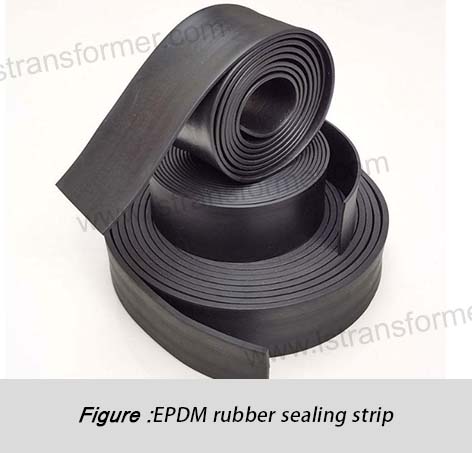
–Enhanced Sealing Design:Enclosures with multiple seals achieve high IP ratings. Principle: Physically blocks salt mist ingress.
2. High Humidity and Condensation: The "Invisible Destroyer" of Insulation
•Challenge: Offshore humidity consistently exceeds 80%, and temperature fluctuations easily cause internal condensation.
•Damage Mechanism:
–Moisture is absorbed by insulating materials.
–Absorbed water increases material conductivity, lowering resistivity and increasing the dissipation factor.
–Partial Discharge intensifies in damp conditions.
–Consequences:Accelerated insulation aging, heightened risk of thermal breakdown, eventual insulation failure.
•Solutions & Principles:
–Vacuum Pressure Impregnation with Epoxy Resin:Treats windings thoroughly. Principle: Removes air/moisture and fills all gaps, creating a seamless, hydrophobic insulation layer.
–Intelligent Temperature & Humidity Control:Heaters with dehumidification functions are installed. Principle: Sensors monitor conditions, activating heaters to raise internal temperature above dew point or starting dehumidifiers.
–Hydrophobic Sealants:Applied at potential moisture entry points. Principle: Forms a water-repellent barrier.
3. Temperature Extremes and Cooling Challenges: The "Accelerator" of Material Aging
•Challenge: Significant daily/seasonal temperature swings combined with poor heat dissipation at sea compared to land.
•Damage Mechanism:
–Thermal stress occurs due to differing coefficients of thermal expansion.
–Insulation aging rate increases exponentially with temperature.
–Consequences: Seal fatigue and leaks; embrittlement/cracking of insulation; mechanical deformation; reduced lifespan.
•Solutions & Principles:
–Enhanced Cooling Design:
•Optimized internal oil pathways increase cooling surface area and reduce flow resistance.
•Larger radiators or Forced Oil Forced Air cooling compensate for weak natural convection.
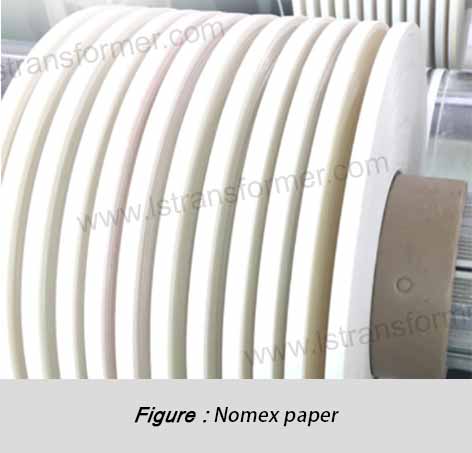
–Wide-Temperature-Range Materials: Use high glass transition temperature transition temperature insulating materials and low-temperature resistant sealing materials. Principle: Stability at high temps and elasticity in cold.
–Temperature Monitoring & Alarms:Pt100 sensors monitor hotspot temperatures. Principle: Enables real-time monitoring, load assessment, and early warnings.
4. Mechanical Vibration and Shock: The "Cause" of Structural Fatigue
•Challenge: Continuous vibration from turbine operation, wave impacts, and occasional shocks from vessel collisions.
•Damage Mechanism:
–Cyclic stress is induced in components.
–Material fatigue can occur over time.
–Loosening and displacement of parts happen.
–Consequences:Structural cracks, oil leaks, broken leads, short circuits, connection failures, internal discharge.
•Solutions & Principles:
–Robust Structural Design:
•Modal Analysis ensures natural frequencies avoid major excitation frequencies, preventing resonance.
•Anti-vibration/shock design uses reinforced structures.
–Advanced Fastening & Clamping:Utilizes locknuts, disc springs, and multi-point winding compression. Principle: Maintains preload and prevents loosening/displacement.
–Flexible Connections & Dampers:Soft connections for high-current leads and shock absorbers at the base. Principle: Absorb vibrational energy.
5. Difficult Maintenance and Long-Life Demand: The "Ultimate Test" of Reliability
•Challenge: Poor accessibility, short maintenance windows, very high costs, and project life requirements exceeding 25 years.
•Damage Mechanism:
–Fault consequences are severe due to high downtime costs.
–Preventive maintenance is limited.
–Consequence: Demands extremely high initial quality, design margins, and condition monitoring.
•Solutions & Principles:
–Design Redundancy & Margins:Lower operating flux density and current density are used. Principle: Reduces losses and temperatures, slowing aging.
–Advanced Online Monitoring & Diagnostics:
•Dissolved Gas Analysis monitors key gas concentrations and generation rates to diagnose faults.
•High-Frequency Partial Discharge Monitoring assesses insulation health.
•Core Grounding Current Monitoring detects core faults.
•Data is transmitted via IoT gateways for remote expert analysis and alerts.
–Modular & Maintainable Design:Key components are modular. Principle: Allows for faster replacement, reducing offshore downtime.
Conclusion
Offshore wind transformers are the "heart" of a wind farm's safe and efficient operation. Facing multiple challenges—salt mist, high humidity, condensation, temperature extremes, vibration, and harsh maintenance conditions—requires multidisciplinary innovation integrating materials science, insulation technology, structural design, and intelligent monitoring. Strict adherence to international standards like IEC 60076-11 during design, manufacturing, and testing is crucial for creating reliable equipment capable of withstanding extreme marine environments and meeting 25+ year lifespans.
As offshore wind moves further out to sea and increases in capacity, demands for reliability, power density, and intelligence will continue to rise. Ongoing technical development is key to supporting the global green energy transition.
Contact Us
LuShan, est.1975, is a Chinese professional manufacturer specializing in power transformers and reactors for50+ years. Leading products are single-phase transformer, three-phase isolation transformers,electrical transformer,distribution transformer, step down and step up transformer, low voltage transformer, high voltage transformer, control transformer, toroidal transformer, R-core transformer;DC inductors, AC reactors, filtering reactor, line and load reactor, chokes, filtering reactor, and intermediate,high-frequency products.
Our power transformers and reactors are widely used in 10 application areas: rapid transit, construction machinery, renewable energy, intelligent manufacturing, medical equipment, coal mine explosion prevention , excitation system, vacuum sintering(furnace), central air conditioning.
Know more about power transformer and reactor :www.lstransformer.com.
If you would like to obtain customized solutions for transformers or reactors, please contact us.
WhatsApp:+86 13787095096
Email:[email protected]