
 EN
EN
 FR
FR DE
DE ES
ES
What Is the Typical Protection Rating for Outdoor Reactors?
What Is the Typical Protection Rating for Outdoor Reactors?
In global power infrastructure, outdoor reactors are key equipment for reactive power compensation and short-circuit current limitation. Their protection rating directly affects long-term reliability and operational safety. This article explores international standards for outdoor reactor protection ratings, selection criteria, and implementation methods to provide comprehensive technical guidance for power engineers, procurement decision-makers, and maintenance personnel.
Content
1. Understanding the International Standard for Protection Ratings – IP Code
The International Electrotechnical Commission (IEC) established the IP code as a globally recognized standard for evaluating the protective capability of electrical enclosures. This standard is widely adopted by major organizations such as IEEE and ANSI. The IP code consists of two characteristic digits:
•The first digit indicates protection against solid objects (including dust).
•The second digit indicates protection against liquids (primarily water).
For outdoor reactors, the typical requirement isIP54 or higher,due to variable and harsh outdoor conditions. Here’s what IP54 means:
•First digit "5": Dust protected – ingress of dust is not entirely prevented, but it shall not interfere with satisfactory operation.
•Second digit "4": Water resistant against splashing from any direction.
IP Rating | Dust Protection | Water Protection | Typical Application Scenario |
IP54 | Limited dust protection | Splash water resistance | General outdoor areas with some shelter |
IP55 | Limited dust protection | Low-pressure water jets | Outdoor locations exposed to rain |
IP65 | Totally dust-tight | Low-pressure water jets | Dusty or coastal regions |
IP66 | Totally dust-tight | Strong water jets | Harsh industrial environments or offshore areas |
IP67 | Totally dust-tight | Temporary immersion | Areas prone to flooding or heavy rain |
Table 1: Common IP Ratings for Outdoor Electrical Equipment
It is important to note that in North America, theNEMA 250 standard is more commonly used. Correspondence between NEMA and IP codes should be noted—for example, NEMA 3R roughly corresponds to IP54, while NEMA 4X corresponds to IP66.
2. Four Key Environmental Factors Influencing Protection Level Selection
● Climate Conditions & Their Impact on Protection Levels
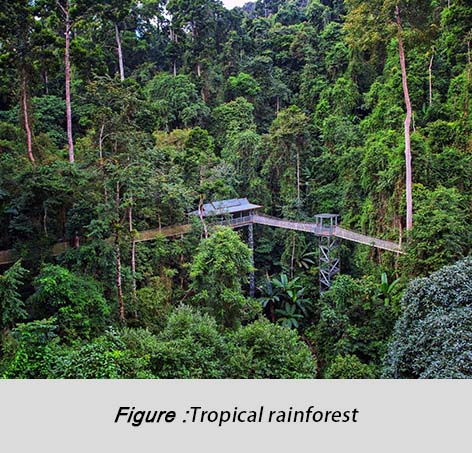
Tropical rainforest climates with high humidity (often above 80% RH) and heavy rainfall (annual precipitation exceeding 2000 mm) accelerate the aging of reactor insulation materials. Moisture ingress increases the dielectric loss factor (tanδ), expressed as:
tanδ= (1/ωC)×(1/R)
Where:
•ω = angular frequency (2πf)
•C = insulation capacitance
•R = insulation resistance
When moisture reduces R, tanδ rises significantly, leading to increased insulation heating. Thus, in regions like Southeast Asia, at least IP55 is required, while typhoon-prone areas should consider IP56 for protection against strong wind-driven rain.
● Pollution Levels & Associated Protection Requirements
According to IEC 60721-3-3, industrial pollution is classified into four levels. In heavily polluted zones (e.g., chemical plants, cement factories — pollution level 3 or 4), conductive dust can deposit on reactor surfaces, creating leakage paths. Test data show that when non-soluble deposit density (NSDD) reaches 0.1 mg/cm², insulator flashover voltage can drop by up to 30%. This explains why IP65 or higher is needed in coastal (salt mist) environments, where total dust prevention avoids conductive particle buildup.
● Special Considerations Special Considerations for High Altitude
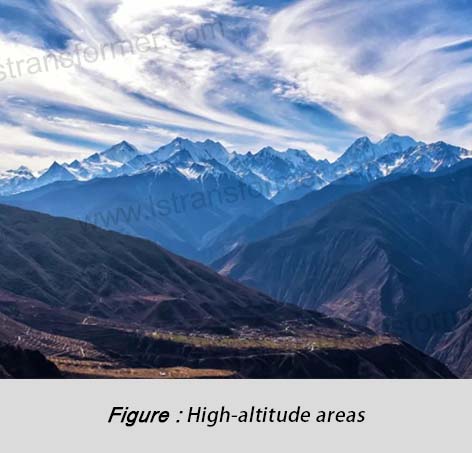
Every 1000-meter increase in altitude reduces air density by about 10%, lowering external insulation strength. While this mainly affectselectrical clearance design, high-altitude areas often experience large day-night temperature differences (over 40 K). This leads to a breathing effect, intensifying stress on enclosure seals. For installations above 2000 meters, it is recommended toincrease the protection rating by one level beyond the base requirement.
● Biological Factors Affecting Protective Design
Per IEEE C57.12.00, rodent bites account for about 7% of substation failures. To address this, combine protection ratings with mechanical measures—e.g., stainless steel mesh (aperture ≤ 5 mm) can meet both IP5X dust protection and pest prevention requirements. In tropical climates, insects like ants may invade terminal connections, requiring connectors to achieve at least IP6X.
3. Key Technical Measures for Achieving High Protection Levels
● Principles of Sealing System Design
High-quality sealing relies on material science and mechanical engineering. Ethylene Propylene Diene Monomer (EPDM) gaskets are preferred due to excellent weather resistance (-50°C to 150°C) and low compression set (<25%). Seal performance can be evaluated using:
Q = K×(ΔP)^n×A / d
Where:
•Q = leakage rate
•K = material permeability coefficient
•ΔP = pressure difference
•A = sealing area
•d = seal thickness
•n = empirical coefficient (usually 1 < n < 2)
Using a dual-seal design (primary + secondary seals) can reduce leakage rates by two orders of magnitude—key to achieving IP66. Additionally, breather valves with molecular sieve desiccants balance internal and external pressure differences, preventing seal failure from prolonged negative pressure.
● Enhanced Protection via Surface Treatment
Reactor enclosures are typically made from cold-rolled steel (SECC) and undergo multiple treatments:
•Phosphating: Chemical conversion coating forms a 5–10 μm crystalline phosphate layer, improving paint adhesion.
•Cathodic electrocoating: Electrochemical process deposits epoxy resin (20–30 μm thick) on the metal surface, providing basic corrosion resistance corrosion resistance.
•Powder coating: Electrostatic application of polyester/polyurethane powder, cured at 180–200°C, forming a 50–80 μm UV-resistant polyester layer.
Treatment Process | Salt Spray Test Hours | Humidity Resistance | UV Resistance | Suitable IP Rating |
Conventional painting | 500 h | Fair | Grade 2 | Below IP54 |
Hot-dip galvanizing | 1000 h | Good | Grade 3 | IP55 |
E-coat + powder coat | 2000 h | Excellent | Grade 5 | IP65 and above |
Stainless steel | 5000 h | Outstanding | Grade 5 | IP68 |
Table 2: Comparison of Surface Treatment Solutions
● Protective Design Details for Special Components
Outlet terminals use dual sealing:
•Primary seal: Molded silicone rubber ensures interfacial sealing.
•Secondary seal: Potting compound (polyurethane or epoxy) fills all voids.
Heat dissipation must balance protection and cooling needs:
•For up to IP55: Natural ventilation (with insect screens).
•For IP65 and above:
–Integrated fin-and-enclosure die-casting
–Internal heat pipes + external corrugated fins
•Forced air cooling (requires additional IP54-rated fan)
4. Balancing Protection Level and Maintenance Costs
While increasing the protection level lowers failure rates, costs rise exponentially. Statistics indicate a ~40% cost increase from IP55 to IP65, and another ~25% from IP65 to IP66. Based onLife Cycle Cost (LCC) analysis, optimal choice considers:
LCC = Initial Cost +Σ(Maintenance Cost)/(1+r)^t +Σ(Failure Loss)/(1+r)^t
Monte Carlo simulations reveal that under moderately harsh conditions, the LCC crossover between IP55 and IP65 typically occurs within 8–10 years. Therefore, for reactors expected to last over 15 years, selecting a higher protection grade proves more economical.
5. Comparison of International Standards on Protection Levels
•IEC 60076-6 specifies a minimum ofIP54 for outdoor reactors.
•IEEE 1277 recommends selection based on application scenario:
–Distribution class: NEMA 3R (≈IP54)
–Transmission class: NEMA 4X (≈IP66)
•China’s GB/T 1094.6 aligns with IEC but specifically requires one-level-higher protection in coastal regions.
Note that EU CE marking includes the Low Voltage Directive (LVD) and EMC Directive, but protection ratings primarily relate to the Machinery Directive (MD). UL certification in the U.S. focuses more on fire safety and should be considered alongside NEMA standards.
Conclusion
Selecting an appropriate protection rating for outdoor reactors involves multi-objective optimization, balancing technical feasibility, economic rationality, and maintenance convenience. Future designs will likely incorporate smarter solutions such as self-healing seals and condition monitoring systems. Users are advised to refer to environmental parameters perIEC 60721-3 classification and specify third-party certification (e.g., SGS IP validation testing) in tender documents to ensure genuine performance.
Contact Us
LuShan, est.1975, is a Chinese professional manufacturer specializing in power transformers and reactors for50+ years. Leading products are single-phase transformer, three-phase isolation transformers,electrical transformer,distribution transformer, step down and step up transformer, low voltage transformer, high voltage transformer, control transformer, toroidal transformer, R-core transformer;DC inductors, AC reactors, filtering reactor, line and load reactor, chokes, filtering reactor, and intermediate,high-frequency products.
Our power transformers and reactors are widely used in 10 application areas: rapid transit, construction machinery, renewable energy, intelligent manufacturing, medical equipment, coal mine explosion prevention , excitation system, vacuum sintering(furnace), central air conditioning.
Know more about power transformer and reactor :www.lstransformer.com.