
 EN
EN
 FR
FR DE
DE ES
ES
Special Design Requirements for Transformers Used in High-Altitude Regions
Special Design Requirements for Transformers Used in High-Altitude Regions
Power equipment must be adapted to complex environmental conditions worldwide, and high-altitude areas present unique challenges for transformers. This article explores the key design adjustments required for transformers operating in high-altitude environments and explains why these improvements are essential to ensure reliable performance under extreme conditions.
Content
1. Special Challenges of High-Altitude Environments for Transformers
High-altitude regions(typically areas over 1,000 meters above sea level) have significantly different environmental conditions compared to low-altitude regions. As altitude increases, air density, atmospheric pressure, temperature, and humidity undergo notable changes that directly affect a transformer’s cooling efficiency, insulation strength, and mechanical stability.
From a physical perspective, for every 1,000-meter increase in altitude, atmospheric pressure decreases by approximately 10%, leading to reduced air density. This change results in two main issues:
First, the insulating performance of air deteriorates, increasing the risk of corona discharge and flashover.
Second, convective heat dissipation capability dissipation capability is reduced, negatively affecting transformer cooling efficiency. According toIEC 60076 standards, transformer designs must account for these factors when intended for use at altitudes exceeding 1,000 meters.
Approximately 25% of the world's land area lies above 1,000 meters, including regions such as the Andes, Himalayas, Ethiopian Highlands, and Rocky Mountains. The demand for power infrastructure in these areas is growing rapidly. According toMarket Research Future, the compound annual growth rate (CAGR) for the high-altitude transformer market between 2023 and 2030 is projected to reach 6.8%, outpacing growth in the standard transformer market.
2. Key Special Design Considerations for High-Altitude Transformers
● Enhanced Insulation System Design
Reduced atmospheric pressure at high altitudes directly affects the dielectric strength of air. Based onPaschen's Law, the breakdown voltage of a gas depends on the product of gas pressure and electrode distance (pd value). Under low-pressure conditions, the breakdown voltage for the same distance is significantly lower. This means transformers require greater insulation clearance or stronger insulating materials to prevent electrical discharges.
Common engineering solutions include:
•Increased Insulation Distance:
According toIEC 60076-14, external insulation distances should be increased by approximately 11% per 1,000 meters of altitude. For example, a transformer designed for 2,000 meters altitude would need about 22% more external insulation than one designed for sea level.
•Use of High-Performance Insulating Materials:
Solid insulating materials with higher dielectric strength—such as Nomex® paper or modified epoxy resin—can partially replace air insulation, as their performance is unaffected by altitude.
•Optimized Electric Field Distribution:
Computer simulations (e.g., finite element analysis) help optimize electrode shapes and insulation structures to avoid localized electric field concentrations and premature failure.
Altitude (m) | Insulation Distance Correction Factor | Test Voltage Correction Factor |
≤1000 | 1.00 | 1.00 |
1500 | 1.11 | 1.07 |
2000 | 1.22 | 1.14 |
2500 | 1.35 | 1.21 |
3000 | 1.48 | 1.28 |
Table 1: Insulation correction factors based on altitude (per IEC 60076)
● Cooling System Optimization
Decreased air density significantly reduces the efficiency of convection-based cooling. Under high-altitude conditions, natural convection cooling capacity can drop by more than 30%. Since temperature rise directly affects insulation aging (according to theArrhenius equation, insulation life halves with every 6–8K increase), effective thermal management is crucial.
Effective cooling optimizations include:
•Increasing Cooling Surface Area:
Larger radiators or additional cooling fins compensate for reduced convection efficiency. For instance, a transformer operating at 4,000 meters may require up to 50% more surface area compared to its sea-level counterpart.
•Forced Cooling Systems:
At very high altitudes (>3,000 m) or for large-capacity transformers, forced oil circulation (OFAF) or forced air cooling (FAAF) systems are used to actively drive coolant flow.
•Enhanced Temperature Monitoring:
Multi-point temperature sensors and predictive maintenance systems enable real-time monitoring of hot-spot temperatures. PerIEEE C57.91, the hot-spot temperature in oil-immersed transformers should not exceed 110°C.
3. Material Selection and Mechanical Adaptability
High-altitude regions often experience extreme temperature fluctuations (daily variations up to 40°C in some locations) and intense ultraviolet radiation, requiring specialized material choices:
•Low-Temperature Treatment for Metal Components:
Conventional steel may become brittle below -40°C. Nickel-alloy steels or special heat treatments ensure low-temperature toughness-temperature toughness for cores and enclosures.
•Upgraded Sealing Systems:
Low-pressure environments accelerate seal aging. High-performance materials like fluororubber or hydrogenated nitrile rubber help prevent oil leakage and moisture ingress.
•UV-Resistant Coatings:
Enclosures coated with polyurethane or ceramic-filled paints resist peeling and oxidation caused by intense UV exposure.
4. International Standards and Testing Requirements
Global standards provide clear guidelines for high-altitude transformers:
•IEC 60076 Series: International Electrotechnical Commission standards define altitude correction factors and type-test requirements.
•IEEE C57.12.00: Institute of Electrical and Electronics Engineers standards include specific design guidance for altitudes above 1,500 meters.
•GB 1094.1: Chinese national standard, equivalent to IEC but includes additional requirements for plateau-type transformers.
Certification tests typically include:
1.Low-Pressure Power Frequency Withstand Test:Validates insulation strength under simulated high-altitude pressure conditions.
2.Temperature Rise Type Test: Confirms effectiveness of the cooling system under rated load.
3.Thermal Cycling Test: Evaluates material stability under extreme temperature variations.
Conclusion and Recommendations
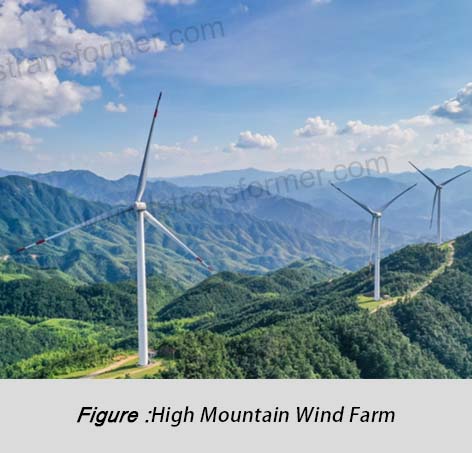
Designing transformers for high-altitude operation requires multidisciplinary optimization, integrating electrical performance, thermal management, and mechanical reliability. With the rapid expansion of renewable energy projects—such as high-mountain wind farms and solar power stations—demand for specially designed high-altitude transformers will continue to grow.
When selecting or designing transformers for high-altitude applications, consider the following recommendations:
•Identify the exact installation altitude and environmental parameters.
•Choose manufacturers certified under relevant standards like IEC 60076 or IEEE C57.
•Implement predictive maintenance systems for real-time monitoring.
•Perform regular preventive maintenance, including dissolved gas analysis (DGA) and insulation resistance testing.
By incorporating these specialized designs, transformers can maintain reliability and service life comparable to those at sea level, ensuring dependable power supply even in remote high-altitude regions.
Contact Us
LuShan, est.1975, is a Chinese professional manufacturer specializing in power transformers and reactors for50+ years. Leading products are single-phase transformer, three-phase isolation transformers,electrical transformer,distribution transformer, step down and step up transformer, low voltage transformer, high voltage transformer, control transformer, toroidal transformer, R-core transformer;DC inductors, AC reactors, filtering reactor, line and load reactor, chokes, filtering reactor, and intermediate,high-frequency products.
Our power transformers and reactors are widely used in 10 application areas: rapid transit, construction machinery, renewable energy, intelligent manufacturing, medical equipment, coal mine explosion prevention , excitation system, vacuum sintering(furnace), central air conditioning.
Know more about power transformer and reactor :www.lstransformer.com.
If you would like to obtain customized solutions for transformers or reactors, please contact us.
WhatsApp:+86 13787095096
Email:[email protected]