
 EN
EN
 FR
FR DE
DE ES
ES
How to Assess Transformer Insulation Paper Aging? —Degree of Polymerization (DP Value) Testing Method and Remaining Life Prediction
How to Assess Transformer Insulation Paper Aging?
—Degree of Polymerization (DP Value) Testing Method and Remaining Life Prediction
With the increasing aging of global power grid infrastructure, transformers, as the core equipment of power systems, play a critical role in operational reliability. Transformer insulation paper aging is one of the primary causes of equipment failure, directly impacting the safety, stability, and asset life management of the grid. How to scientifically assess the condition of insulation paper and predict its remaining lifespan has become a key factor in maintenance decision-making for the power industry. This article provides an in-depth analysis of the internationally recognized Degree of Polymerization (DP value) testing method and its application in predicting transformer remaining life, offering scientific guidance for your equipment health management.
Content
1. Core Mechanism of Insulation Paper Aging: Breakage of Cellulose Chains
Transformer insulation paper is primarily composed of cellulose. New paper features long-chain cellulose molecules (with a DP value typically between 1000–1300), providing excellent mechanical and electrical strength.
(1)Aging Triggers (Cause):Heat (temperature), oxygen, moisture, and acidic substances (byproducts of insulating oil aging) inevitably act on cellulose during transformer operation.
(2)Chemical Reactions (Effect):These factors trigger complex chemical reactions (mainly hydrolysis and oxidation), causing the glycosidic bonds in cellulose molecules to break.
(3)Performance Degradation (Effect):As chain breaks increase, cellulose molecules shorten (DP value decreases), leading to a significant reduction in mechanical strength (tensile strength, toughness). The paper becomes brittle, while its electrical strength (voltage resistance) and oil absorption capacity also decline, potentially causing discharge or insulation failure.
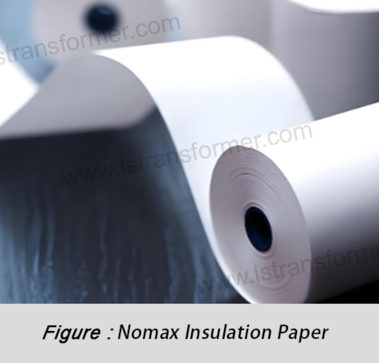
2. Degree of Polymerization (DP Value): The Gold Standard for Quantifying Insulation Paper Aging
DP value (Degree of Polymerization) directly reflects the average length of cellulose molecular chains and is the most accurate and internationally recognized (e.g., IEC 60450, ASTM D4243) indicator for assessing insulation paper aging.
(1)Testing Principle (Cause):DP value testing is based on the viscosity or rheological behavior of cellulose in specific solvents (e.g., cupriethylenediamine solution). Long-chain molecules result in higher viscosity, while short-chain molecules yield lower viscosity.
(2)Measurement Method (Effect):In a laboratory, the viscosity of dissolved insulation paper samples is precisely measured and compared against known standards to calculate the average DP value. This is a destructive test, typically performed during transformer maintenance by sampling key areas (e.g., near hotspots).
(3)Condition Assessment (Effect):DP value provides an accurate "snapshot" of insulation paper aging status.
DP Value Range | Insulation Paper Condition | Key Characteristics & Risks |
> 1000 | Excellent (New / Like New) | Outstanding mechanical and electrical performance; minimal aging signs. |
500–1000 | Good | Stable performance; early or mid-stage aging; requires monitoring. |
250–500 | Caution / Degraded | Critical warning zone! Significant loss of mechanical strength; increased brittleness; detailed maintenance or replacement planning needed. |
< 250 | Severe Aging / End of Life | Extremely low mechanical strength; high risk of damage from vibration or short-circuit forces; immediate replacement required. |
Table: Relationship Between DP Value and Insulation Paper Aging Status (Based on IEEE Std C57.91 Guidelines)

3. DP Value-Based Transformer Remaining Life Prediction Models
A single DP value test assesses current condition, while predicting remaining life requires combining aging kinetics models. The most widely used is the Arrhenius reaction rate model based on thermal aging.
(1)Model Basis (Cause):Temperature is the primary accelerator of insulation paper aging. The Arrhenius equation describes the relationship between reaction rate constant (k) and absolute temperature (T):
k = A * exp(-Ea / (R * T))
– k: Reaction rate constant (represents aging speed)
– A: Pre-exponential factor (material/environment- dependent constant)
– Ea: Activation energy (typically ~111 kJ/mol for cellulose degradation, adjusted for oil-paper systems)
– R: Ideal gas constant (8.314 J/mol·K)
– T: Absolute temperature (Kelvin, K = °C + 273)
(2)DP Value Decline & Life Consumption (Cause):Experiments and operational data show that under constant temperature, DP value decline (or aging) follows an approximately linear relationship (or specific functions like first-order kinetics). The time to reach the end-of-life DP value (e.g., 200 or 250) represents the "lifespan" at that temperature.
(3)Temperature Acceleration (Cause):Per Arrhenius, every 6–10°C increase (depending on Ea) doubles aging rates, drastically shortening lifespan at higher temperatures.
(4)Prediction Steps (Effect):
a. Collect historical DP values (at least two tests) and corresponding operational years.
b. Estimate operating temperatures, especially hotspot temperatures (using load records, ambient data, or design parameters).
c. Develop an aging model by fitting historical DP decline and equivalent thermal stress to derive a transformer-specific aging rate equation (may require specialized software/engineering).
d. Extrapolate remaining life by projecting current DP value decline to the end-of-life threshold under expected future temperatures.
Model Type | Core Principle | Advantages | Limitations | Applications |
Arrhenius (Single Temp.) | Constant-temperature reaction kinetics | Simple, widely accepted | Ignores temperature fluctuations | Stable-temperature transformers |
Enhanced Arrhenius (Load Cycles) | Accounts for temperature variations & cumulative damage | More realistic for variable loads | Complex calculations | Transformers with fluctuating loads |
Furan Compound-Based | Correlates furan levels with DP/life | Enables online monitoring | Requires calibration for oil types | Supplementary trend analysis |
Table: Comparison of Transformer Remaining Life Prediction Models
4. Key Testing Steps & Comprehensive Assessment Strategy
(1)Representative Sampling:Follow standards (e.g., IEC 60544) to collect uncontaminated samples from hotspot areas (e.g., near winding tops). Sample quality directly impacts accuracy.
(2)Precision Lab Testing:Use accredited labs for viscosity-based DP testing (per IEC 60450 or ASTM D4243).
(3)Holistic Data Analysis: Combine:
– Historical DP trends to track aging rates.
– Dissolved Gas Analysis (DGA) for CO/CO₂ (cellulose aging markers) and combustible gases.
– Furan Analysis (e.g., 2-FAL levels correlate with DP decline).
– Moisture content (accelerates hydrolysis).
– Acid value (high acidity catalyzes degradation).
– Operational history (load profiles, outages, maintenance).
(4)Expert Decision-Making:Engineers should integrate data to assess risks and plan actions: enhanced monitoring, load/temperature reduction, maintenance, or replacement.
5. Proactive Maintenance Strategies to Extend Transformer Life
Understanding aging mechanisms enables targeted interventions:
● Control Operating Temperatures (Most Effective):
(1)Why? Lower hotspot temperatures exponentially slow aging (per Arrhenius). Example: Reducing hotspots from 110°C to 100°C can multiply lifespan.
(2)How? Optimize cooling (clean radiators, ensure fan/oil pump function), avoid overloading, monitor hotspots.
● Minimize Moisture & Oxygen:
(1)Why? Moisture fuels hydrolysis; oxygen accelerates oxidation.
(2)How? Use high-performance breathers (desiccant/membrane types), perform vacuum oil filtering, target <3% moisture saturation.
● Manage Acid Levels:
(1)Why? Acids catalyze cellulose breakdown.
(2)How? Monitor oil acidity; regenerate or replace oil if >0.1 mgKOH/g.
● Regular Condition Monitoring:Integrate DP tests, DGA, furan analysis, and oil tests into predictive maintenance plans.
In Summary
DP value testing is the cornerstone of transformer insulation health assessment and lifespan prediction. By adhering to IEC/ASTM standards, leveraging Arrhenius models, and combining multi-parameter data (DGA, furans, moisture), operators gain precise insights into insulation conditions. Proactive strategies—temperature control, moisture/oxygen/acid management—can dramatically extend service life and optimize ROI.
Amid global energy transitions and infrastructure sustainability goals, mastering these advanced assessment and longevity technologies ensures safer, more reliable, and cost-effective power systems. Investing in scientific insulation evaluation is an investment in the grid’s resilient future.
Contact Us
LuShan, est.1975, is a Chinese professional manufacturer specializing in power transformers and reactors for 50+ years. Leading products aresingle-phase transformer, three-phase isolation transformers,electrical transformer,distribution transformer, step down and step up transformer, low voltage transformer, high voltage transformer, control transformer, toroidal transformer, R-core transformer;DC inductors, AC reactors, filtering reactor, line and load reactor, chokes, filtering reactor, and intermediate,high-frequency products.
Our power transformers and reactors are widely used in 10 application areas: rapid transit, construction machinery, renewable energy, intelligent manufacturing, medical equipment, coal mine explosion prevention , excitation system, vacuum sintering(furnace), central air conditioning.
Know more about power transformer and reactor :www.lstransformer.com.
If you would like to obtain customized solutions for transformers or reactors, please contact us.
WhatsApp:+86 17267488565
Email:[email protected]