
 EN
EN
 FR
FR DE
DE ES
ES
How to Calculate the Transformer Winding Wire Diameter? —Complete Guide and Key Factor Analysis
How to Calculate the Transformer Winding Wire Diameter?
—Complete Guide and Key Factor Analysis
The selection of the transformer winding wire diameter directly impacts its performance, efficiency, and safety. Proper wire diameter calculation can reduce copper loss, improve heat dissipation, and ensure long-term stable operation. This article provides a detailed breakdown of the methods for calculating transformer winding wire diameter, covering key formulas, influencing factors, and international standards, helping engineers and industry professionals make informed decisions.
Content
1. Why Is Transformer Winding Wire Diameter Calculation So Important?
The choice of transformer winding wire diameter affects the following critical performance indicators:
(1)Current Carrying Capacity: Insufficient wire diameter can cause overheating, accelerating insulation aging or even burning out the winding.
(2)Resistance Loss (I²R Loss):Smaller wire diameters increase DC resistance, leading to higher copper loss and reduced efficiency.
(3)Heat Dissipation Performance:Thicker wires have a larger surface area, improving heat dissipation but increasing volume and cost.
(4)Mechanical Strength:High-frequency or high-current transformers must account for the skin effect, which may require the use of stranded wires.
Thus, scientifically calculating the wire diameter is a fundamental step in transformer design.
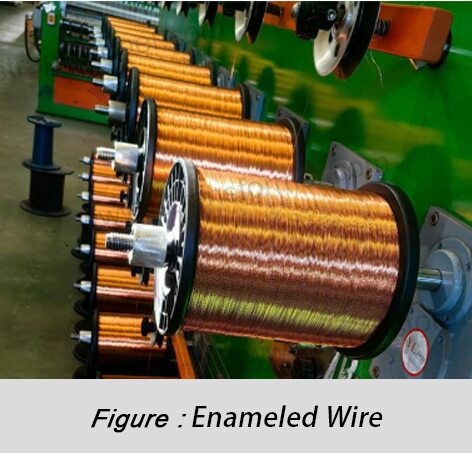
2. Core Formula for Transformer Winding Wire Diameter Calculation
The wire diameter calculation is primarily based on current density (J) and load current (I). The basic formula is:
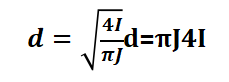
Where:
d = Wire diameter (mm)
I = Winding current (A)
J = Current density (A/mm²)
● Selection of Current Density (J)
Current density is a key parameter in determining wire diameter. Typical ranges are as follows:
Transformer Type | Current Density (A/mm²) | Application Scenario |
Small Distribution Transformers | 2.0–3.5 | Household appliances, low-power devices |
Power Transformers | 1.6–2.5 | Grids, industrial applications |
High-Frequency Transformers | 4.0–6.0 | Switching power supplies, electronics |
Reasons for Selecting an Appropriate Current Density:
(1)Too High: Causes overheating, shortening insulation material lifespan (lifespan halves for every 10°C increase).
(2)Too Low:Wastes materials, increases volume and cost.
3. Key Factors Influencing Wire Diameter Calculation
The selection of transformer winding wire diameter must consider multiple factors, including load current, operating frequency, heat dissipation conditions, and insulation class:
● Electrical and Thermal Performance Balance
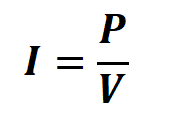
Load current is determined by transformer power and voltage. For a single-phase transformer, the current is calculated as:
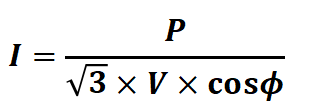
For a three-phase transformer, the phase factor is introduced:
Additional considerations in practical design:
(1)Peak Current: Transient overloads, such as motor startup, require a 20% margin.
(2)Temperature Rise Limit: Insulation material class (e.g., Class A 105°C, Class H 180°C) determines the maximum allowable temperature rise, which is proportional to the square of current density ( ).
).
●High-Frequency Effects and Material Selection
When frequency exceeds 1 kHz, the skin effect becomes significant, causing current to concentrate near the conductor surface. Skin depth ( δ) is calculated as:
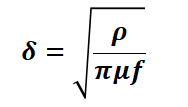
Where :ρ= resistivity,μ= permeability.
In such cases, stranded wires (Litz wires) are used to increase effective conductive area. Copper offers better conductivity than aluminum but is more expensive; aluminum requires a 60% larger cross-section for equivalent current capacity.
●Compliance with International Standards
Regional standards impose specific constraints on wire diameter design. For example:
(1)IEC 60076: Specifies temperature rise limits for power transformers.
(2)IEEE C57.12.00: Requires short-circuit withstand capability for North American distribution transformers.
Design considerations:
(1)Wire diameter must meet the target market’s standard current density range.
(2)High-voltage windings must account for insulation thickness affecting space factor.
4. International Standards and Reference Specifications
Different regions have specific standards for transformer winding design:
Standard Code | Scope | Key Requirements |
IEC 60076 | Power Transformers | Temperature rise limits, insulation coordination |
IEEE C57.12.00 | North American Distribution Transformers | Load capacity, short-circuit withstand |
GB 1094 | Chinese National Standard | Equivalent to IEC, with additional partial discharge requirements |
5. Practical Calculation Example
Case: Design a single-phase 10 kVA, 230 V distribution transformer with a current density of 2.5 A/mm².
(1)Calculate Load Current:
(2)Calculate Wire Cross-Sectional Area:
(3)Convert to Diameter (for stranded wires, divide accordingly):
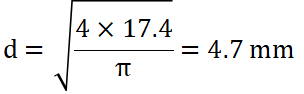
Final Selection: Use two parallel wires of 3.3 mm diameter (total area ≈ 17.1 mm²), with a 5% margin.
6. Frequently Asked Questions (FAQ) and Optimization Tips
Q1: Is a Thicker Wire Diameter Always Better?
No. Excessively thick wires reduce window fill factor, increase leakage inductance, and raise costs. Balance loss reduction with volume.
Q2: How to Validate Wire Diameter Suitability?
Temperature Rise Test: Measure winding temperature under full load, ensuring it stays below insulation class limits.
Efficiency Test: Compare copper loss ( ) to total loss (typically < 30%).
Q3: How to Convert Between Aluminum and Copper Wires?
Aluminum’s resistivity is 1.6× higher than copper, requiring a 60% larger cross-section for the same current. Example:

In Summary
Transformer winding wire diameter calculation requires balancing current density, temperature rise, frequency effects, and international standards. A scientifically chosen wire diameter optimizes efficiency, reduces costs, and extends lifespan. For reliability, use professional design software (e.g., ANSYS Maxwell or FEMM) for simulation validation.
For further inquiries about transformer design or customized solutions, contact our technical team.
Contact Us
LuShan, est.1975, is a Chinese professional manufacturer specializing in power transformers and reactors for50+ years. Leading products are single-phase transformer, three-phase isolation transformers,electrical transformer,distribution transformer, step down and step up transformer, low voltage transformer, high voltage transformer, control transformer, toroidal transformer, R-core transformer;DC inductors, AC reactors, filtering reactor, line and load reactor, chokes, filtering reactor, and intermediate,high-frequency products.
Our power transformers and reactors are widely used in 10 application areas: rapid transit, construction machinery, renewable energy, intelligent manufacturing, medical equipment, coal mine explosion prevention , excitation system, vacuum sintering(furnace), central air conditioning.
Know more about power transformer and reactor :www.lstransformer.com.
If you would like to obtain customized solutions for transformers or reactors, please contact us.
WhatsApp:+86 13787095096
Email:[email protected]