
 EN
EN
 FR
FR DE
DE ES
ES
Transformer Lead Wire Connection: Quick Connect Terminals vs. Ring Terminals – A Deep Dive into Reliability
Transformer Lead Wire Connection: Quick Connect Terminals vs. Ring Terminals
– A Deep Dive into Reliability
In the manufacturing and installation of transformers and reactors, the quality of the connection between the lead wires and external circuits directly determines the long-term reliability of the equipment. When faced with the two mainstream solutions—Quick Connect Terminals (Fast-on) and Ring Terminals (OT Terminals)—engineers worldwide often need to make critical decisions. This article will thoroughly analyze the reliability differences between the two, based on international standards, working principles, and application scenarios.
Content
1. Defining Reliability in Multiple Dimensions: Beyond Simple Connections
Reliability is not just about "on/off" functionality. According to standards set by authoritative bodies like the International Electrotechnical Commission (IEC) and Underwriters Laboratories (UL), the reliability of electrical connections is a systematic consideration, primarily reflected in:
(1)Electrical Performance Stability: The connection resistance must remain stable over time to avoid overheating (due to the Joule heating effect: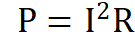 P=I2R) or even fire hazards (as emphasized in IEC 60512 testing).
(2)Mechanical Strength:Terminals must withstand mechanical stresses (tension, torsion) and vibration impacts (tested under UL 486A/B and IEC 60068-2 series standards).
(3)Environmental Resistance: Ability to endure humidity, salt spray, high-temperature oxidation, and chemical corrosion (per IEC 60068-2 environmental tests).
(4)Long-Term Durability: Must survive thermal cycling caused by material expansion and contraction (temperature cycling tests).
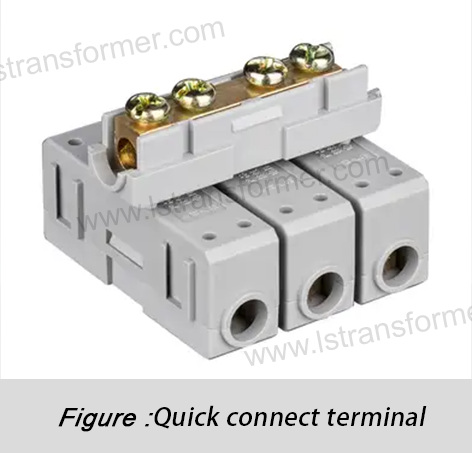
Quick Connect Terminals (Fast-on):Rely on precisely designed elastic metal tabs (often made of phosphor bronze or beryllium copper) that snap into corresponding female connectors.
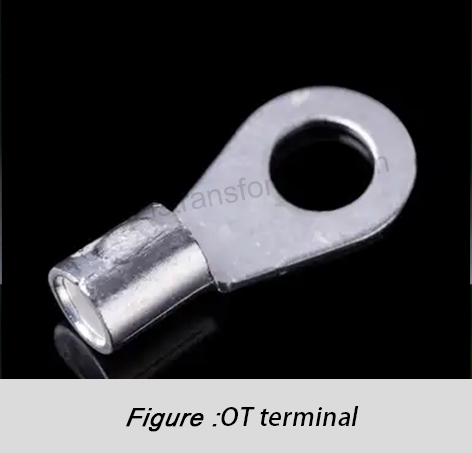
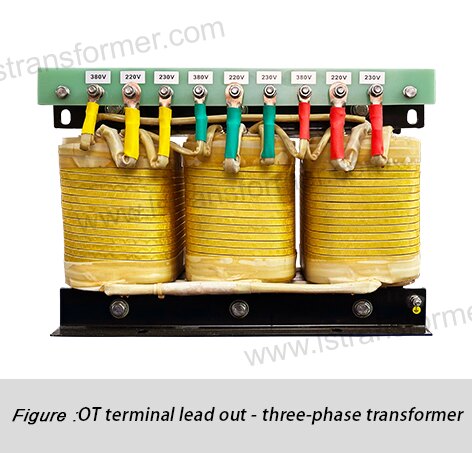
Ring Terminals (OT Terminals): Feature a metal sleeve (typically brass or copper) with a ring-shaped end, securely crimped or bolted onto equipment terminals.
2. Mechanical Vibration Scenarios: The Inherent Advantage of Ring Terminals
In environments with mechanical vibration or shock, Ring Terminals generally outperform Quick Connect Terminals due to fundamental differences in their connection mechanisms:
● Quick Connect Terminal Risks:
(1)Their snap-in design relies on continuous elastic pressure to maintain contact. Under persistent vibration (e.g., in wind turbines, rail transit, or heavy industrial equipment), the material can suffer from "stress relaxation," gradually losing elasticity.
(2)Micron-level relative motion between contact surfaces causes "fretting wear," where oxidized debris accumulates, forming an insulating layer. This leads to a sharp rise in contact resistance ( ΔR), eventually causing overheating. UL 486E sets strict standards for vibration resistance.
● Ring Terminal Strengths:
(1)Bolts or screws apply constant, high pressure to clamp the ring terminal to the terminal post. This rigid connection minimizes relative motion (reducing fretting wear).
(2)Even under severe vibration (e.g., as tested per IEC 61373 for rail equipment), the connection remains stable if the bolt torque meets specifications (per manufacturer guidelines or IEC 60947). The contact pressure does not rely on material elasticity, avoiding stress relaxation.
Feature | Quick Connect (Fast-on) | Ring Terminal (OT) | Reliability Impact |
Connection Principle | Elastic tab pressure | Bolt/screw mechanical pressure | Ring Terminals inherently better for vibration resistance. |
Fretting Wear Risk | High (contact surfaces can slide) | Very low (surfaces are fixed) | Fretting wear creates insulating oxide layers, increasing resistance and heat. |
Long-Term Pressure | Depends on material elasticity (may weaken) | Depends on bolt torque (constant) | Stress relaxation increases contact resistance over time. |
Typical Vibration Use | Low to medium (e.g., consumer electronics) | Medium to high (e.g., industrial motors, power systems) | Ring Terminals meet stricter standards (e.g., IEC 61373 Cat 1). |
Table 1: Key vibration resistance metrics (referencing UL 486E, IEC 60068-2-6).
3. High Current and Low Resistance Needs: Electrical Reliability of Ring Terminals
For high-current applications or where low connection resistance is critical (e.g., power transformers, reactor main circuits, DC sides of inverters), Ring Terminals are often superior:
● Quick Connect Limitations:
(1)Higher contact resistance (typically in the milliohm range). While initial values may be acceptable, resistance increases (ΔR) more significantly over time due to heat, oxidation, or vibration.
(2)Per Joule’s law (Ploss=I2×Rcontact), even small resistance increases cause squared power losses, leading to overheating and a vicious cycle of "heat → oxidation → higher resistance" (a key focus in IEC 60512-5-2 testing).
● Ring Terminal Advantages:
(1)Bolt pressure creates extensive metal-to-metal contact, achieving very low resistance (as low as micro-ohms).
(2)Larger contact area ( A) and high pressure (
 σ) penetrate surface oxides/contaminants, ensuring stable resistance.
Feature | Quick Connect (Fast-on) | Ring Terminal (OT) | Electrical Reliability Analysis |
Typical Contact Resistance | Milliohms (mΩ) | Micro-ohms (μΩ) | Ring Terminals are 1-2 orders of magnitude lower. |
Resistance Stability (ΔR) | Sensitive to vibration/oxidation | Very stable | Small ΔR ensures controlled temperature rise over time. |
High-Current Heat Rise | Higher (due to higher R) | Lower (very low R) | Excessive heat accelerates insulation aging (per IEC 60076-7). |
Current Rating | Low to medium (< 20A typical) | Medium to high (tens to thousands of A) | Ring Terminals are preferred for high-power systems (per IEC 60943 recommendations). |
Table 2: High-current/low-resistance scenario comparison.
4. Harsh Environments: Corrosion Resistance and Material Selection
In humid, salty (coastal/chemical plants), or high- temperature environments, protection and materials are critical:
● Quick Connect Limitations:
Larger exposed metal areas. If plating (e.g., tin) is thin or damaged, base materials (copper alloys) corrode easily, spiking resistance (per UL 310 salt spray tests).
● Ring Terminal Advantages:
(1)Bolted connections offer better "sealing," partially blocking corrosive agents.
(2)Often use high-quality tinned or silver-plated copper (per IEC 61238-1). Silver resists oxidation; tin provides corrosion barriers. Pre-insulated designs (UL 486A/B) add moisture/dust/chemical protection.
5. Decision-Making: Choosing the Best Terminal for Transformers/Reactors
The choice depends on key application parameters:
(1)Vibration/Shock:High vibration (e.g., motors, rail, wind turbines)? → Choose Ring Terminals.
(2)Current Levels:High current ( ≥10-20A) or need ultra-low resistance? → Choose Ring Terminals.
(3)Corrosion Risk: Humid, salty, or high-temperature? → Opt for high-quality plated (thick tin/silver) Ring Terminals.
(4)Installation/Maintenance: Frequent disconnects (e.g., testing)? → Quick Connects offer convenience but select industrial-grade (UL 1977). For permanent links, Ring Terminals are maintenance-free.
In Summary
For transformers and reactors, where decades of stable operation are critical, lead wire reliability is paramount. Quick Connect Terminals excel in low-current, low-vibration, or serviceable scenarios (e.g., control circuits).
However, for high-current, high-vibration, or harsh-environment applications (e.g., transformer main leads, reactor terminals), Ring Terminals deliver superior reliability with:
(1)Ultra-low, stable contact resistance.
(2)Exceptional vibration resistance.
(3)Robust mechanical strength.
(4)Superior environmental sealing.
Always reference equipment specifications, select certified products (UL, IEC, VDE), and consult experts when needed. Reliable connections are the foundation of safe, stable power systems.
Contact Us
LuShan, est.1975, is a Chinese professional manufacturer specializing in power transformers and reactors for50+ years. Leading products are single-phase transformer, three-phase isolation transformers,electrical transformer,distribution transformer, step down and step up transformer, low voltage transformer, high voltage transformer, control transformer, toroidal transformer, R-core transformer;DC inductors, AC reactors, filtering reactor, line and load reactor, chokes, filtering reactor, and intermediate,high-frequency products.
Our power transformers and reactors are widely used in 10 application areas: rapid transit, construction machinery, renewable energy, intelligent manufacturing, medical equipment, coal mine explosion prevention , excitation system, vacuum sintering(furnace), central air conditioning.
Know more about power transformer and reactor :www.lstransformer.com.
If you would like to obtain customized solutions for transformers or reactors, please contact us.
WhatsApp:+86 13787095096
Email:[email protected]