
 EN
EN
 FR
FR DE
DE ES
ES
How to Choose Between Natural Air Cooling and Forced Air Cooling for Dry-Type Transformers?
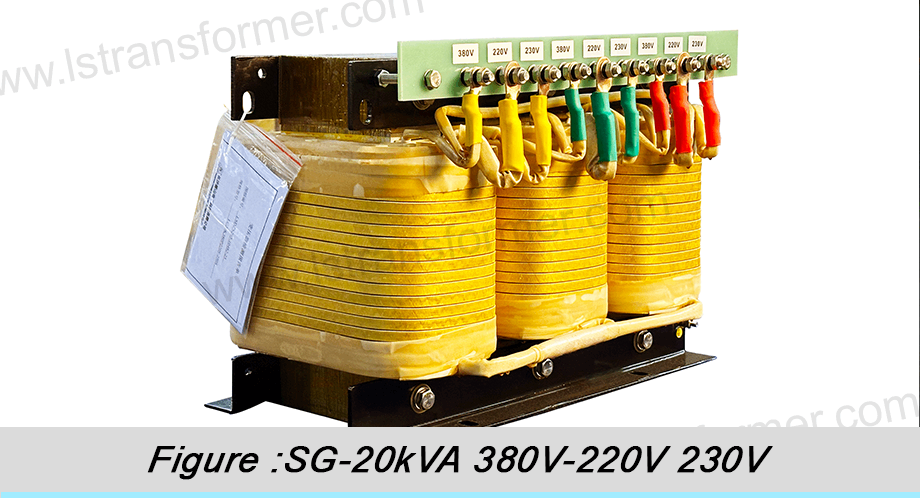
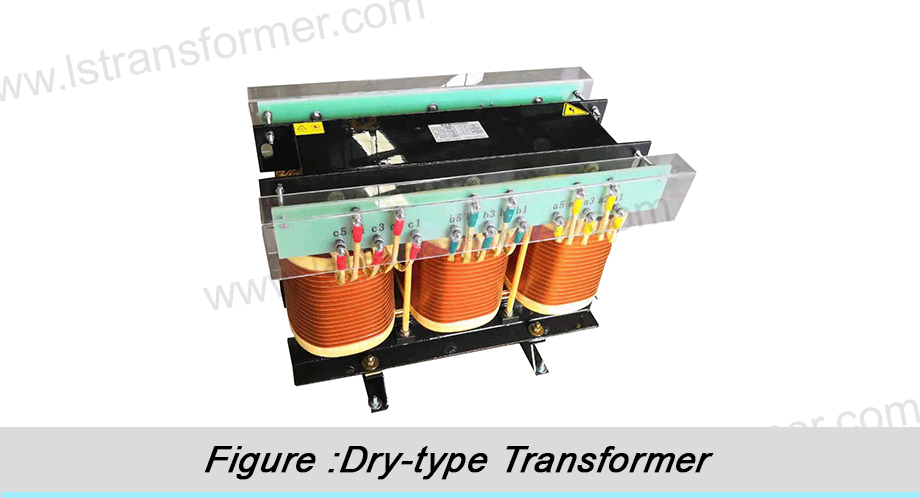
In the global power infrastructure sector, dry-type transformers have become the preferred choice for commercial buildings, data centers, industrial facilities, and renewable energy projects due to their environmental friendliness, safety, and ease of maintenance. According to theInternational Electrotechnical Commission(IEC) 60076-11 standard, the cooling methods for dry-type transformers are mainly divided into Natural Air Cooling (AN) and Forced Air Cooling (AF). This article provides an in-depth analysis of these two cooling methods—covering their principles, advantages, disadvantages, and suitable application scenarios—to help overseas users make informed decisions based on specific needs while optimizing transformer operational efficiency and service life.
Content
1. Basic Principles of Natural Air Cooling (AN) & Forced Air Cooling (AF)
● How Natural Air Cooling (AN) Works
Natural Air Cooling relies on the natural convection and heat radiation principles for dissipation. When the transformer operates, heat generated by the windings and core raises the temperature of the surrounding air. The heated air becomes less dense and rises, while cooler air naturally flows in from the bottom, creating a continuous convective cycle. This method operates entirely on physical laws without requiring additional energy input.
The heat transfer formula can be expressed as:
Q = h×A× ΔT
Where:
•Q = Heat dissipation (W)
•h = Natural convection heat transfer coefficient (W/m²·K)
•A = Heat dissipation surface area (m²)
• ΔT = Temperature difference between transformer surface and ambient air (K)
The natural convection coefficienth is generally low (approx. 5–25 W/m²·K), so a larger surface areaA is required to ensure sufficient heat dissipationQ.
● How Forced Air Cooling (AF) Works
Forced Air Cooling uses installed fans to artificially accelerate airflow, significantly enhancing heat exchange efficiency. Based on fluid dynamics principles, forced convection disrupts the air boundary layer, greatly increasing the heat transfer coefficient h. The forced convection coefficient can reach 5–10 times that of natural convection (approx. 50–250 W/m²·K), allowing the transformer to handle higher loads within the same physical size.
The heat dissipation capacity for Forced Air Cooling can be calculated using:
Q =ṁ ×Cp× ΔT
Where:
• ṁ= Mass flow rate of air (kg/s)
•Cp = Specific heat capacity of air (approx. 1.005 kJ/kg·K)
• ΔT = Temperature difference between inlet and outlet air (K)
2. Key Selection Factors: Comparative Analysis
● Load Characteristics & Capacity Requirements
Comparison Item | Natural Air Cooling (AN) | Forced Air Cooling (AF) |
Typical Capacity Range | ≤ 2500 kVA | Up to 20 MVA |
Continuous Load Cap. | 100% rated capacity | Up to 150% rated capacity (short-term) |
Load Fluctuation Adapt. | Suitable for stable loads | Suitable for fluctuating loads |
Overload Capability | Limited (~10–20%) | Strong (30–50%, depends on fan config.) |
Natural Air Cooled transformers operate continuously at their rated capacity butoffer limited overload capability.According to IEEE Std C57.96, AN-type transformers allow short-term overloads (≤ 2 hours) of about 15% at an ambient temperature of 30°C. In contrast, Forced Air Cooled transformers can increase capacity by 30–50% for short periods (typically ≤ 1 hour) by activating fans, making them especially suitable for applications like data centers where sudden load spikes may occur.
● Energy Efficiency & Operating Costs
Natural Air Cooled transformers typically achieve efficiencies of 98–99% with no additional fan power consumption. However, they often require more materials and larger surfaces to achieve equivalent capacity. Forced Air Cooled units offer similar efficiencies, but fan power consumption usually accounts for 0.5–2% of the rated capacity. Taking a 1000 kVA transformer as an example:
•Natural Air Cooling: No additional power consumption
•Forced Air Cooling: Fan power ~5–20 kW (depending on configuration)
Example calculation: Based on 8,000 operating hours/year and electricity cost at 0.12/kWh,ForcedAirCoolingadds4,800 – $19,200 annually in electricity costs. However, AF allows more compact designs, potentially saving 20–30% in installation space costs.
● Environmental Adaptability
Temperature Impact: Per IEC 60076-12, Natural Air Cooled transformers must be derated when ambient temperatures exceed 40°C, typically by 1% per °C rise. Forced Air Cooling mitigates this issue through enhanced heat dissipation, offering clear advantages in high-temperature environments.
Altitude Adjustment: For every 100 meters increase in altitude, air density decreases by about 1%, reducing natural cooling effectiveness by 0.5–1%. Forced Air Cooling can partially compensate by increasing fan airflow in high-altitude regions (>1000 meters).
Polluted Environments: In locations with high dust or fiber content (e.g., textile mills), Natural Air Cooling is often more reliable because AF fans might draw in pollutants and clog airways. In such cases, select designs with a protection rating ≥ IP54.
3. Decision-Making Process & Techno-Economic Analysis
Choosing a cooling method should follow a systematic decision process:
Determine Basic Parameters:
–Rated capacity & load profile
–Ambient conditions (temperature, altitude, pollution level)
–Installation space constraints
–Available maintenance resources
Technical Feasibility Assessment:
–Calculate thermal load under worst-case conditions
–Verify heat dissipation capacity of the chosen cooling method
–Check compliance with local regulations (e.g., NFPA 70, BS 7671)
Life Cycle Cost (LCC) Analysis:
LCC = Initial Cost + Σ(Energy Costs) + Σ(Maintenance Costs) - Residual Value
Maintenance costs for Forced Air Cooling are typically 15–25% higher than for Natural Air Cooling, primarily due to fan upkeep and replacement.
Reliability Considerations:
–Natural Air Cooling MTBF (Mean Time Between Failures) is usually >300,000 hours
–Forced Air Cooling system MTBF≈100,000 hours (mainly influenced by fans)
–Critical applications should consider redundant fan configurations
4. International Standards & Best Practices
Global standards requirements for dry-type transformer cooling:
Standard | Natural Air Cooling Requirements | Forced Air Cooling Requirements |
IEC 60076-11 | Temp. rise limit: Winding 150K (resistance method) | Must indicate overload capacity under forced cooling |
IEEE C57.12.01 | Ambient temp. ≤ 40°C | Automatic derating upon fan failure |
EN 50588-1 | Requires thermographic testing | Fans must comply with EN 60730 safety standard |
AS/NZS 60076.11 | No altitude correction needed if ≤ 1000m | Must include airflow monitoring device |
Best Practice Recommendations:
•Commercial Buildings: Prioritize Natural Air Cooling (low maintenance, quiet operation)
•Data Centers: Consider Forced Air Cooling (handles sudden load spikes)
•Industrial Applications: Choose AF for low-pollution; choose AN for heavy pollution
•Renewable Energy: Prefer Forced Air Cooling for wind converter applications (manages fluctuations)
Conclusion & Recommendations
Selecting the appropriate cooling method for a dry-type transformer requires careful consideration of technical parameters, operating environment, and economic factors. Natural Air Cooling suits applications with stable loads, clean environments, and a focus on energy efficiency. Meanwhile, Forced Air Cooling offers flexible solutions for high-density installations, fluctuating loads, or high-temperature environments.
For most international users, we recommend:
1.Capacity < 1600 kVA & ambient temp. < 35°C: Prioritize Natural Air Cooling.
2.Need short-term overload capability or limited installation space: Opt for Forced Air Cooling.
3.High-temperature regions (e.g., Middle East) or high-altitude areas (e.g., Andes Mountains): Recommended to use Forced Air Cooling.
4.Implement regular thermographic inspections (Annually for AN, Semi-annually for AF).
By scientifically selecting the cooling method, you can ensure safe and efficient transformer operation over its 15–20 year design life while optimizing Total Cost of Ownership (TCO). For further selection analysis based on specific project parameters, consult a professional transformer engineer or contact our technical support team for a customized solution.
Contact Us
LuShan, est.1975, is a Chinese professional manufacturer specializing in power transformers and reactors for50+ years. Leading products are single-phase transformer, three-phase isolation transformers,electrical transformer,distribution transformer, step down and step up transformer, low voltage transformer, high voltage transformer, control transformer, toroidal transformer, R-core transformer;DC inductors, AC reactors, filtering reactor, line and load reactor, chokes, filtering reactor, and intermediate,high-frequency products.
Our power transformers and reactors are widely used in 10 application areas: rapid transit, construction machinery, renewable energy, intelligent manufacturing, medical equipment, coal mine explosion prevention , excitation system, vacuum sintering(furnace), central air conditioning.
Know more about power transformer and reactor :www.lstransformer.com.
If you would like to obtain customized solutions for transformers or reactors, please contact us.
WhatsApp:+86 13787095096
Email:[email protected]