
 EN
EN
 FR
FR DE
DE ES
ES
What Environmental Challenges Do Reactors Face in Photovoltaic Power Stations? — In-Depth Analysis and Solutions
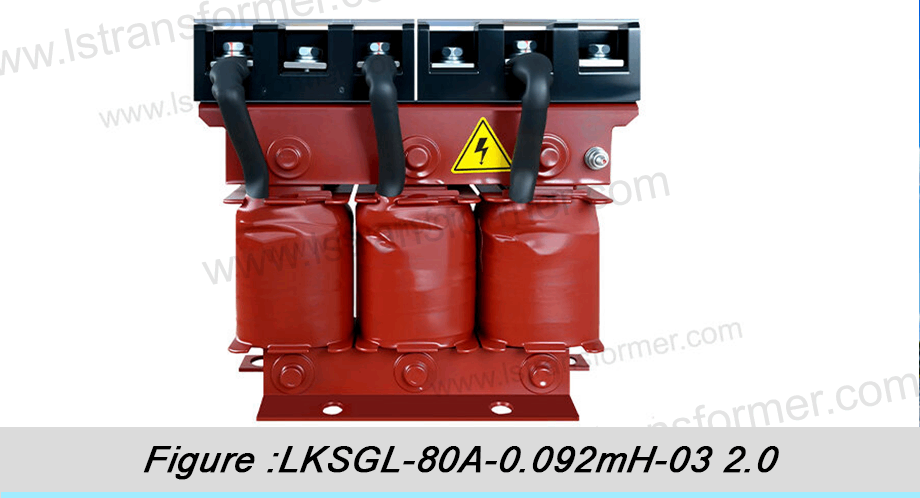
Reactors play a critical role in reactive power compensation, harmonic suppression, and system protection within photovoltaic (PV) power stations. However, since PV plants are often built in open areas with high temperatures, dust, or high altitude, reactors face more severe environmental challenges compared to traditional grid applications. This article provides a detailed analysis of five major environmental issues that reactors may encounter in PV power plants and offers practical solutions covering technical selection, operational optimization, and monitoring strategies to ensure long-term stable operation.
1. Impact of High Temperature on Reactors & Solutions
● Problem Analysis
PV power stations are typically located in regions with strong direct sunlight, where ambient temperatures can exceed 50°C. Additionally, reactors generate heat during operation (due to copper and iron losses). According toIEC 60076-6,reactors can operate continuously at up to 40°C ambient temperature. Beyond this limit, the following risks arise:
•Accelerated insulation aging (lifespan halves with every 8–10°C increase)
•Increased winding resistance (higher copper loss, reduced efficiency)
•Risk of magnetic core saturation (affects inductance stability)
● Detailed Solutions
(1) Enhanced Cooling Design
•Forced Air Cooling System: Install IP55-rated axial fans inside reactor cabinets (wind speed ≥3 m/s), reducing internal temperature by 15–20°C. Forced convection improves cooling efficiency by 60–70% compared to natural cooling. Fans should include a thermal control switch (set to activate at 50°C).
•Optimized Heat Sinks:Use aluminum fins with 30% more surface area and apply high-emissivity coatings (e.g., anodizing) to improve heat radiation.
(2) Material Upgrades
•Utilize Class H (180°C) or higher-grade insulation materials such as Nomex® or mica tape, offering 40% better heat resistance than standard Class B (130°C) insulation.
•Implement low-loss silicon steel sheets (e.g., 23ZH100), reducing iron losses by 15–20%.
(3) Installation Optimization
•Sunshade Installation: Install ventilated sunshades above reactors (at least 50 cm above the device), lowering surface temperature by 10–15°C.
•Avoid Enclosed Spaces: Ensure at least 1-meter clearance for heat dissipation if installed in containerized inverter rooms, and incorporate louvered vents (open area ratio≥30%).
(4) Smart Monitoring
•Integrate PT100 temperature sensors for real-time winding temperature monitoring. Configure SCADA systems with three-level alarms: warning at 70°C, derating at 90°C, and trip at 110°C.
2. Dust and Contaminant Accumulation & Solutions
● Problem Analysis
Arid regions commonly experience dust accumulation on reactor surfaces, forming an insulating layer that reduces heat dissipation efficiency. Tests show that 1 mm of dust can decrease cooling performance by 20–30%. Conductive dust can also cause tracking; IEEE Std 1313.2 defines minimum creepage distance requirements based on pollution levels.
Comparison Table of Pollutant Effects:
Type of Contaminant | Conductivity | Impact on Heat Dissipation | Typical Regions |
Ordinary Dust | Low | Medium-High | Desert Areas |
Industrial Dust | Medium-High | Medium | Near Industrial Zones |
Salt Mist | High | Low | Coastal Areas |
Agricultural Dust | Medium | High | Farmland Surroundings |
● Detailed Solutions
(1) Enclosure Protection Enhancement Protection Enhancement
•IP54/IP55 Protection Rating: Use fully sealed reactor enclosures with removable dust filters (mesh count≥60) at air inlets.
•Anti-Dust Coating:Apply anti-static coatings like fluorocarbon paint on cabinet exteriors to reduce dust adhesion.
(2) Active Cleaning Strategies
•Automatic Blow-off System: Install compressed air nozzles (0.3 MPa pressure) inside reactors for automatic cleaning every 24 hours (10-second cycles).
•Robotic Cleaning:For large-scale PV plants, use rail-mounted cleaning robots (e.g., integrated monitoring and cleaning systems like DustIQ).
(3) Pollution Level Adaptation
According to IEC 60815 standards:
Pollution Level | Typical Environment | Min. Creepage Distance (mm/kV) |
I (Light) | Low-dust regions | 16 |
II (Medium) | Standard PV plants | 20 |
III (Heavy) | Desert/Industrial zones | 25 |
IV (Severe) | Coastal + dusty composite environments | 31 |
•Solution:Select Class III pollution design for desert areas and add silicone rubber skirts to extend creepage distance.
3. Humidity and Condensation Issues & Solutions
● Problem Analysis
Large day-night temperature variations lead to condensation inside reactors. Moisture reduces insulation resistance — IEC 60076-16 specifies normal conditions as ≥1000 MΩ, but levels can drop below safe thresholds when humidity exceeds 85%. Condensation also triggers partial discharges, accelerating insulation degradation.
● Detailed Solutions
(1) Moisture Protection Design
•Built-in Heaters:Calculate heater power at 1.5 W/kg; activate automatically when humidity >70% RH.
•Breathable Vents + Desiccant: Install color-changing silica gel breathers (blue to red indicates moisture absorption requiring replacement).
(2) Material Selection
•Epoxy Vacuum Impregnation: Apply VPI (Vacuum Pressure Impregnation) treatment to windings to prevent moisture penetration.
•Moisture-Resistant Insulation Materials:Such as Nomex® 910 (moisture absorption rate <1%).
(3) Monitoring and Maintenance
•Online Humidity Sensors(e.g., Honeywell HIH8000 series) for real-time humidity tracking.
•Regular Polarization Index Testing (PI = R₁₀min / R₁min); perform drying if PI < 2.
4. High Altitude Environmental Issues & Solutions
● Problem Analysis
For every 1000 m increase in altitude, air density decreases by approximately 10%, resulting in:
•Reduced cooling capacity (temperature rise increases by 3–5%)
•Decreased external insulation strength (requires increasing electrical clearance by 8–12%)
● Detailed Solutions
Altitude (m) | Temperature Rise Correction Factor | Insulation Strength Correction Factor |
≤1000 | 1.00 | 1.00 |
2000 | 1.05 | 0.92 |
3000 | 1.12 | 0.85 |
4000 | 1.20 | 0.78 |
•Derated Operation: Reduce rated current by 5% per 1000 m above 1000 m.
•Enhanced Insulation: Use designs with extended creepage distances (e.g., high-altitude specific reactors).
5. Harmonic and Electrical Stress Issues & Solutions
● Problem Analysis
Photovoltaic inverters generate 5th andth and 7th order harmonics, leading to additional losses in reactors
(Pₕ=∑Iₕ² ×Rₕ).
● Detailed Solutions
•Harmonic Tolerant Design: Employ foil windings to minimize eddy current losses.
•Install RC Snubber Circuits (C = 0.1 μF, R = 10 Ω) to absorb high-frequency oscillations.
Conclusion
By implementing optimized cooling, dust-proofing, moisture protection, altitude adaptation, and harmonic suppression measures, the reliability of reactors in photovoltaic power stations can be significantly improved. It is recommended to integrate online monitoring systems (covering temperature, humidity, and harmonics) to enable predictive maintenance and ensure long-term operational stability.
Contact Us
LuShan, est.1975, is a Chinese professional manufacturer specializing in power transformers and reactors for50+ years. Leading products are single-phase transformer, three-phase isolation transformers,electrical transformer,distribution transformer, step down and step up transformer, low voltage transformer, high voltage transformer, control transformer, toroidal transformer, R-core transformer;DC inductors, AC reactors, filtering reactor, line and load reactor, chokes, filtering reactor, and intermediate,high-frequency products.
Our power transformers and reactors are widely used in 10 application areas: rapid transit, construction machinery, renewable energy, intelligent manufacturing, medical equipment, coal mine explosion prevention , excitation system, vacuum sintering(furnace), central air conditioning.
Know more about power transformer and reactor :www.lstransformer.com.
If you would like to obtain customized solutions for transformers or reactors, please contact us.
WhatsApp:+86 13787095096
Email:[email protected]