
 EN
EN
 FR
FR DE
DE ES
ES
How to Choose Transformer Enclosures for Coastal Salt Spray Environments?
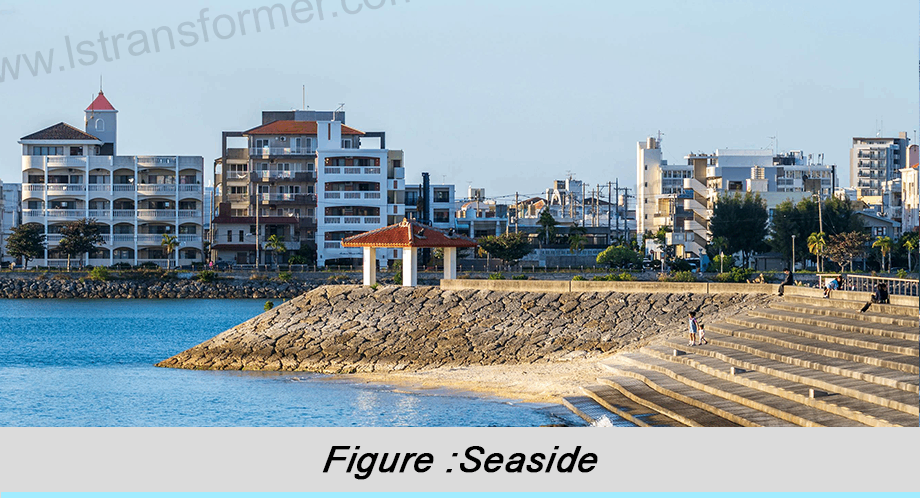
Operating transformers in coastal areas face unique challenges, with salt spray corrosion being one of the most significant threats. According to International Electrotechnical Commission (IEC) standards, coastal areas are defined as regions within 10 kilometers of the coastline, where salt spray concentration can be 5–10 times higher than inland. Selecting a suitable transformer enclosure for coastal salt spray environments is not only critical to the equipment’s service life but also directly affects the safety and stability of the power system. This article provides a detailed analysis of the corrosion mechanisms affecting transformers in salty atmospheres and offers scientific and practical enclosure selection guidelines to support informed decision-making.
Content
1. Corrosion Mechanism of Salt Spray on Transformer Enclosures
Chloride particles in salt spray environments trigger complex electrochemical reactions on metal surfaces, leading to accelerated corrosion. The process consists of three key stages:
lSalt Deposition Phase:
Sea winds carry salt particles that deposit on the enclosure surface. Research shows that within 500 meters of the coast, deposition rates can reach 100–300 mg/m² per day.
lElectrolyte Film Formation:
When relative humidity exceeds 60%, salt particles absorb moisture from the air, forming a conductive electrolyte conductive electrolyte film with a typical thickness of 1–100 μm—enough to initiate electrochemical corrosion.
lElectrochemical Corrosion Phase:
Within this film, anodic and cathodic zones form on the metal surface, generating corrosive currents. Steel corrosion rates under these conditions can reach 0.1–0.5 mm per year, 3–8 times higher than inland rates.
The accumulation of corrosion products (e.g., Fe₂O₃·H₂O) further damages protective coatings, creating a vicious cycle. Therefore, selecting appropriate materials and protective systems is essential.
2. Material Selection Criteria for Coastal Transformer Enclosures
lCorrosion Resistance Performance
Stainless steel is the most common choice, but performance varies significantly by type:
Material Type | Salt Spray Resistance | Cost Index | Suitable Environment |
304 Stainless Steel | Moderate | 1.0 | Mild (>5 km from coast) |
316L Stainless Steel | Excellent | 1.5–2.0 | Medium (1–5 km from coast) |
2205 Duplex Steel | Outstanding | 2.5–3.0 | Severe (<1 km from coast) |
● 316L Stainless Steel
316L offers superior salt spray resistance due to its2–3% molybdenum content. Molybdenum forms stable complexes [MoO₄]²⁻ with chloride ions, preventing damage to the passive layer.
Itslow carbon content (<0.03%)also minimizes chromium carbide precipitation at grain boundaries, reducing intergranular corrosion risk. Electrochemical tests show that 316L has a pitting potential (Epit) of approximately +350 mV (SCE) in 3.5% NaCl solution—much higher than 304 stainless steel's +100 mV.
● Aluminum Alloy Enclosures
Alloys such as5083 and 6061are alternatives, forming a dense Al₂O₃ protective film. However, their lower strength makes them more suitable for small transformers. Corrosion resistance follows Wagner’s oxidation theory, with oxide growth obeying a parabolic rate law.
● Composite Materials
Fiber-reinforced polymer (FRP)offers complete immunity to salt spray corrosion but requires verification of mechanical strength and fire resistance according to IEC 61439. Long-term degradation mainly results from resin hydrolysis, following the Arrhenius equation.
lProtective Coating Systems
When using carbon steel as the base material, a multi-layer coating system offers a cost-effective solution:
●Primer:
Epoxy zinc-rich primer (Zn content >80%) providing cathodic protection based on Faraday’s law.
●Intermediate Layer:
Micaceous iron oxide (MIO) epoxy, 150–200 μm thick, acting as a barrier.
●Topcoat:
Polyurethane or fluorocarbon paint, 50–80 μm thick, offering UV protection and aesthetics.
According toISO 12944, a C5-M grade coating can provide over 15 years of protection in harsh marine environments.
3. Structural Design and Sealing Optimization
lSalt Spray Ingress Protection
The enclosure of coastal transformers shall adhere to the following design principles:
●Ingress Protection (IP) Rating:
A minimum of IP55(dust-protected and protected against low-pressure water jets) is required, with IP56 being the optimum. IP rating testing shall be performed in accordance with IEC 60529.
An IP56 ratingsignifies the enclosure must withstand forceful water jets from a 12.5 mm diameter nozzle at a distance of 3 meters, delivering 100 L/min for at least 3 minutes, without harmful water ingress. From a fluid dynamics perspective, the water intrusion pressure differential (ΔP) can be represented as:
ΔP =ρgh +½ρv²
Where:
ρ is the density of water,
g is the gravitational acceleration,
h is the water head height,
v is the water jet velocity.
The equivalent ΔP for IP56 is approximately 30 kPa.
●Sealed Structure:
A dual-seal design shall be adopted, comprising an outer seal of silicone rubber gasket (Hardness: 50-60 Shore A) and an inner seal of polyurethane foam.
The compression set of the silicone rubber shall be <20% (as per ISO 815) to guarantee long-term sealing integrity. Based on fluid sealing theory, the necessary contact pressure (P_c) must)must satisfy:
P_c >ΔP / (μ ·K)
Where: μ is the coefficient of friction, Kis the geometric factor. In standard designs,P_c` typically needs to achieve 0.5–1 MPa.
●Ventilation System:
If transformer ventilation is necessary, an air-to-air heat exchanger shall be utilized to prevent direct openings. Heat exchange efficiency (η) is defined as:
η= (T₁- T₂) / (T₁- T₃)
Where:
T₁ is the inlet hot air temperature (internal),
T₂ is the outlet air temperature,
T₃ is the external cooling air temperature.
High-efficiency heat exchancers can attain anηvalue of 60–70%, while fully maintaining the specified IP protection level.
● Water Accumulation Prevention Design
To mitigate accelerated localised corrosion caused by water pooling, the enclosure design must ensure:
●Minimum Inclination Angle ≥5°:
Fluid mechanics calculations indicate this angle maintains the water film thickness (δ) below the critical threshold:
δ< (3μQ /ρg sinθ)^(1/3)
Where:
μ is the dynamic viscosity of water,
Q is the volumetric
flow rate per unit width, θis the surface inclination angle. A 5° incline ensuresδ` remains below 0.2 mm, thereby preventing the formation of a continuous electrolytic film.
●Drain Hole Diameter ≥20 mm,
With the quantity determined based on surface area (minimum of 1 per square meter):
Total drain capacity (Q_d) must satisfy:
Q_d = n·C_d·A· √(2gH) > Q_max
Where:
n is the number of drain holes,
C_d is the discharge coefficient (approx. 0.61),
A is the cross-sectional area of a single hole,
H is the hydraulic head.
A single 20 mm diameter hole under a 5 mm head provides a drainage capacity (Q_d) of approximately 1.2 L/s.
●Absence of Internal Dead Zones; All Welds Continuous and Smooth:Weld seams prone to flow separation can induce vortices, resulting in salt deposit accumulation. Utilising Computational Fluid Dynamics (CFD) for optimisation can achieve a flow velocity uniformity exceeding 90%.
4. Maintenance and Monitoring Strategy
Regular maintenance remains essential even with a well-chosen enclosure. Recommended intervals:
Inspection Item | Mild Salt Area | Medium Salt Area | Severe Salt Area |
Visual Inspection | 12 months | 6 months | 3 months |
Coating Thickness Check | 24 months | 12 months | 6 months |
Seal Integrity Check | 24 months | 12 months | 6 months |
Corrosion Potential Measurement | 36 months | 24 months | 12 months |
Use a Cu/CuSO₄ reference electrode; protection potential should remain between -850 mV and -1100 mV (vs. CSE).
International Standards & Certification Requirements
Coastal transformer enclosures should comply with:
●IEC 60076-11: Dry-type transformers – environmental requirements
●ISO 9223: Atmospheric corrosivity classification
●ASTM B117: Salt spray test standard
●NORSOK M-501: Coating standard for marine environments
Products certified by DNV GL or ABS are recommended, often involving cyclic corrosion tests simulating years of exposure.
Conclusion
Choosing the right transformer enclosure transformer enclosure for coastal salt spray environments requires careful consideration of material properties, coating systems, structural design, and maintenance planning. For most applications,316L stainless steel with IP56 ratingis the optimal choice. In extreme environments,2205 duplex steel or compositesmay be necessary. Although high-quality enclosures involve higher initial costs, they significantly extend equipment lifespan and reduce total cost of ownership (TCO). We recommend performing recommend performing a detailed site-specific environmental assessment and consulting professional manufacturers before purchasing.
Contact Us
LuShan, est.1975, is a Chinese professional manufacturer specializing in power transformers and reactors for50+years. Leading products aresingle-phase transformer, three-phaseisolationtransformers,electrical transformer,distribution transformer, step down and step up transformer, low voltage transformer, high voltage transformer, control transformer, toroidal transformer, R-core transformer;DC inductors, AC reactors, filtering reactor, line and load reactor, chokes, filtering reactor, and intermediate,high-frequency products.
Our powertransformers and reactors are widely used in 10 application areas: rapid transit, construction machinery, renewable energy, intelligent manufacturing, medical equipment, coal mine explosion prevention , excitation system, vacuum sintering(furnace), central air conditioning.
Know more about power transformer and reactor :www.lstransformer.com.
If you would like to obtain customized solutions for transformers or reactors, please contact us.
WhatsApp:+8613787095096
Email:[email protected]