
 EN
EN
 FR
FR DE
DE ES
ES
How to Balance High Protection Levels with Transformer Maintenance Accessibility? ——A Practical Guide for Engineers Worldwide
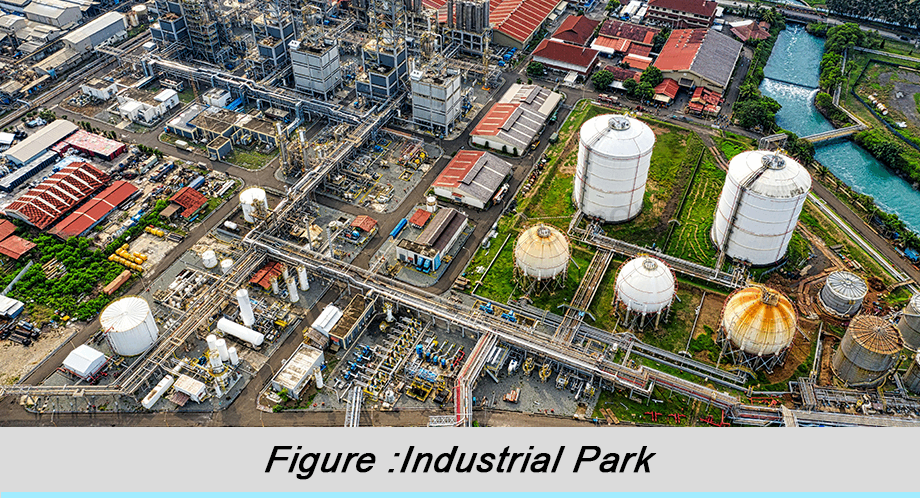
At the heart of electrical power systems, transformers stand as silent giants. When located along storm-battered coastlines or within dust-filled industrial zones, a robust "suit of armor" – a high IP protection rating – is fundamental to their survival. However, does this very armor become an insurmountable barrier for maintenance personnel? This is the critical challenge faced by engineers globally: how can we achieve both high transformer IP ratings and easy maintenance accessibility? This article delves into strategies for finding this balance, covering core needs such as electrical enclosure corrosion prevention.
Content
1. Understanding IP Ratings: The Scientific Definition Scientific Definition of Transformer Enclosure Robustness
The Ingress Protection code is an international standard (IEC 60529) widely adopted globally. It intuitively quantifies an enclosure's ability to resist solid objects and liquid ingress. For example:
•IP54:Dust protected (limited ingress) + Protected against water splashing from any direction.
•IP65:Dust tight (no dust ingress) + Protected against low-pressure water jets.
•IP67:Dust tight + Protected against temporary immersion (up to 1 meter depth for 30 minutes).
High-level protection is crucial for harsh environments like outdoors, near coasts, or mines. It significantly reduces insulation degradation and short-circuit faults caused by dust or moisture ingress, thereby extending equipment lifespan and enhancing transformer reliability in demanding conditions.
IP Rating | Solid Particle Protection (1st Digit) | Water Ingress Protection (2nd Digit) | Typical Application Examples |
IP44 | ≥ Ø1mm objects | Splashing water from any direction | General outdoor distribution transformers (non-extreme environments) |
IP54 | Limited dust ingress (not fully sealed) | Splashing water from any direction | Light industrial areas with some dust or humidity |
IP55 | Limited dust ingress | Low-pressure water jets from a nozzle | Industrial plants with dust/moisture |
IP65 | Dust tight | Low-pressure water jets from a nozzle | Severe industrial, coastal, sandy areas |
IP67 | Dust tight | Temporary immersion (1m, 30 mins) | Areas prone to brief flooding/severe splashing |
Table 1: Common Transformer IP Ratings Interpretation & Applications
2. The Core Conflict: High IP Rating vs. Maintenance Accessibility
Pursuing higher IP ratings necessitates more complex sealing designs:
•Heavy-duty, Complex Door Seals:
Multiple rubber gaskets and robust locks/hinges are essential, increasing the force and time required to open doors.
•Proliferation of Fasteners:
To withstand high-pressure water jets or fine dust penetration, enclosures require numerous high-strength bolts, drastically increasing disassembly time.
•Limited Access Hatches:
Implementing large, conveniently located inspection panels becomes challenging on high-grade enclosures, hindering quick access to internal components.
•Restricted Ventilation & Cooling:
Openings for ventilation are limited in highly protected enclosures, posing significant thermal management challenges.
The consequences are clear: extended repair times, hindered preventive maintenance efficiency, and increased risk of unplanned downtime due to maintenance difficulties.
3. The Path to Balance: Innovative Design Integrated with Operational Thinking
Leading international manufacturers address this dilemma using these strategies, achieving both rugged transformer enclosures and simplified electrical simplified electrical equipment repair:
● Modular Panels & Quick-Access Systems
•Measures:
Replace traditional unitary enclosures with modular panels; integrate hydraulic struts, cam-lock/release mechanisms.
•Benefits & Principle:
Modularity allows personnel to access specific components by opening only the relevant panel section, avoiding full enclosure disassembly. Quick-access systems dramatically reduce bolt operations and opening effort, directly cutting down transformer housing access time.
•Standards Compliance:
Aligns with standards like IEC 62271-202 regarding accessibility and safety.
● Labyrinth Seals & Optimized Access Hatches
•Measures:
Implement labyrinthine seal paths at door/cover joints; strategically design hatch location, size, and quantity near key components.
•Benefits & Principle:
Labyrinth structures greatly extend the intrusion path for moisture/dust. This allows equivalent/higher protection using simpler compression seals, avoiding extreme tightness requirements. Optimized hatches enable routine checks without opening main doors.
•Technical Basis:
Fluid dynamics analysis shows labyrinth seals increase local resistance and divert flow, effectively dissipating intrusion energy.
● Smart Condition Monitoring & Remote Diagnostics
•Measures:
Integrate online DGA, winding temperature monitoring, bushing tan-delta monitoring, partial discharge sensors, combined with IoT gateways.
•Benefits & Principle:
Real-time data reduces the frequency of physical inspections, minimizing seal wear and maintenance time. Precise fault warnings enable planned maintenance before severe failures, avoiding lengthy emergency repairs on complex enclosures, enhancing predictive maintenance benefits.
•Standards Support:
Conforms to standards like IEC 61850 for communication.
● Weather-Resistant Materials & Targeted Protection
•Measures:
Use stainless steel, aluminum alloys, or composites; apply cathodic protection in corrosive areas; rationalize IP requirements for non-critical zones.
•Benefits & Principle:
Corrosion-resistant materials offer longer service life, reducing maintenance triggered by seal failure or structural decay. Targeted reinforcement protects critical areas effectively without universally applying the highest IP rating, reducing overall maintenance complexity.
•Cost-Benefit Analysis via Life-Cycle Costing (LCC):
TotalLCC = Initial Cost + Σ(Maintenance Costᵢ / (1+r)^ᵗⁱ) + Failure Cost
While premium materials and smart monitoring increase initial investment, they significantly reduce maintenance frequency and failure risk, optimizingLCC.
Balancing Strategy | Core Objective | Key Technologies / Design Points | Impact on Maintenance Accessibility | Impact on Protection Reliability |
Modular Panels & Quick-Access | Reduce access time & physical effort | Hydraulic struts, cam locks, modular panel design | >50% reduction in access time; easier single-person operation | Maintains or improves door seal integrity |
Labyrinth Seals & Optimized Hatches | Equivalent protection Equivalent protection for key areas, simplify checks | Multi-path seals, dedicated hatches above key components | ~80% routine checks avoid main door opening | Achieves IP66+ level protection on specific paths |
Smart Condition Monitoring | Reduce unnecessary openings, precise fault location | DGA, temperature monitoring, PD sensors, IoT remote transmission | 30%-60% reduction in physical inspections; accurate diagnosis | Fewer openings reduce accidental seal damage risk |
Weather-Resistant Materials & Targeted Protection | Extend lifespan, reduce corrosion upkeep | 316L Stainless Steel / Aluminum, Cathodic Protection, Zonal IP Rationalization | Significantly less maintenance due to corrosion | Key areas reach IP66/67; overall service life increased |
Table 2: Evaluation of Balancing Strategies & Key Technical Aspects
4. Maintenance Practices: Standardized Procedures for High-IP Transformers
To maximize balancing benefits, establish standardized procedures:
•Dedicated Tools:
Provide specially designed wrenches/unlocking tools to prevent seal damage during disassembly.
•Seal Maintenance Protocol:
Periodically inspect seal elasticity/integrity per manufacturer guidelines/IEC 60076, clean contact surfaces, use specified silicone grease, use OEM replacement parts.
•Opening/Closing Operation Training:
Ensure personnel are proficient with quick-release/locking procedures and correctly use support struts. Record access times and reasons for optimization.
•IP Rating Verification:
Perform simple post-overhaul verification checks per IEC 60529.
Conclusion
In the global endeavor to protect transformers in harsh environments while ensuring maintainability, the solution isn't compromise but the integration of intelligent design, modularity, and precise protection. From Nordic frost to Middle Eastern deserts, offshore platforms to deep mines, leading designs prove that robust protection and accessible maintenancecancoexist. This matters not just for cost-effectiveness but for building the resilient power grids of the future – ensuring light persists through challenges.
"The strongest fortress should not become its own prison. Excellence in engineering lies in precise trade-offs and ingenious solutions." — Global Energy Facilities Council, Sustainable Grid Whitepaper
Contact Us
LuShan, est.1975, is a Chinese professional manufacturer specializing in power transformers and reactors for50+years. Leading products aresingle-phase transformer, three-phaseisolationtransformers,electrical transformer,distribution transformer, step down and step up transformer, low voltage transformer, high voltage transformer, control transformer, toroidal transformer, R-core transformer;DC inductors, AC reactors, filtering reactor, line and load reactor, chokes, filtering reactor, and intermediate,high-frequency products.
Our powertransformers and reactors are widely used in 10 application areas: rapid transit, construction machinery, renewable energy, intelligent manufacturing, medical equipment, coal mine explosion prevention , excitation system, vacuum sintering(furnace), central air conditioning.
Know more about power transformer and reactor :www.lstransformer.com.
If you would like to obtain customized solutions for transformers or reactors, please contact us.
WhatsApp:+8613787095096
Email:[email protected]