
 EN
EN
 FR
FR DE
DE ES
ES
How to Reduce Transformer No-Load Loss? Complete Guide & Global Practices
In the global context of energy transition and industrial energy efficiency, reducing transformer no-load loss has become a key focus for the power industry, industrial enterprises, and commercial users alike. According to the International Energy Agency (IEA), transmission and distribution losses account for about 8% to 15% of total global electricity generation, with transformer no-load losses representing a significant portion of this. Whether you operate distribution transformers, power transformers, or dry-type transformers, optimizing no-load performance can directly lower your electricity costs.
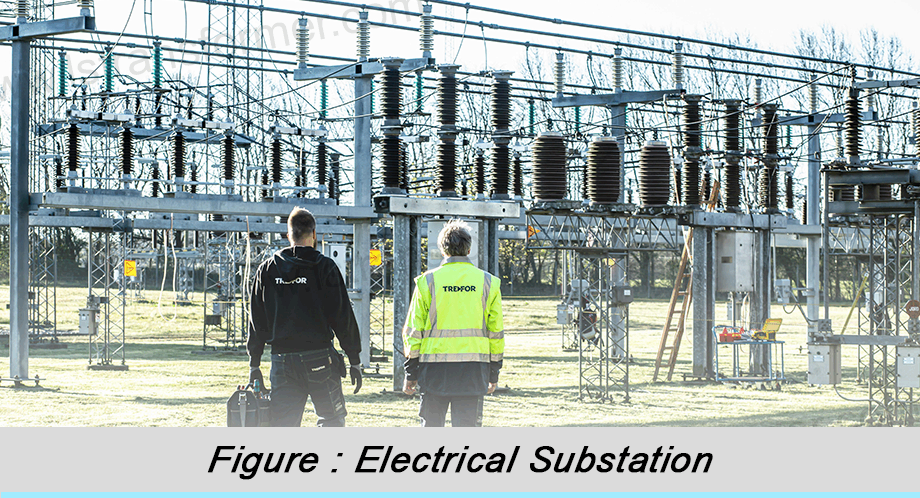
For facilities with transformers running 24/7 – such as data centers, hospitals, and continuous production plants – the energy savings from minimizing no-load loss are particularly substantial. This guide provides a comprehensive overview of no-load loss, international standards, and proven strategies for reduction, tailored for a global audience seeking efficient and cost-effective power solutions.
1. What is Transformer No-Load Loss? Definitions & International Standards
Transformer No-Load Loss, as defined by the international standard IEC 60076-1, is the active power consumed by a transformer when one winding (usually the high-voltage side) is energized at rated voltage and rated frequency, while the other winding remains open-circuited. It consists primarily of two components:
1.1 Hysteresis Loss
(1)Cause: This loss occurs due to the internal friction within the transformer's core material. As the alternating magnetic field constantly reverses direction, the magnetic domains in the core material must realign, a process that consumes energy and dissipates it as heat.
(2)Key Influencing Factor: The lower the coercivity of the core material, the smaller the area of its hysteresis loop, resulting in lower hysteresis loss.
1.2 Eddy Current Loss
(1)Cause: The alternating magnetic field induces circulating currents (eddy currents) within the conductive core material. The electrical resistance of the core converts the energy of these currents into heat (Joule heating).
(2)Key Influencing Factors: Directly related to the core material's resistivity, lamination thickness, and magnetic flux density.
No-load loss is an inherent characteristic of a transformer. It occurs continuously whenever the transformer is energized, regardless of whether it is supplying any load. Therefore, investing in low no-load loss transformers offers a clear path to operational savings.
Standard System | Standard Code | Efficiency Tier | No-Load Loss Limit (kW) | Notes |
International Electrotechnical Commission | IEC 60076-20 | Tier 1 | 1.05 | Basic efficiency requirement |
U.S. Department of Energy | DOE 10 CFR 431 | TP-1 | 0.98 | Latest standard effective 2023 |
EU Ecodesign | EU 548/2014 | A0 | 0.92 | Highest efficiency class |
Chinese National Standard | GB 20052-2020 | Level 1 | 0.89 | Leading performance level |
Table 1: No-Load Loss Requirements of Major International Efficiency Standards (Example: 10kV, 1000kVA Oil-Immersed Transformer)
2. Reducing No-Load Loss: Optimizing Core Design & Material Selection
The core is the primary source of no-load loss in a transformer. Advanced materials and innovative design are crucial for improving energy conversion efficiency.
2.1 Using High-Permeability, Low-Loss Silicon Steel Laminations
2.1.1Action: Employ High-Grade Grain-Oriented Silicon Steel (GOES), such as Japan's JFE JNEX series, Germany's ThyssenKrupp Hi-B steel, or China's Baosteel B20R070.
2.1.2How It Works:
(1)Crystal Orientation Optimization: Special rolling and annealing processes align the silicon steel grains so their easy-magnetization direction is consistent with the rolling direction. This makes magnetization easier, significantly reducing hysteresis loss.
(2)Increased Silicon Content: Adding silicon (typically 3%-3.5%) increases the core's resistivity. According to the formula for eddy current loss
Pe ∝ (Bm * f * t)² / ρ
where Bm is flux density
f is frequency, t is lamination thickness
ρ is resistivity
Ahigher resistivity directly reduces eddy current losses.
2.2 Applying Amorphous Metal Core – A Revolutionary Breakthrough
Action: Replace traditional silicon steel with Amorphous Alloy (e.g., Metglas) ribbon to form the transformer core.
How It Works:
Disordered Atomic Structure: Amorphous metal is formed by ultra-rapid cooling (millions of degrees per second), creating a glassy, non-crystalline structure with long-range atomic disorder. This eliminates the impediment of grain boundaries to magnetic domain wall movement, resulting in extremely low coercivity. Hysteresis loss can be just 20%-30% of that in traditional silicon steel.
High Resistivity: Amorphous alloys have a resistivity approximately three times higher than silicon steel, drastically suppressing eddy current loss at the source.
2.3 Optimizing Core Structure and Manufacturing Process
Action: Utilize Step-Lap joint configurations in the core and minimize the number of joints.
How It Works:
Reducing Local Magnetic Reluctance: Traditional butt-lap joints cause severe magnetic flux distortion and high-loss transverse flux. Step-lap joints create a smooth transition, leading to more uniform flux distribution and a significant reduction in stray loss at the joints.
Controlling Stacking Pressure and Annealing: Precise stacking pressure ensures core compactness, avoiding additional losses from vibration. Annealing in a protective atmosphere relieves processing stresses in the laminations, restoring their optimal magnetic properties.
Conclusion & Global Recommendations
Reducing transformer no-load loss is a systematic engineering challenge that integrates materials science, electromagnetic design, and intelligent operation. Starting with the selection of transformers that meet the world's highest efficiency standards (such as EU A0 or China Level 1) and extending to fine-tuned management throughout their lifecycle, each step offers significant energy savings and economic returns.
Key Takeaways:
The Core is the Main Battleground: Investing in high-performance silicon steel or amorphous metal cores may increase initial costs, but it dramatically lowers the Total Cost of Ownership (TCO) over the typical 20-30 year lifespan.
Design is a Balancing Act: Work closely with your transformer manufacturer. Optimize the design magnetic flux density and material usage based on your actual load profile for the best efficiency at your specific operating points.
Operation Management is the Force Multiplier: Utilize digital monitoring and smart grid technologies to ensure your high-efficiency hardware performs at its peak.
In the global journey towards "net-zero emissions," improving transformer efficiency is one of the most cost-effective actions available. We recommend that for your next transformer purchase, you look beyond the initial price tag. Request detailed no-load loss test reports and calculate the lifecycle cost to make a truly informed decision.
About Us: We provide global clients with high-efficiency, energy-saving transformers and customized energy solutionsthat comply with international standards. Our engineering team is proficient in various standards including IEC, IEEE, BS, and DIN. Our products are exported to over 50 countries and regions across Europe, North America, Southeast Asia, the Middle East, and more. For no-load loss analysis and product selection advice tailored to your specific operating conditions, please contact our global engineering team.