
 EN
EN
 FR
FR DE
DE ES
ES
Special Requirements for Winding Conductors in Amorphous Alloy Transformers: Technical Analysis and International Standards Guide
Special Requirements for Winding Conductors in Amorphous Alloy Transformers: Technical Analysis and International Standards Guide
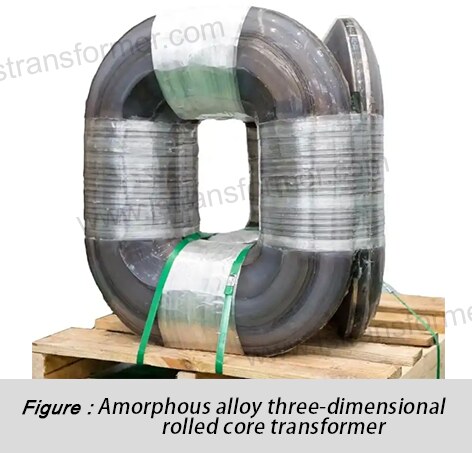
As a revolutionary material in the transformer industry, amorphous alloy is renowned for its extremely low core loss, reducing no-load energy consumption by 60%-80%. However, its unique operational characteristics also impose higher demands on winding conductors. This article delves into the special requirements for winding conductors in amorphous alloy transformers, explains the underlying technical principles, and provides solutions compliant with international standards (IEC, IEEE).
Content
1. Handling Higher-Frequency Harmonics: Selection of Low-Loss Conductive Materials
● Cause:The magnetization curve of amorphous alloy is "harder," leading to greater distortion in the excitation current waveform. This results in significantly higher high-order harmonic content (especially 3rd, 5th, and 7th harmonics) in the no-load current compared to traditional silicon steel transformers. When these high-frequency currents flow through the winding conductors, they cause pronounced skin effects and proximity effects.
● Requirement:Use conductors with high conductivity and low resistivity, preferably oxygen-free copper (OFC).
● Principle and Effects:
(1)Conductivity and Losses:The AC resistance (Rac) of a conductor under the skin effect is significantly higher than its DC resistance (Rdc). The simplified formula for Rac is:
Rac ≈ Rdc × (1 + F)
where F is a coefficient determined by frequency, conductor size, and shape.
Copper’s resistivity (ρ ≈ 1.68×10⁻⁸ Ω·m @20°C) is much lower than aluminum (ρ ≈ 2.82×10⁻⁸ Ω·m). Under the same conditions, copper conductors exhibit lower Rac, and according to Joule’s law (P = I²R), this reduces load losses, which is critical for improving the overall efficiency of amorphous alloy transformers.
(2)Skin Depth:Skin depth (δ) measures the effective penetration depth of current in a conductor, calculated as:
δ = √(ρ / (π × f × μ))
where:
ρ = resistivity
f = frequency
μ = permeability
Higher frequencies (f) result in smaller skin depths (δ), causing current to concentrate near the conductor surface, reducing the effective cross-sectional area and increasing resistance. Copper’s high conductivity ensures a larger skin depth at the same frequency, minimizing additional high-frequency losses.
(3)Advantages of Oxygen-Free Copper:OFC has extremely low oxygen content (<5ppm) and fewer impurities, offering a more uniform crystal structure and conductivity close to the theoretical value of pure copper (100% IACS). This further reduces resistance and losses compared to standard electrolytic copper (ETP).
2. Withstanding Higher Thermal Stress: High-Temperature Insulation Systems
● Cause:
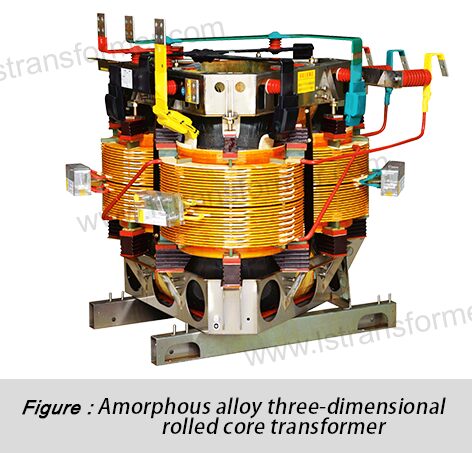
(1)Hotspot Temperatures: Amorphous alloy cores typically operate at higher magnetic flux densities. Although core losses are low, heat is more concentrated in the core itself. The ultra-thin amorphous strips (~25μm) have short heat conduction paths and weaker heat dissipation, potentially raising the core temperature and transferring heat to adjacent low-voltage windings (especially inner layers).
(2)Overload Capacity: Amorphous alloy strips have a lower Curie temperature (~410°C) and are prone to crystallization and brittleness at high temperatures. To ensure core safety, conservative temperature rise limits (per IEC 60076 or IEEE C57.12.00/01) are adopted, requiring insulation systems to operate reliably under stricter thermal constraints.
● Requirement:Use insulation materials with higher thermal classes (e.g., H-class or above) and optimize insulation design.
● Principle and Effects:
(1)Higher Thermal Class:Prefer H-class (180°C) or higher insulation (e.g., Nomex® rated for 220°C) over traditional B-class (130°C) or F-class (155°C) materials.
(2)Material Properties:High-temperature insulation materials (e.g., polyimide films, aramid paper, high-temperature resins) retain excellent electrical strength, mechanical integrity, and aging resistance at elevated temperatures. For example, Nomex® (DuPont aramid paper) can endure tens of thousands of hours at 220°C, whereas B-class materials degrade rapidly.
(3)Thermal Aging Lifespan: Insulation lifespan follows the Arrhenius law: every 10°C increase doubles the aging rate. Higher thermal class materials exhibit slower aging at the same operating temperature, significantly extending transformer life.
(4)Structural Design:Optimize winding layouts (e.g., adding cooling ducts) and use thermally conductive insulation (e.g., epoxy with fillers) to dissipate heat faster, lowering operational temperatures.
3. Adapting to Unique Mechanical Properties: Flexible Conductors and Impact-Resistant Structures
● Cause:
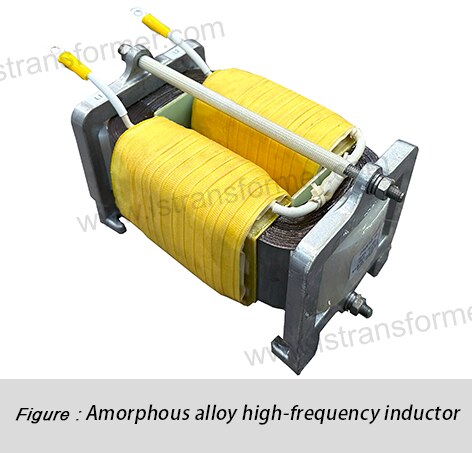
(1)Core Characteristics:Amorphous alloy strips are inherently hard and brittle. Electromagnetic forces during operation cause micro-vibrations, transmitted to windings via core clamps and spacers.
(2)Short-Circuit Forces:During faults, windings endure massive instantaneous electromagnetic forces (Lorentz forces). The mechanical damping of amorphous cores differs from silicon steel.
● Requirement:
(1)Conductor Flexibility:Use soft, bendable conductors (e.g., well-annealed soft copper) and small-gauge wires (e.g., stranded or transposed conductors).
(2)Structural Reinforcement:Windings need robust support and clamping to withstand vibrations and short-circuit forces.
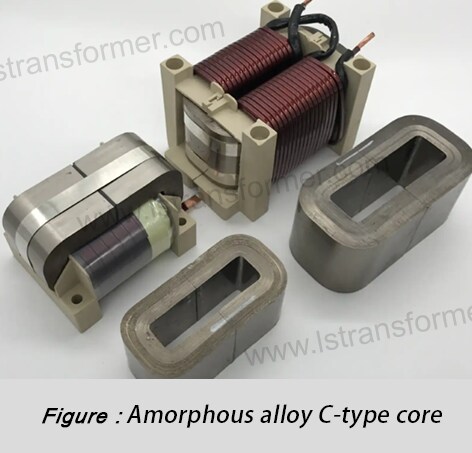
● Principle and Effects:
(1)Flexible Conductors:Soft copper resists work-hardening fractures under repeated stress. Small-gauge wires (e.g., Litz wire) adapt better to core-induced vibrations, reducing insulation wear. During faults, flexible conductors absorb some impact energy.
(2)Short-Circuit Resistance:Short-circuit forces (F) are proportional to current squared (I²). Key measures include:
—High-strength insulation cylinders (e.g., pre-compressed board or CRGE) for radial support.
—Axial clamping forces (F_clamp > K × F_max_axial, where K > 1.5).
—Optimized spacers and blocks (e.g., high-density laminates) to distribute forces.
—Reinforced winding ends (e.g., molded angle rings) to prevent deformation.
Requirement Category | Core Challenge | Special Requirements for Conductors/Insulation | Key Solutions & Technical Principles |
Low-Loss Conductivity | High harmonics → Skin/proximity effects | High conductivity, low resistivity | Material: Oxygen-free copper (OFC). Conductor type: Litz/transposed wires. |
High-Temperature Insulation | Higher core temps/stricter limits | Higher thermal class (H-class+) | Materials: Polyimide, Nomex®, high-temp resins. Design: Improved cooling paths. |
Flexibility & Impact Resistance | Core vibrations/short-circuit forces | Flexible conductors; robust structure | Conductors: Soft copper, stranded wires. Structure: Reinforced supports/clamping. |
Table 1: Key Requirements and Solutions for Amorphous Transformer Conductors
Property | Unit | Copper (Cu) | Aluminum (Al) | Relevance to Amorphous Transformers |
Resistivity (20°C) | Ω·m | ≈ 1.68×10⁻⁸ | ≈ 2.82×10⁻⁸ | Lower Cu resistivity reduces losses. |
Conductivity (IACS %) | % | 100% | ≈ 61% | Higher Cu conductivity improves efficiency. |
Density | g/cm³ | ≈ 8.96 | ≈ 2.70 | Al is lighter but mechanically weaker. |
Tensile Strength | MPa | Soft: 200-250; Hard: 350-450 | Soft: 60-100; Hard: 150-200 | Cu offers better short-circuit resistance. |
Elongation (Soft) | % | > 30% | > 20% | Cu’s flexibility suits core vibrations. |
Thermal Conductivity | W/(m·K) | ≈ 400 | ≈ 235 | Cu dissipates heat more effectively. |
Cost | (Variable) | Higher | Lower | Al is cheaper but less performant. |
Table 2: Copper vs. Aluminum Conductor Properties (Per IEC 60228)
In Summary
Amorphous alloy transformers are pivotal for energy-efficient power systems. Their ultra-low no-load losses demand stringent conductor/insulation standards: high conductivity (preferably OFC), high thermal class (H-class+), and superior mechanical flexibility. Understanding the underlying principles (skin effect, thermal aging, short-circuit forces) and adhering to IEC/IEEE standards (e.g., IEC 60076, IEEE C57) ensures global reliability.
Optimized conductor and insulation choices, paired with robust designs, maximize energy savings, enhance fault resistance, and extend service life—delivering unparalleled lifecycle value for power solutions worldwide.
Contact Us
LuShan, est.1975, is a Chinese professional manufacturer specializing in power transformers and reactors for50+ years. Leading products are single-phase transformer, three-phase isolation transformers,electrical transformer,distribution transformer, step down and step up transformer, low voltage transformer, high voltage transformer, control transformer, toroidal transformer, R-core transformer;DC inductors, AC reactors, filtering reactor, line and load reactor, chokes, filtering reactor, and intermediate,high-frequency products.
Our power transformers and reactors are widely used in 10 application areas: rapid transit, construction machinery, renewable energy, intelligent manufacturing, medical equipment, coal mine explosion prevention , excitation system, vacuum sintering(furnace), central air conditioning.
Know more about power transformer and reactor :www.lstransformer.com.
If you would like to obtain customized solutions for transformers or reactors, please contact us.
WhatsApp:+86 17267488565
Email:[email protected]