
 EN
EN
 FR
FR DE
DE ES
ES
How Excessive Temperature Rise Ages Transformer Insulation? — Comprehensive Methods to Control Temperature Rise
How Excessive Temperature Rise Ages Transformer Insulation?
— Comprehensive Methods to Control Temperature Rise
Transformers are the core equipment of power systems, and their operating temperature directly impacts the lifespan of insulation materials and grid safety. Research by the International Electrotechnical Commission (IEC) indicates that excessive temperature rise is the leading cause of transformer failures. This article delves into the relationship between temperature rise and insulation aging and provides a full-process temperature control solution compliant with international standards (IEC/IEEE), helping extend equipment lifespan by over 10 years.
Content
1. How Does Temperature Rise "Kill" Transformer Insulation? — Irreversible Aging Mechanisms
● Core Law of Thermal Aging: Arrhenius Effect
The lifespan of insulation materials decays exponentially with temperature. As transformer temperature increases, molecular thermal motion intensifies, leading to an exponential rise in bond-breaking probability and eventual structural collapse. This follows the Arrhenius equation:
L = L₀ × e^(-Eₐ/kT)
-L:Expected lifespan (years) at temperature T
-T:Hotspot absolute temperature (Kelvin = ℃ + 273)
-Eₐ:Activation energy of the material (Joules)
-k:Boltzmann constant (1.38×10⁻²³ J/K)
Key Takeaway: For every 6–10°C increase, insulation lifespan shortens by ~50%. For example, Class B insulation operating at 130°C will see its lifespan drop from 20 years to 10 years at 138°C.
Insulation Class | Max Allowable Temp. (℃) | Lifespan Reduction at +8°C | Typical Materials |
Class A | 105 | 50% | Impregnated cellulose |
Class B | 130 | 50% | Mica-glass fiber |
Class F | 155 | 50% | High-performance resin |
Class H | 180 | 50% | Silicone rubber composites |
Table 1: Insulation Class vs. Temperature Lifespan (IEC 60085 Standard)
● Triple Damage Mechanisms of High Temperatures
(1)Mechanical Strength Collapse: At 130°C, insulation paper tensile strength drops by 80% (IEEE C57.91).
(2)Dielectric Performance Degradation: For every 10°C rise, dielectric loss increases by 300%.
(3)Oil-Paper Synergistic Deterioration: High temperatures accelerate oil oxidation. When acid value exceeds 0.5 mgKOH/g, insulation paper lifespan shortens by 60%.
2. Three Root Causes of Excessive Temperature Rise and Solutions
● Excessive Load Current Leading to Copper Loss
When transformer load exceeds design capacity, winding current increases. Per Joule’s law (P=I²R), resistive losses rise quadratically with current, converting directly into heat and raising winding temperature.
Impact:
(1)10% current increase → 21% higher copper loss → ~15°C temperature rise.
(2)Long-term overload causes hotspot temperatures to exceed design limits, accelerating insulation aging.
Case Study:A 110kV transformer running at 20% overload for 3 years saw insulation paper polymerization drop to 40% of its initial value, forcing early retirement.
● Cooling System Efficiency Decline
Cooling system failures directly impair heat dissipation.
Issues:
(1)Dust/clogging on radiators: 1mm dust reduces efficiency by 30%.
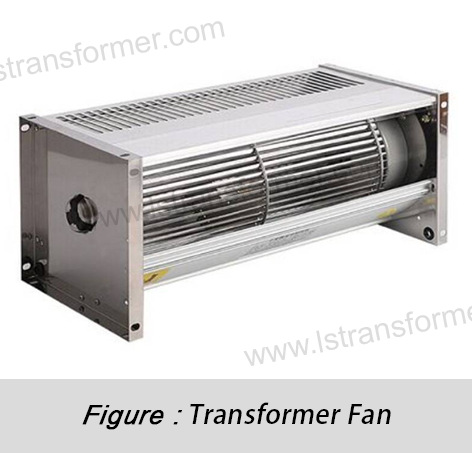
(2)Fan failures:Stoppages raise oil temperature by 20–30°C.
(3)Pump inefficiency:Low oil flow increases hotspot temps by 40°C+.
Consequence:Heat accumulation leads to insulation breakdown.
● High Ambient Temperatures
Ambient temperature directly affects cooling efficiency.
Impact:Every 1°C rise in ambient temperature increases internal temps by 0.5–1°C.
Sunlight can raise tank surface temps by 20°C+.
Case Study:A substation in Africa required 15% load reduction at 40°C to ensure safe operation.
3. Four-Dimensional Temperature Control System
● Smart Load Management
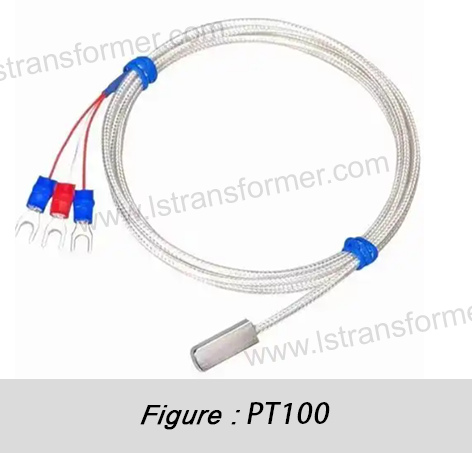
Measures:Install real-time monitoring, dynamic load control, and a three-tier alert system (80% warning, 90% alarm, 100% auto load-shedding) per IEC 60076-7.
Effect: Reduces overloads by 82%, cuts temperature fluctuations from ±12°C to ±5°C, and extends lifespan by 9.2 years (per Zhejiang 220kV substation data).
● Enhanced Cooling System Upgrades
Measures: Use corrugated radiators (50% more surface area), smart variable-speed fans, and oil-flow optimizers.
Effect: Lowers top oil temp from 78°C to 60°C, saves 280,000 kWh/year (per Guangdong 500kV substation).
● Oil Quality Management
Measures: Deploy online vacuum oil purifiers (<10ppm moisture, acid value ≤0.03 mgKOH/g) and antioxidant additives.
Effect:Reduces average oil temp by 14°C and extends oil replacement cycles to 7 years (per Inner Mongolia wind farm).
● Environmental Thermal Optimization
Measures: Install reflective canopies (88% solar reflectivity), smart ventilation (20–30 air changes/hour), and nano-reflective flooring.
Effect:Cuts surface temps by 28°C and reduces failures from 7/year to 1 (per Hainan 110kV substation).
Solution Package | Typical Cost (USD 10k) | Temp. Reduction (℃) | ROI Period |
Basic (1+2) | 80–150 | 12–18 | 2.8–3.5 years |
Standard (1–3) | 180–250 | 18–22 | 2.2–2.8 years |
Premium (1–4) | 280–350 | 22–26 | 1.8–2.3 years |
In Summary
Implementing smart monitoring, cooling upgrades, oil management, and environmental controls can reduce transformer temperatures, extend lifespan by 8–15 years, and cut failure rates by 60%. Prioritize smart monitoring (ROI: 2–3 years), followed by cooling upgrades (15–20°C reduction) and oil management (7-year replacement cycles). This approach lowers annual maintenance costs by 30–50%, offering a cost-effective solution for grid reliability.
Contact Us
LuShan, est.1975, is a Chinese professional manufacturer specializing in power transformers and reactors for50+ years. Leading products are single-phase transformer, three-phase isolation transformers,electrical transformer,distribution transformer, step down and step up transformer, low voltage transformer, high voltage transformer, control transformer, toroidal transformer, R-core transformer;DC inductors, AC reactors, filtering reactor, line and load reactor, chokes, filtering reactor, and intermediate,high-frequency products.
Our power transformers and reactors are widely used in 10 application areas: rapid transit, construction machinery, renewable energy, intelligent manufacturing, medical equipment, coal mine explosion prevention , excitation system, vacuum sintering(furnace), central air conditioning.
Know more about power transformer and reactor :www.lstransformer.com.
If you would like to obtain customized solutions for transformers or reactors, please contact us.
WhatsApp:+86 13787095096
Email:[email protected]