
 EN
EN
 FR
FR DE
DE ES
ES
What to Do When the Lead Wire Length Is Insufficient During On-Site Transformer Installation?
What to Do When the Lead Wire Length Is Insufficient During On-Site Transformer Installation?
On-site transformer installation is a complex and meticulous task, and insufficient length of high-voltage bushing lead wires is a common challenge engineers face. This issue not only delays project timelines but may also lead to increased contact resistance, localized overheating, and even equipment failure or safety hazards due to improper temporary fixes. This article provides a systematic, scientific, and internationally compliant solution to effectively address this challenge.
Content
1. Root Causes and Potential Risks Analysis
Insufficient lead wire length may seem like a dimensional issue, but it actually involves multiple stages, including design, manufacturing, transportation, and installation:
(1)Design/Manufacturing Deviation:Unclear drawings or insufficient allowance for on-site conditions during production.
(2)Transportation Damage: Minor displacement of bushings or risers due to vibration or impact during large transformer transportation.
(3)Installation Baseline Error: Misalignment of foundation embedments, bus ducts, or cable trays, resulting in cumulative deviations beyond tolerance.
(4)Environmental Factors:Thermal expansion and contraction of metal components due to extreme temperature fluctuations (especially in regions with large day-night temperature differences).
● Ignoring this issue can lead to severe consequences:
(1)Deadly Overheating:Over-tightened wires or deformed connectors reduce effective contact area, drastically increasing contact resistance (according to Joule’s Law, Q=I2Rt), leading to burnout at connection points or even bushings.
(2)Insulation Breakdown:Forced pulling may damage wire insulation or bushing tail insulation; insufficient clearance in confined spaces can cause flashover.
(3)Mechanical Damage: Conductors, bushings, or supports endure additional stress, leading to fatigue fractures or oil leaks due to seal failure over time.
(4)High Costs: Downtime, disassembly, rework, or part replacements result in significant financial losses and project delays.
2. Scientific Solutions: From Temporary Fixes to Permanent Resolutions
● Professional Connectors/Extension Fittings (Preferred Method)
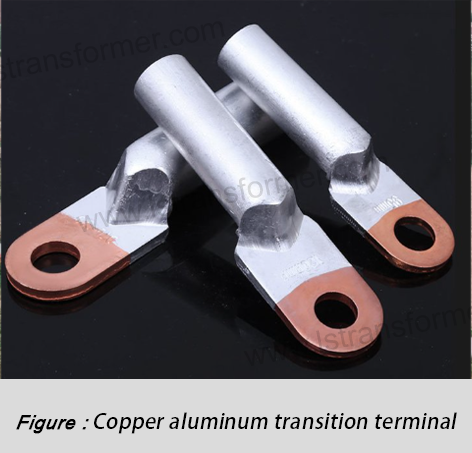
(1)Core Idea:Use high-quality connectors compliant with IEC 61238-1 or IEEE Std 386, such as copper-aluminum transition terminals, equipment clamps, or extension tubes.
(2)Mechanism:
–Non-Destructive Connection:No cutting of original wires; extension segments are securely joined via bolted or hydraulic crimping, ensuring smooth current transition.
–Performance Assurance:High-quality connectors use specialized techniques (e.g., friction welding, brazing) for molecular-level bonding, minimizing electrochemical corrosion. Contact resistance is far below IEC 61238-1 requirements (typically ≤1.1x the resistance of an equal-length conductor).
–Flexibility:Available in various lengths and angles to adapt to space constraints.
(3)Key Steps:
–Surface Prep:Clean contact surfaces thoroughly and apply anti-oxidant conductive paste.
–Torque Control:Use a calibrated torque wrench to tighten bolts to manufacturer specifications for even pressure distribution.
–Testing: Measure contact resistance with a micro-ohmmeter post-installation to verify quality (IEC 60599 recommends stable values significantly lower than adjacent conductor resistance).
(4)Advantages:Highest reliability, no damage to equipment, and full compliance with international standards.
● Conductor Splicing (Use with Caution)
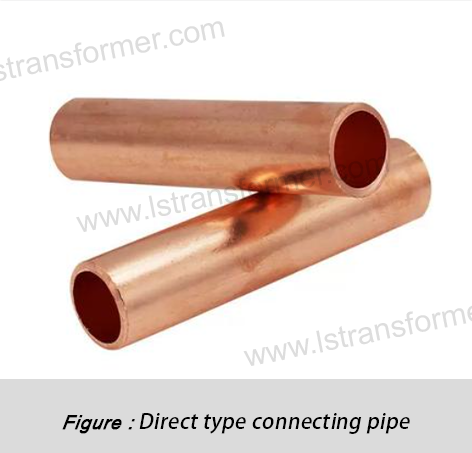
(1)Core Idea:For large length discrepancies, cut the original wire and splice in a new segment of the same material and cross-section using IEC 61238-1-compliant straight or butt connectors.
(2)Risks and Steps:
–Precision Cutting: Ensure clean, perpendicular cuts to avoid strand separation.
–Crimping/Welding:Use cross-section-matched dies and tools, following GB/T 14315 or IEEE Std 1525. Post-crimp, conduct pull and resistance tests.
–Insulation Restoration: Use cold/heat-shrink tubes, insulating tape, and waterproof sealants matching the original insulation grade. Validate with withstand voltage tests.
–Space Requirements: Splicing requires additional clearance, potentially affecting safety margins.
(3)Applicability:Suitable for spacious areas with professional conditions.
● Adjust Equipment Position (If Foundation Allows)
(1)Core Idea: Slightly reposition the transformer within safe limits (e.g., using adjustable steel shims) to align lead wires naturally.
(2)Key Steps:
–Feasibility Check:Confirm with structural engineers that adjustments won’t compromise stability.
–Coordinated Adjustments:Ensure pipes, cable trays, and bus ducts accommodate the new position.
–Precision Alignment: Use laser levels to meet GB 50148 or IEEE Std C57.12.00 standards for horizontality and alignment.
(3)Advantages:Most permanent solution.
(4)Limitations:Restricted by foundation design and adjacent equipment layout (adjustments are typically limited to a few centimeters).
3. Prevention Over Cure: Key Controls During Design and Construction
Key Parameter | Design Requirements | Standards Reference |
Design Margin | Add 10%-15% length for foundation errors, thermal expansion, and installation tolerances. | IEEE Std C57.12.00, IEC 60076 |
3D Simulation | Use ANSYS/SolidWorks to simulate equipment placement and busbar connections. | ANSYS, SolidWorks Simulation |
On-Site Verification | Measure bushing-to-connection distances precisely post-installation for wire fabrication. | GB 50150, IEEE Std C57.152 |
Material Compatibility | Specify conductor/bushing materials (Cu/Al) and account for thermal expansion differences. | IEC 61238-1 (Cu-Al Connections) |
Environmental Compensation | Calculate expansion (ΔL = α × L₀ × ΔT) for extreme climates; reserve space for expansion joints. | IEC 62271-1 |
4. Core Formula: Conductor Ampacity and Temperature Rise
Inadequate conductor sizing (even with sufficient length) is a common risk. Key formulas:
Ampacity Calculation:
 I=k×Sθ
Where:
I: Allowable current (A)
S: Cross-sectional area (mm²)
k, θ: Material/insulation/environment-dependent coefficients.
Conductor | Insulation | k (A/mm²) | Notes |
Copper | XLPE | 11–15 | High ampacity, heat-resistant. |
Copper | PVC | 9–12 | Lower cost, moderate performance. |
Aluminum | XLPE | 7–9 | Larger cross-section needed vs. Cu. |
Aluminum | PVC | 6–8 |
Temperature Rise:P = I² × R
R = ρ × L / S
Ensure equilibrium temperature stays below insulation
limits (e.g., 90°C for XLPE).
In Summary
Insufficient transformer lead wire length is a critical reliability threat. Prioritize standardized extension fittings for safety and efficiency. Splicing demands strict adherence to IEC/IEEE standards, while equipment repositioning is ideal but context-dependent. Ultimate prevention lies in design margins, 3D simulations, and precise post-installation measurements.
Contact Us
LuShan, est.1975, is a Chinese professional manufacturer specializing in power transformers and reactors for50+ years. Leading products are single-phase transformer, three-phase isolation transformers,electrical transformer,distribution transformer, step down and step up transformer, low voltage transformer, high voltage transformer, control transformer, toroidal transformer, R-core transformer;DC inductors, AC reactors, filtering reactor, line and load reactor, chokes, filtering reactor, and intermediate,high-frequency products.
Our power transformers and reactors are widely used in 10 application areas: rapid transit, construction machinery, renewable energy, intelligent manufacturing, medical equipment, coal mine explosion prevention , excitation system, vacuum sintering(furnace), central air conditioning.
Know more about power transformer and reactor :www.lstransformer.com.
If you would like to obtain customized solutions for transformers or reactors, please contact us.
WhatsApp:+86 17267488565
Email:[email protected]