
 EN
EN
 FR
FR DE
DE ES
ES
Common Connection Methods for Transformer Lead Wires —Essential Guide for Global Engineers
Common Connection Methods for Transformer Lead Wires
—Essential Guide for Global Engineers
Amid the global energy transition and smart grid construction, transformers serve as the core hub of power systems, where the reliability of their connections directly impacts grid safety and energy efficiency. Lead wires, acting as the "lifeline" between transformers and external systems, are critical in design and selection. According to international standards such as IEC 60204 and IEEE Std C57.12.00, transformer lead wire connections must meet stringent requirements, including current-carrying capacity, mechanical strength, environmental aging resistance, and contact resistance stability. This article provides an in-depth analysis of five mainstream lead wire technologies and their scientific principles, helping you make optimal choices for global projects.
Content
1. Bolted Connection: The Foundation of High-Current Systems
● Technical Principle
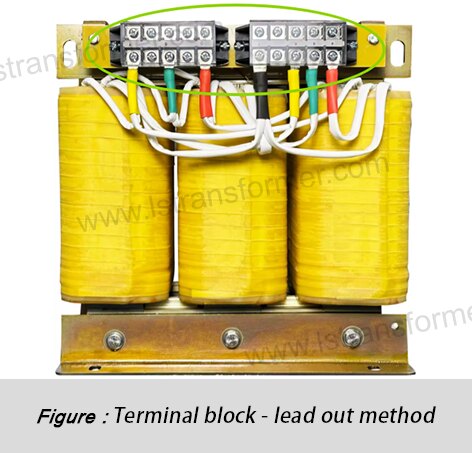
Bolted connections use high-strength alloy bolts with precise torque (typically following IEC 60076 or ANSI C119.4 standards) to create plastic deformation at the copper/aluminum conductor interface, eliminating microscopic air gaps.
According to Holm’s contact theory, contact resistance is calculated as:
Rc = ρ/(2a) + σ/F
Where:
ρ = resistivity
a = contact point radius
σ = surface film resistance
F = contact force
Increasing bolt pressure (F) effectively suppresses the impact of oxidation layers.
● Key Advantages
(1)High overload capacity: Can sustain 125% rated current with a temperature rise below 65K (IEC 60076-2).
(2)Zero aging risk: No organic materials; withstands temperatures up to 150°C (UL 506 verified).
(3)Visual inspection: Contact quality can be assessed by measuring indentation depth with a feeler gauge.
● Applications:The 800kV main transformer at Brazil’s Itaipu Hydroelectric Plant uses M42 special bolts, achieving a single-point current capacity of 50kA.
Conductor Cross-Section (mm²) | Bolt Grade | Recommended Torque (N·m) | Contact Pressure (kN) |
300 | Grade 8.8 | 280 ± 15% | 45 |
500 | Grade 10.9 | 450 ± 10% | 78 |
800 | Grade 12.9 | 700 ± 10% | 120 |
Table 1: International Torque Standards for Bolted Connections (IEEE Std 62)
2. Crimped Terminal Connection: An Innovative Solution for Vibration Resistance
● Structural Innovation
Features a triple-layer composite design:
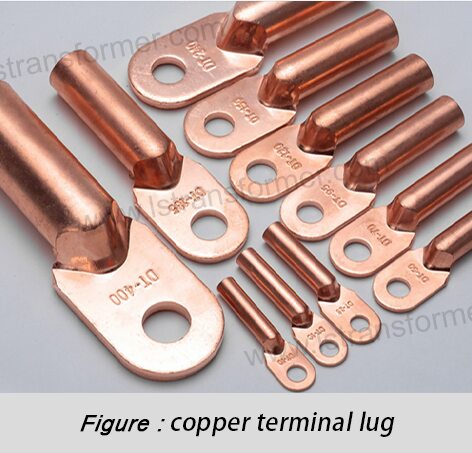
(1)Phosphor bronze spring provides continuous pressure compensation.
(2)Tin plating suppresses electrochemical corrosion.
(3)Compression sleeve ensures molecular-level bonding.
Contact resistance variation (ΔRc) remains below 3% (MIL-DTL-38999 vibration standard).
● Mechanical Mechanism
According to Hooke’s Law (F = k·x), the conical spring design ensures contact force fluctuation remains within 15% under ±2mm displacement.
Tests by the U.S. Naval Laboratory confirm stable contact resistance even under 15g acceleration vibration.
● Typical Application: Siemens’ offshore wind platform dry-type transformers use crimped terminals to withstand 12-level wind vibrations.
3. Welded Connection: A Reliable Choice for Permanent Joints
Welded connections form a metallurgical bond between the conductor and lead wire through melting or pressure, eliminating contact resistance due to direct atomic bonding. Key technical aspects include:
Welding Type | Applicable Materials | Heat-Affected Zone | Tensile Strength (MPa) | Standard Reference |
Laser Welding | Copper/Copper, Copper/Steel | <0.5mm | ≥220 | ISO 4063-52 |
Brazing (Silver-Based) | Copper/Aluminum Dissimilar Metals | 2-3mm | ≥150 | AWS A5.8 |
Cold Pressure Welding | Aluminum/Aluminum | None | ≥110 | DIN 8593-5 |
Critical Control Parameters:
(1)Energy density: Laser welding requires >500W/mm² for deep penetration.
(2)Gap compensation: Brazing filler metal must account for thermal expansion (ΔL = α·L₀·ΔT).
(3)Surface treatment: Electro-polishing ensures surface roughness (Ra) <1.6μm for wettability.
Case Study:Hitachi ABB Power Grids used vacuum electron beam welding for 800kV GIC bushings in Quebec Hydro projects, achieving joint resistance <0.1μΩ.
● Failure Prevention Measures
(1)Thermal crack control: Adding 0.1% rare earth elements (Ce/La) to copper refines grain structure.
(2)Electrochemical corrosion: Aluminum welds require ETFE coating (salt spray resistance >1000h).
(3)Mechanical fatigue: 30° bevel design reduces stress concentration.
4. Plug-in Terminals: Balancing Modularity and Maintenance
Plug-in terminals use elastic contacts to generate pressure, enabling repeated connections. The core technology lies in balancing contact force and resistance stability. According to Hertz contact theory, the actual contact area (Ac = (F/H)^(2/3)) must exceed the minimum cross-section for current flow.
● Evolution of Contact Materials
(1)1st Gen: Pure silver (prone to sulfidation, increasing resistance).
(2)2nd Gen: Silver-tin oxide (SnO₂ 10wt%, arc-resistant but hard).
(3)3rd Gen: Silver-tungsten carbide (WC 15%, hardness HV220, lifespan >50,000 cycles).
Test Data: Phoenix Contact’s latest EDCP inserts show 18K lower temperature rise than traditional terminals under 100A continuous load.
● Structural Innovations
(1)Dual-locking mechanism:Primary spring for contact force + secondary spring for vibration resistance.
(2)Liquid metal filling: Gallium-based alloys self-repair contact surfaces during micro-motion wear.
(3)Integrated sensors:NTC thermistors monitor contact status in real time.
Military Validation: Complies with MIL-STD-1344 Method 3005.1, withstands 40G mechanical shock.
In Summary
Choosing transformer lead wires involves balancing electrical performance, mechanical reliability, and cost. Welded connections are irreplaceable in permanent installations like nuclear plants, while plug-in terminals offer flexibility for maintenance-heavy environments like data centers.
Designers should prioritize type testing per IEC 62271-203 and optimize electric/thermal field distribution via finite element analysis. With digital twin technology, real-time simulation can predict lead wire lifespan, enabling predictive maintenance.
For scenario-specific selection tools, visit our Global Engineer Resource Hub.
Contact Us
LuShan, est.1975, is a Chinese professional manufacturer specializing in power transformers and reactors for50+ years. Leading products are single-phase transformer, three-phase isolation transformers,electrical transformer,distribution transformer, step down and step up transformer, low voltage transformer, high voltage transformer, control transformer, toroidal transformer, R-core transformer;DC inductors, AC reactors, filtering reactor, line and load reactor, chokes, filtering reactor, and intermediate,high-frequency products.
Our power transformers and reactors are widely used in 10 application areas: rapid transit, construction machinery, renewable energy, intelligent manufacturing, medical equipment, coal mine explosion prevention , excitation system, vacuum sintering(furnace), central air conditioning.
Know more about power transformer and reactor :www.lstransformer.com.
If you would like to obtain customized solutions for transformers or reactors, please contact us.
WhatsApp:+86 13787095096
Email:[email protected]