
 EN
EN
 FR
FR DE
DE ES
ES
Why Are Litz Wires Commonly Used in High-Frequency Reactors? —An In-Depth Analysis of Key Design Principles
Why Are Litz Wires Commonly Used in High-Frequency Reactors?
—An In-Depth Analysis of Key Design Principles
High-frequency reactors are core components in power electronic systems, and their design choices directly impact device performance and efficiency. This article provides a detailed analysis of the five key reasons why high-frequency reactors use Litz wires, covering everything from skin effect to thermal management. It fully reveals the scientific basis behind this design choice.
Content
1. Overview of High-Frequency Reactors and Litz Wires
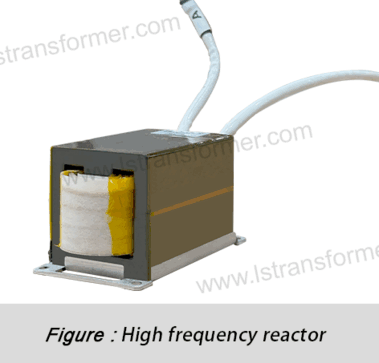
High-frequency reactors are inductive components operating in the frequency range of 10kHz to several MHz. They are widely used in modern electronic devices such as switching power supplies, inverters, and RF circuits. Compared to low-frequency reactors, high-frequency reactors face more severe challenges from the skin effect and proximity effect, which directly influence the special considerations for conductor material selection.
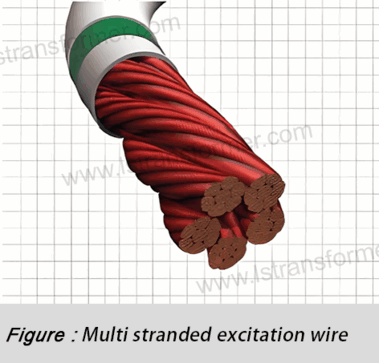
Litz wire is a composite conductor made up of multiple insulated thin wires twisted together in a specific pattern. This unique structure makes it an ideal choice for high-frequency applications, particularly where minimizing AC resistance is critical. According to the International Electrotechnical Commission (IEC) 60317-13 standard, Litz wires have strict classifications and performance requirements to ensure global interchangeability and reliability.
2. Skin Effect and How Litz Wires Address It
● Principle of Skin Effect and Its Impact
The skin effect refers to the phenomenon where high-frequency AC current tends to concentrate near the surface of a conductor. This effect is governed by electromagnetic field theory and can be derived from Maxwell's equations. In simple terms, a changing current generates a changing magnetic field, which in turn produces eddy currents. These eddy currents interact with the main current, leading to an uneven current distribution.
The skin depth (δ) is a key parameter for quantifying the skin effect. It represents the depth at which the current density drops to 1/e (approximately 37%) of its surface value. The formula for skin depth is:
δ = √(ρ/(πμf))
Where:
ρ: Conductor resistivity (Ω·m)
μ: Conductor permeability (H/m)
f: Frequency (Hz)
Frequency (kHz) | Skin Depth (mm) |
10 | 0.66 |
100 | 0.21 |
500 | 0.094 |
1000 | 0.066 |
Table 1: Skin depth of copper conductors at different frequencies
The table shows that as frequency increases, skin depth decreases. At 100kHz, the central region of a solid wire with a diameter exceeding 0.42mm hardly conducts any current, leading to material waste and increased resistance.
● How Litz Wires Overcome the Skin Effect
Litz wires divide a large conductor into many insulated thin strands and use a specific twisting pattern to ensure each strand continuously changes its position within the bundle. This design achieves:
(1)Maximized effective conductor area:Each thin strand's diameter is typically 2-3 times the skin depth, ensuring the entire cross-section remains conductive. For example, in 100kHz applications, a single strand diameter of 0.4-0.6mm is ideal.
(2)Uniform current distribution:Precise twisting ensures each strand alternates between the outer and inner positions of the bundle, so all strands carry equal current on average, avoiding overloading specific strands.
(3)Reduced eddy current losses:Insulation between thin strands blocks large eddy current paths, confining eddy currents to small regions within individual strands, significantly lowering eddy current losses.
Experimental data shows that at 100kHz, properly designed Litz wires can reduce AC resistance by 60-70% compared to solid wires of the same cross-section. This advantage becomes even more pronounced as frequency increases.
3. Proximity Effect and How Litz Wires Optimize Performance
● Proximity Effect and Its Consequences
The proximity effect refers to the phenomenon where the alternating magnetic fields generated by AC currents in adjacent conductors interact, causing further distortion in current distribution. In high-frequency reactors, windings are tightly packed, making the proximity effect often more detrimental than the skin effect in terms of additional losses.
The severity of the proximity effect depends on:
(1)The ratio of conductor spacing to size
(2)Current phase relationships (in-phase or out-of-phase)
(3)Frequency and conductor material properties
In multi-layer windings, the proximity effect can cause AC resistance to exceed DC resistance by an order of magnitude, severely limiting the power density and efficiency of high-frequency reactors.
● How Litz Wires Mitigate the Proximity Effect
Litz wires counteract the proximity effect through the following mechanisms:
(1) Conductor subdivision strategy:Dividing a large conductor into multiple thin strands fundamentally reduces the size-to-spacing ratio of individual conductors. According to IEEE Std 1812 guidelines, strand diameter should be less than twice the skin depth for optimal results.
(2) Position-swapping technique: The twisting process ensures strands continuously exchange positions, allowing each strand to average exposure to varying magnetic field intensities, preventing excessive localized losses.
(3)Phase-optimized arrangement:Advanced Litz wire designs account for phase relationships between strands, using specific twist pitch and direction to partially offset magnetic field influences from adjacent conductors.
Conductor Type | Cross-Sectional Area (mm²) | Rac/Rdc |
Solid Round Wire | 1.0 | 8.2 |
Flat Copper Strip | 1.0 | 12.7 |
Standard Stranded Wire | 1.0 | 3.5 |
Optimized Litz Wire | 1.0 | 1.8 |
Table 2: AC/DC resistance ratios for different conductor types at 1MHz
As shown, optimized Litz wire designs minimize additional losses from the proximity effect, demonstrating clear advantages in high-frequency applications.
4. Improved Thermal Performance and Reliability
● Thermal Challenges in High-Frequency Reactors
The primary heat sources in high-frequency reactors include:
(1)Winding resistive losses
(2)Core losses
(3)Dielectric losses
Winding losses are particularly significant in high-current applications, with heat concentrated in small volumes, leading to substantial temperature rise. According to IEC 60076-7, a reactor winding's hot spot temperature exceeding its rated value by 10°C can reduce insulation life by approximately half.
● Thermal Advantages of Litz Wires
(1) Increased heat dissipation surface area:
Litz wires distribute the same conductor cross-section across multiple thin strands, significantly increasing total surface area. For example, a 1mm² solid wire has a surface area of 3.57mm²/m, whereas a Litz wire made of 100 strands (each 0.1mm in diameter) has a surface area of 31.4mm²/m—nearly 9 times higher. This larger surface area enhances convective and radiative cooling.
(2) Internal thermal channels:
The tiny gaps between strands in a Litz wire bundle create capillary action, aiding heat transfer from the insulation coating to the exterior. Some high-performance Litz wires are designed with dedicated cooling channels for even better heat dissipation.
(3) More uniform temperature distribution:
Traditional windings often develop hot spots in the innermost layers, whereas Litz wire windings, due to uniform current distribution, also exhibit more even heat distribution, avoiding localized overheating. Studies show Litz wires can reduce maximum winding temperature differences by 40-50%.
(4) Enhanced thermal cycle resistance:
The multi-strand structure of Litz wires better accommodates thermal expansion and contraction compared to single thick wires, reducing mechanical stress on the insulation system. This feature is particularly important in applications with frequent load fluctuations, such as renewable energy systems.
5. Mechanical Flexibility and Manufacturing Advantages
● Mechanical Requirements for High-Frequency Reactors
Modern power electronics demand high power density and miniaturization, imposing strict mechanical requirements on reactors:
(1)Adaptability to complex wiring in compact spaces
(2)Resistance to vibration and shock during operation
(3)Suitability for automated production to reduce costs
Traditional solid or flat windings struggle to meet these demands, especially in high-frequency, high-current reactors.
● Mechanical Benefits of Litz Wires
(1)Superior bending performance:
The multi-strand structure of Litz wires greatly enhances flexibility. According to ASTM B872 testing, Litz wires can achieve a minimum bending radius 3-5 times smaller than solid wires of the same cross-section, facilitating wiring in confined spaces.
(2) Vibration fatigue resistance:
The composite structure of thin strands effectively disperses vibration-induced stress, preventing single-point failure. This characteristic is critical for mobile applications like electric vehicles and aerospace. The MIL-W-16878E military standard specifically recommends Litz wires for vibration-prone environments.
(3) Optimized winding fill factor:
Litz wires conform better to core and bobbin shapes, improving window utilization. Although the insulation between strands slightly reduces individual wire fill factor, the overall winding fill factor is typically higher due to tighter packing.
(4) Production adaptability:
Modern Litz wires can be precisely wound using automated equipment, meeting mass production needs. Specially designed Litz wires (e.g., rectangular cross-section) further enhance space efficiency and manufacturability.
6. Litz Wire Selection Guide for High-Frequency Reactor Design
● Key Parameters to Consider
Selecting the right Litz wire for high-frequency reactors requires evaluating:
(1)Strand diameter
(2)Twist pitch
(3)Insulation grade
(4)Conductor material
● Recommended Applications by Frequency
Per IEC 62025, here are Litz wire recommendations for high-frequency reactors:
(1)Below 100kHz:Use thicker strands (0.5-1.0mm diameter) with fewer strands (10-50).
(2)100kHz–1MHz:Medium fineness (0.1-0.3mm) with 50-500 strands.
(3)Above 1MHz:Ultra-fine strands (0.05-0.1mm) with 500-2000 strands; segmented twisting may be needed.
For very high frequencies (>10MHz) or specialized applications (e.g., medical devices), refer to IEEE Std C57.18.10 for professional design guidance.
In Summary
Thanks to their superior skin effect suppression, proximity effect mitigation, excellent thermal performance, and mechanical flexibility, Litz wires have become the gold standard for high-frequency reactor design. As power electronics evolve toward higher frequencies and greater power densities, Litz wire technology continues to innovate:
(1)New composite materials:E.g., carbon nanotube-reinforced copper wires, further enhancing conductivity and mechanical strength.
(2)Smart Litz wires:Integrating temperature or magnetic field sensors for real-time reactor monitoring.
(3)3D-printed windings:Combining Litz wire properties with additive manufacturing, opening new design paradigms.
The International Energy Agency (IEA) predicts the global high-frequency reactor market will reach $12.5 billion by 2030, with over 90% adopting Litz wire technology. Understanding the science behind this critical technology helps engineers make optimized design choices and provides procurement professionals with essential quality evaluation criteria.
Whether you work in renewable energy, electric vehicles, or industrial power supply design, mastering the application of Litz wires in high-frequency reactors will give your projects and products a significant performance edge and market competitiveness.
Contact Us
LuShan, est.1975, is a Chinese professional manufacturer specializing in power transformers and reactors for50+ years. Leading products are single-phase transformer, three-phase isolation transformers,electrical transformer,distribution transformer, step down and step up transformer, low voltage transformer, high voltage transformer, control transformer, toroidal transformer, R-core transformer;DC inductors, AC reactors, filtering reactor, line and load reactor, chokes, filtering reactor, and intermediate,high-frequency products.
Our power transformers and reactors are widely used in 10 application areas: rapid transit, construction machinery, renewable energy, intelligent manufacturing, medical equipment, coal mine explosion prevention , excitation system, vacuum sintering(furnace), central air conditioning.
Know more about power transformer and reactor :www.lstransformer.com.
If you would like to obtain customized solutions for transformers or reactors, please contact us.
WhatsApp:+86 13787095096
Email:[email protected]