
 EN
EN
 FR
FR DE
DE ES
ES
Why Do Transformers in the Chemical Industry Require High Ingress Protection (IP) Ratings?
Why Do Transformers in the Chemical Industry Require High Ingress Protection (IP) Ratings?
In the power systems of the chemical industry, the choice oftransformer protection level directly impacts equipment safety, reliability, and service life. Chemical environments often contain harsh factors such as corrosive gases, dust, and moisture, which impose higher demands on the protective performance of transformer enclosures. TheIP rating standard established by the International Electrotechnical Commission (IEC) provides a scientific basis for selecting transformer housings.
This article will analyze the selection criteria for transformer enclosure protection levels in the chemical industry, explore the characteristics and applicable scenarios of different IP ratings, and introduce relevant international standards and testing methods to help chemical companies make informed purchasing decisions.
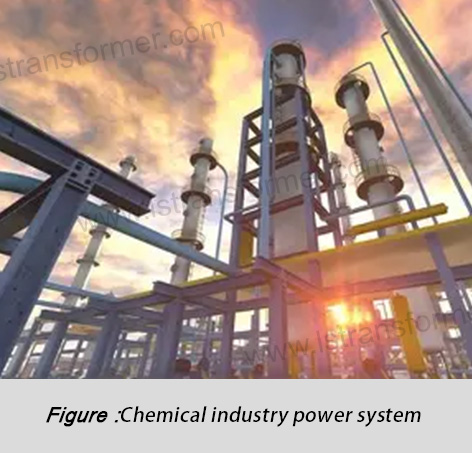 https://www.lstransformer.com/Transformers
Content
1. Special Requirements for Transformer Enclosures in Chemical Environments
Chemical production environments often contain various corrosive media, includingacidic gases, alkaline dust, and organic solvent vapors. These substances can accelerate the corrosion of metal enclosures, leading to reduced protective performance. Additionally, many chemical plants are classified as hazardous areas due to explosion risks (according to IEC 60079 standards), which also imposes specific requirements forexplosion-proof transformers.
● Corrosive Gases:
The impact of corrosive environments is mainly reflected in three aspects:
•First, corrosion of the housing material can compromise structural compromise structural integrity, causing the IP rating to become ineffective.
•Second, corrosion products may accumulate on cooling surfaces, affecting the transformer's heat dissipation efficiency.
•Third, severe corrosion reduces mechanical strength, posing safety hazards.
According to research by NACE International (National Association of Corrosion Engineers), in typical chemical environments, carbon steel housings without proper protection may have a lifespan of less than 5 years.
● Explosion Risks:
Explosion risk is another major challenge in the chemical industry. Internal arcing or overheating in transformers can act as ignition sources. Therefore, in hazardous areas, it is essential to useexplosion-proof enclosures certified under ATEX or IECEx. Such enclosures not only prevent internal explosions from spreading but also block external explosive gases from entering the equipment.
Temperature fluctuations must also be considered. Chemical processes often involve significant temperature changes, so housing materials must possess sufficient thermal stability and low thermal expansion coefficients to prevent seal failure due to thermal stress.
2. Detailed Explanation of the IP Rating Standard
The IP (Ingress Protection) rating, defined by the IEC 60529 standard, is an internationally recognized system for evaluating the ability of electrical equipment enclosures to resist dust and water ingress. The IP code consists of two digits: the first indicates protection against solid objects (0–6), and the second indicates protection against liquids (0–9). Higher numbers indicate stronger protection capabilities.
● Dust Protection (First Digit):
Level | Protection Level | Typical Applications |
IP5X | Dust-protected (limited ingress permitted, but not interfering with operation) | General industrial areas |
IP6X | Totally dust-tight (no dust entry) | Dust-heavy chemical zones |
● Water Protection (Second Digit):
Level | Protection Level | Typical Applications |
IPX4 | Protected against water splashes | Indoor areas with potential liquid splashing |
IPX5 | Protected against water jets | Areas near cleaning zones |
IPX7 | Protected against temporary immersion | Areas prone to short-term flooding |
IPX8 | Protected against continuous immersion | Underground installations or long-term flooded areas |
For chemical industry applications, anIP55 rated transformer or higher is generally recommended. This level effectively prevents dust accumulation and resists low-pressure water jets, meeting the needs of most chemical environments. For special areas where exposure to corrosive liquids or high-pressure washing is expected, consider IP65 or IP66 ratings.
3. Material Selection for Chemical Industry Transformer Enclosures
The housing material directly influences both protective performance protective performance and service life. Commonly used materials include:
● Stainless Steel (304 or 316L):
316L stainless steel contains molybdenum, offering excellent resistance to chlorides and sulfuric acid—ideal for coastal or chlorine-rich chemical environments chemical environments. Its corrosion resistance comes from a dense chromium oxide passive film on the surface. According to ASTM A240, 316L shows no red rust after 480 hours in a 5% salt spray test.
● Fiberglass Reinforced Polyester (FRP):
This composite material offers outstanding chemical corrosion resistance, is lightweight, and does not rust. Its protective properties stem from the resin matrix blocking chemical penetration. Note: FRP has lower thermal conductivity (0.3–0.4 W/(m·K)) compared to metals, requiring design adjustments for heat dissipation.
● Specially Coated Carbon Steel:
Utilizes a multi-layer anti-corrosion coating system: zinc layer (cathodic protection) + epoxy primer (barrier protection) + polyurethane topcoat (weather resistance). Per ISO 12944, properly coated carbon steel can last over 15 years in C5-M level corrosive environments.
Material selection should take into account the total lifecycle cost (LCC) using the formula below:
LCC = Initial Cost +∑(Maintenance Cost)/(1+r)^n + Replacement Cost/(1+r)^N
Where:
•LCC = Total Lifecycle Cost
•r = Discount rate
•n = Year of maintenance
•N = Year of replacement
Although stainless steel has a high initial cost, its LCC is often the lowest in highly corrosive settings.
4. Special Protection Needs & Solutions
● Explosion Protection Requirements:
In areas with potentially explosive atmospheres, transformer housings must comply with ATEX 2014/34/EU or IECEx standards. Common explosion-proof types include:
•Flameproof Enclosure (Ex d):
Withstands internal explosion pressure and prevents flame transmission.
•Increased Safety (Ex e):
Prevents sparks or overheating through additional safety measures.
● Enhanced Corrosion Protection Measures:
Beyond material choice, consider these strategies:
•Cathodic Protection:
Applies a protective current to steel enclosures to counteract corrosion potential. Suitable for underground or submerged installations.
•Ventilation Design:
Maintains slight positive pressure inside the enclosure (~50 Pa) to prevent corrosive gas infiltration. Requires gas filtration units.
•Sealing Systems:
Use fluoroelastomer or silicone rubber gaskets resistant to chemical attack. Performance can be evaluated per ASTM D2000.
5.Installation & Maintenance Guidelines
Proper installation and maintenance are crucial to preserving protective performance:
● Installation Tips:
•Raise the base at least 150 mm above ground to prevent water pooling.
•Use cable glands that match the IP rating.
•Maintain a safe distance (recommended≥3 m) from corrosion sources like acid tanks.
● Maintenance Schedule:
•Quarterly inspection of seal elasticity.
•Annual measurement of grounding resistance.
•Biennial assessment of coating condition per ISO 4628.
● Cleaning Methods:
•Use pH-neutral cleaners to avoid damaging surface treatments.
•Keep water pressure within limits specified by the IP rating.
•Avoid metal brushes or abrasives that could damage protective layers.
Conclusion & Recommendations
Selecting the rightIP protection level for transformers in the chemical industry involves balancing safety, reliability, and economy. Based on our analysis, we recommend:
1.Basic Protection Level: Choose IP55 or higher for most chemical zones; consider IP65/IP66 for harsher conditions.
2.Material Choice: Use 316L stainless steel for moderate corrosion, and FRP or specialized coatings for severe environments.
3.Explosion Protection: In hazardous areas, always select ATEX/IECEx-certified products and choose the appropriate type based on gas classification.
4.Lifecycle Cost Analysis: Conduct a 15-year LCC analysis to avoid high future costs from initial savings.
5.Supplier Selection: Prioritize suppliers with international certifications like IEC 60076 and IEEE C57.12, and request third-party test reports.
As chemical processes evolve, environmental challenges may intensify. We advise designing with a 20% protection margin and considering potential considering potential process changes. Through scientific selection and diligent maintenance, transformer housings can fully perform their protective role, ensuring safe and stable operations in chemical production.
Contact Us
LuShan, est.1975, is a Chinese professional manufacturer specializing in power transformers and reactors for50+ years. Leading products are single-phase transformer, three-phase isolation transformers,electrical transformer,distribution transformer, step down and step up transformer, low voltage transformer, high voltage transformer, control transformer, toroidal transformer, R-core transformer;DC inductors, AC reactors, filtering reactor, line and load reactor, chokes, filtering reactor, and intermediate,high-frequency products.
Our power transformers and reactors are widely used in 10 application areas: rapid transit, construction machinery, renewable energy, intelligent manufacturing, medical equipment, coal mine explosion prevention , excitation system, vacuum sintering(furnace), central air conditioning.
Know more about power transformer and reactor :www.lstransformer.com.
If you would like to obtain customized solutions for transformers or reactors, please contact us.
WhatsApp:+86 13787095096
Email:[email protected]