
 EN
EN
 FR
FR DE
DE ES
ES
How to Prevent Small Animals from Entering Outdoor Transformer Enclosures and Causing Short Circuits?
How to Prevent Small Animals from Entering Outdoor Transformer Enclosures and Causing Short Circuits?
Outdoor transformers are essential components of power systems, yet short circuits caused by small animals (such as squirrels, birds, snakes, etc.) entering transformer enclosures remain a significant challenge for the power industry. This article provides a detailed analysis of why small animals cause transformer short circuits and offers a series of proven protective measures to help you effectively address this issue.
 https://www.lstransformer.com/Transformers
Content
1.Why Do Small Animals Cause Short Circuits in Transformers?
The entry of small animals into transformer enclosures is a common but serious problem. The root causes can be analyzed from the following perspectives:
lAnimals as Conductors:
When small animals (especially rodents) simultaneously contact high-voltage parts and grounded components of the transformer, their bodies become pathways for electric current. According to Ohm’s Law (V=IR), even with high resistance in their bodies, sufficient current can flow under high voltage, leading to short circuits.
lMechanical Damage from Animal Activity:
Small animals gnawing on insulating materials or wiring can cause insulation damage. IEEE Std C57.12.00-2015 states that insulation failure is one of the primary causes of transformer faults.
lIssues with Nesting Materials:
Nesting materials (such as twigs and dry grass) brought in by animals can reduce insulation performance or directly cause phase-to-phase short circuits.
Animal Type | Entry Method | Typical Destructive Behavior | Common Fault Types |
Squirrels | Gaps or unsealed openings | Gnawing insulation materials, cables | Phase-to-phase short circuit, ground fault |
Birds | Ventilation openings or top gaps | Nesting, fecal accumulation | Insulation degradation, partial discharge |
Snakes | Bottom openings or gaps | Coiling around live components | Phase-to-phase short circuit, ground fault |
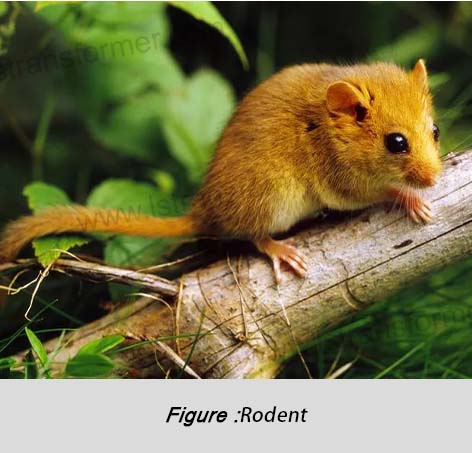
Rodents | Openings as small as 1/2 inch | Gnawing, nesting | Insulation damage, short circuit |
Table 1: Common Small Animals Causing Transformer Faults and Their Behavioral Characteristics
2.Effective Measures to Prevent Small Animals from Entering Transformer Enclosures
lPhysical Barrier Protection
Physical barriers are the most direct and effective protection method, including the following aspects:
a. Seal All Openings and Gaps:
All openings larger than 6mm on the transformer enclosure should be sealed. According to IEC 61936-1 standards, the following materials are recommended:
•Metal mesh (stainless steel preferred, aperture≤6mm)
•Fire-resistant silicone sealant
•Elastic rubber sealing strips
Sealing measures are effective because they fundamentally block the entry paths for small animals. Metal meshes prevent animal intrusion without affecting necessary ventilation necessary ventilation and heat dissipation. Stainless steel is chosen for its strong corrosion resistance, making it suitable for long-term outdoor use.
b. Install Protective Barriers:
Installing protective barriers above transformer bushings and connection points can prevent birds from perching and squirrels from jumping onto live parts. The design of barriers should comply with "creepage distance" requirements, i.e., the minimum distance between live and grounded parts as defined by IEC 60071.
The effectiveness of protective barriers is based on two principles: first, increasing the difficulty for small animals to access live parts; second, altering potential movement paths to keep animals away from hazardous areas.
lEnvironmental Management Measures
Proper management of the environment around transformers can significantly reduce the risk of small animals approaching:
a. Maintain a Clear Radius:
It is recommended to keep a radius of at least 1.5 meters around the transformer free of vegetation and debris. This measure is based on the ecological theory of "edge effect"—reducing edge habitats decreases the likelihood of small animals approaching.
b. Trim Surrounding Trees:
Tree branches should be trimmed to at least 3 meters away from the transformer. This buffer distance accounts for the maximum jumping ability of animals like squirrels (approximately 2 meters). Additionally, this reduces the risk of transformer damage from falling branches.
c. Use Repellents:
Certain natural repellents (e.g., peppermint oil, capsaicin) can be applied to non-live parts of the transformer. These substances stimulate animals' olfactory receptors (activating TRPM8 channels), causing discomfort and keeping them away. However, regular reapplication every 3–6 months is necessary.
lElectrical Protection Improvements
a. Upgrade Insulation Protection:
Adding insulation to exposed live parts is an effective approach. Options include:
•Heat-shrink insulation tubing (compliant with UL 224 standard)
•Insulation coatings (e.g., RTV silicone rubber coating)
The principle of insulation protection is to prevent flashovers caused by animal contact by increasing dielectric strength (typically >20 kV/mm). The unique surface properties of RTV coatings also prevent pollutant accumulation, further enhancing reliability.
b. Install Protective Fittings:
Installing protective fittings (e.g., insulated guards, anti-bird spikes) at critical connection points effectively prevents animal contact. These fittings are designed based on electric field distribution calculations to ensure protection without compromising normal heat dissipation.
Protection Measure | Initial Cost | Maintenance Cycle | Expected Lifespan | Protection Effectiveness |
Metal Mesh Sealing | Low | 5 years | 10–15 years | 85–90% |
RTV Insulation Coating | Medium | 8–10 years | 15 years | 75–85% |
Protective Barriers | Medium-High | None | 20 years | 90–95% |
Environmental Management | Low | Quarterly | Ongoing | 60–70% |
Repellents | Low | Biannually | Short-term | 50–60% |
Table 2: Cost-Benefit Comparison of Different Protection Measures
lMonitoring and Early Warning Systems
Modern technology offers smarter protection methods:
a. Infrared Thermal Imaging Monitoring:
Regular infrared inspection can identify potential risks at an early stage. The severity of localized temperature abnormalities (ΔT > 5°C) caused by animal activities can be evaluated using the following formula:
Risk Factor = 
Where:
ΔT = Temperature difference between the abnormal point and the reference
A = Area of the abnormal region
R = Distance to key components
b. Ultrasonic Repellent Devices:
These devices emit sound waves (20–60 kHz), which are beyond human hearing range but stimulate small animals' auditory systems, activating stress responses that drive them away. Installation must consider coverage (typically a 5–10 meter radius) and directionality.
3.International Standards and Best Practices Reference
Major global standard organizations offer the following recommendations for transformer protection:
•IEEE Std C57.12.29-2020: Specifies design requirements for outdoor transformer protection against small animals, including minimum opening sizes and protective materials.
•IEC 61936-1:2021: Outlines environmental adaptability requirements for power equipment protection, emphasizing biological factors (including small animals).
•ANSI/NEMA PB 2.1-2020: Provides practical guidelines for transformer protection, including recommendations for protection levels (e.g., IP54).
When implementing protective measures, adopting a "Defense in Depth" strategy—multiple layers of protection—is advised. Statistical data show that combining physical barriers, environmental management, and electrical protection can reduce animal-induced failure rates by over 90%.
Conclusion and Recommendations
Preventing small animals from entering outdoor transformer enclosures requires a systematic solution. Based on the analysis above, we recommend:
1.Prioritize physical barriers: Seal all openings larger than 6mm, as this is the most cost-effective measure.
2.Combine multiple methods: Integrate physical protection with environmental management for synergistic effects.
3.Regular inspection and maintenance: Check the effectiveness of protective measures at least quarterly, especially during seasonal transitions.
4.Record and analyze: Maintain fault records, analyze animal activity patterns, and strengthen targeted protections accordingly.
Implementing these measures not only prevents short circuits caused by small animals but also extends transformer lifespan and improves power supply reliability. Different regions may need to adjust strategies based on local wildlife; consulting local wildlife experts is recommended for more tailored advice.
Contact Us
LuShan, est.1975, is a Chinese professional manufacturer specializing in power transformers and reactors for50+ years. Leading products are single-phase transformer, three-phase isolation transformers,electrical transformer,distribution transformer, step down and step up transformer, low voltage transformer, high voltage transformer, control transformer, toroidal transformer, R-core transformer;DC inductors, AC reactors, filtering reactor, line and load reactor, chokes, filtering reactor, and intermediate,high-frequency products.
Our power transformers and reactors are widely used in 10 application areas: rapid transit, construction machinery, renewable energy, intelligent manufacturing, medical equipment, coal mine explosion prevention , excitation system, vacuum sintering(furnace), central air conditioning.
Know more about power transformer and reactor :www.lstransformer.com.
If you would like to obtain customized solutions for transformers or reactors, please contact us.
WhatsApp:+86 13787095096
Email:[email protected]