
 EN
EN
 FR
FR DE
DE ES
ES
Why Must High-Grade Oil-Resistant Wires Be Used in EV Charging Pile Transformers?
Why Must High-Grade Oil-Resistant Wires Be Used in EV Charging Pile Transformers?
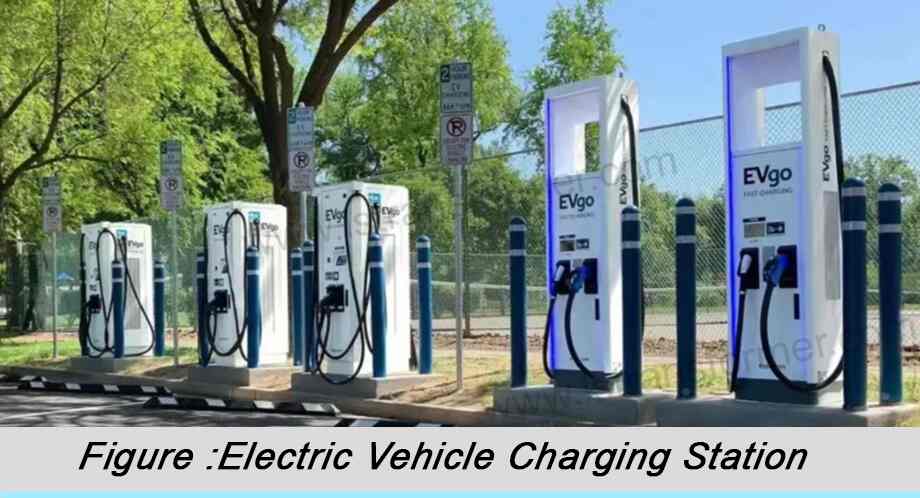
With the rapid expansion of the global electric vehicle (EV) market, the construction of charging infrastructure has become a focal point for governments and businesses worldwide. As a core component of charging piles, the performance of transformers directly impacts charging efficiency, safety, and service life. Among these, the selection of internal insulating wires is particularly critical, and the use of high-grade oil-resistant wires has become an industry standard. This article delves into why EV charging pile transformers must employ high-grade oil-resistant wires, analyzing the topic from multiple perspectives, including technical standards, performance requirements, and economic benefits.
Content
1. Interaction Mechanism Between Transformer Oil and Insulating Materials
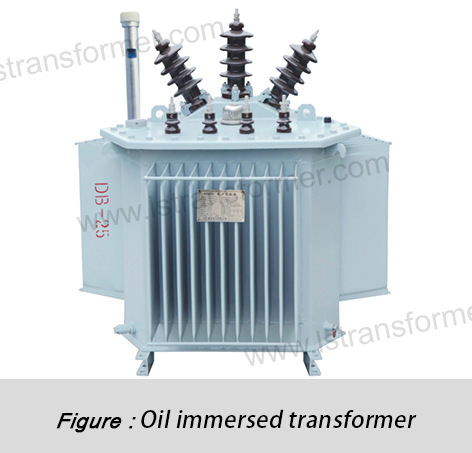
EV charging pile transformers typically adopt an oil-immersed design because insulating oil (usually mineral oil or synthetic ester) offers excellent insulation properties and heat dissipation capabilities. However, prolonged contact between transformer oil and ordinary insulating materials can lead to complex physicochemical interactions:
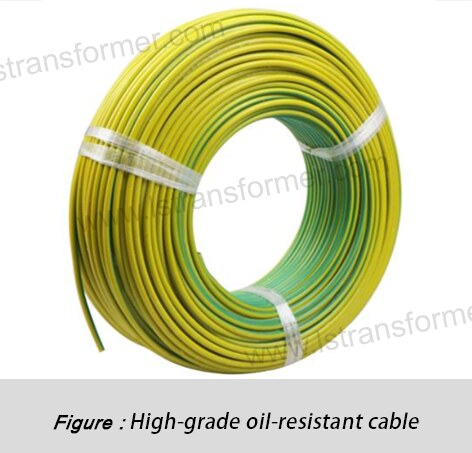
● Swelling Effect:Transformer oil gradually penetrates the molecular structure of insulating materials, causing them to expand (swell). Ordinary insulating materials may exhibit swelling rates of 5-10%, whereas high-grade oil-resistant wires use specialized polymers (such as polyamide-imide or modified polyester) with optimized molecular structures, keeping swelling rates below 1%.
Material Type | Swelling Rate (%) | Insulation Strength (kV/mm) | Long-Term Temperature Rating (°C) | Typical Lifespan (Years) |
Ordinary Enameled Wire | 5-10 | 15-20 | 105 | 5-8 |
Oil-Resistant Modified Polyester | 1-3 | 25-30 | 130 | 10-15 |
Polyamide-Imide | <1 | 30-35 | 155 | 15-20 |
Polyimide | 0.5 | 35-40 | 180 | 20+ |
Table 1: Performance Comparison of Different Insulating Materials in Transformer Oil
● Chemical Compatibility: Transformer oil ages over time under high temperatures and electric fields, producing acidic substances and free radicals. The insulating layers of high-grade oil-resistant wires contain special additives that neutralize these acidic substances, preventing degradation. For example, insulating materials with amine-based additives can maintain the oil's acid value below 0.1 mg KOH/g, far superior to the 0.5 mg KOH/g limit of ordinary materials.
● Synergistic Aging Effect:The aging processes of insulating materials and transformer oil influence each other. IEEE Std C57.91-2011 states that for oil-paper insulation systems, every 6-8°C increase in temperature doubles the aging rate. High-grade oil-resistant wires can reduce this temperature-induced effect by 30-40%, as their superior heat resistance minimizes the contamination of oil by thermal degradation products from the insulation.
2. Special Requirements of High-Voltage Fast Charging on Insulating Materials
With the development of high-power fast-charging technologies (e.g., 350 kW or higher), charging pile transformers face unprecedented electrical stress challenges:
● Pulse Voltage Stress: During fast charging, switching operations in power modules generate high-frequency voltage pulses (up to several kHz). According toIEC 60076-16 standards, such transformers must withstand partial discharge tests at 1.3 times the rated voltage. High-grade oil-resistant wires employ multi-layer insulation structures and nano-fillers (e.g., Al₂O₃ or SiO₂), limiting partial discharge to below 5 pC, whereas ordinary materials often exceed 20 pC.
The empirical formula for calculating partial discharge intensity is:
Q = C × ΔV
Where:
Q = Discharge quantity (pC)
C = Air gap capacitance (F)
ΔV = Discharge inception voltage (V)
High-grade materials significantly reduce discharge by minimizing air gap size and increasing dielectric constant.
● Thermal Cycling Stress:Fast-charging pile transformers operate intermittently, causing drastic temperature fluctuations. Ordinary insulating materials risk micro-cracks due to mismatched coefficients of thermal expansion (CTE > 5 ppm/°C). High-grade oil-resistant wires feature precisely tuned CTE, matching copper conductors and insulating oil within ±1 ppm/°C, greatly extending mechanical lifespan.
● Space Charge Accumulation: In high-voltage DC charging (HVDC), electric field strength can exceed 10 kV/mm. Ordinary materials accumulate space charges, distorting the electric field. High-grade materials incorporate conductive carbon black or metal oxide particles (0.5-2% content), reducing charge relaxation time from hours to minutes.
3. Safety and Regulatory Compliance Considerations
Globally, stringent safety requirements for charging infrastructure have driven the adoption of high-grade oil-resistant wires:
(1)Fire Resistance: UL 2202 mandates that transformers for charging equipment pass UL 94 V-0 flame resistance tests. High-grade oil-resistant wires use phosphorus-based flame retardants (e.g., DOPO derivatives), achieving a limiting oxygen index (LOI) above 35%, compared to 20-25% for ordinary materials. This ensures transformers do not become ignition sources during short circuits.
(2)Environmental Regulations: EU RoHS and REACH regulations restrict hazardous substances like polycyclic aromatic hydrocarbons (PAHs). Premium oil-resistant wires employ halogen-free formulations, reducing toxic gas emission indices (TTI) by over 50% and complying with EN 45545-2 standards for rail applications.
(3)Lifespan Validation:IEC 60076-14 requires charging pile transformers to pass accelerated aging tests (typically 500 thermal cycles). High-grade oil-resistant wires use the Arrhenius lifespan prediction model:
L = L0 × e^(-Ea/kT)
Where:
L = Predicted lifespan
Ea = Activation energy (eV)
k = Boltzmann constant
T = Absolute temperature (K)
By increasing Ea (1.2-1.5 eV for premium materials), lifespan at the same temperature extends 3-5 times.
4. Total Cost of Ownership Analysis
Although high-grade oil-resistant wires cost 20-40% more upfront, they offer significant long-term advantages:
Cost Item | Ordinary Insulation Wires ($) | High-Grade Oil-Resistant Wires ($) | Difference |
Initial Material Cost | 3,500 | 4,900 | +40% |
Installation & Maintenance | 2,800 | 1,500 | -46% |
Energy Loss Cost | 6,200 | 5,100 | -18% |
Downtime Losses | 4,500 | 1,000 | -78% |
10-Year Total Cost | 17,000 | 12,500 | -26% |
CO2 Emissions (Tons) | 12.5 | 9.2 | -26% |
Table 2: 10-Year Total Cost Comparison for Different Insulating Materials (500 kVA Transformer Example)
Cost advantages stem from:
(1)Lower Eddy Current Losses:Stable dielectric constants reduce additional losses by 15-20%.
(2)Reduced Maintenance:Enhanced oil resistance decreases oil treatment frequency.
(3)Extended Replacement Cycles:Longer lifespan cuts equipment renewal costs.
In Summary
Amid the global deployment of EV charging infrastructure, transformers manufactured with high-grade oil-resistant wires have become an inevitable choice driven by technological progress and evolving standards. This material solution not only meets the technical demands of high-voltage, high-current fast charging but also demonstrates comprehensive advantages in safety, environmental compliance, and cost-effectiveness.
As IEEE, IEC, and other standards organizations continue to update regulations, future advancements in oil-resistant wire technology—such as nano-composites and self-healing materials—will further ensure the reliable operation of charging infrastructure. For charging pile operators and transformer manufacturers, investing in high-grade oil-resistant wire technology is an investment in future market competitiveness.
Contact Us
LuShan, est.1975, is a Chinese professional manufacturer specializing in power transformers and reactors for50+ years. Leading products are single-phase transformer, three-phase isolation transformers,electrical transformer,distribution transformer, step down and step up transformer, low voltage transformer, high voltage transformer, control transformer, toroidal transformer, R-core transformer;DC inductors, AC reactors, filtering reactor, line and load reactor, chokes, filtering reactor, and intermediate,high-frequency products.
Our power transformers and reactors are widely used in 10 application areas: rapid transit, construction machinery, renewable energy, intelligent manufacturing, medical equipment, coal mine explosion prevention , excitation system, vacuum sintering(furnace), central air conditioning.
Know more about power transformer and reactor :www.lstransformer.com.
If you would like to obtain customized solutions for transformers or reactors, please contact us.
WhatsApp:+86 17267488565
Email:[email protected]