
 EN
EN
 FR
FR DE
DE ES
ES
How to Scientifically Combat Salt Spray Corrosion in Offshore Wind Power Transformers? —In-Depth Analysis of Protection Technologies and International Standards
How to Scientifically Combat Salt Spray Corrosion in Offshore Wind Power Transformers?
—In-Depth Analysis of Protection Technologies and International Standards
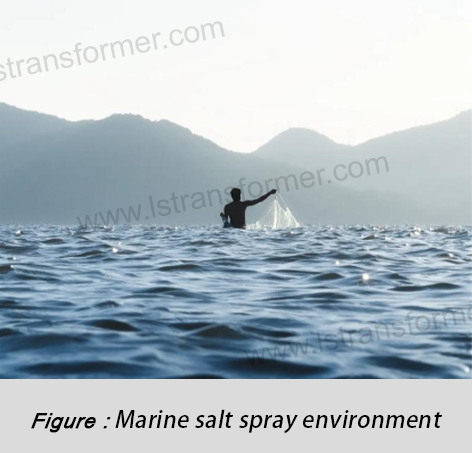
The global offshore wind power capacity is projected to exceed 380GW by 2030. However, in harsh marine environments, the failure rate of transformers due to salt spray corrosion is 3-5 times higher than that of onshore equipment. Chloride ions (Cl⁻) in salt spray combine with moisture to form an electrolyte, triggering electrochemical corrosion cycles in metals. This not only causes an annual power generation loss of 0.8-1.5% but also poses significant safety risks. This article will provide a systematic analysis of salt spray corrosion protection solutions, aligned with the three major international standards: IEC, ISO, and IEEE.
Content
1. Mechanism and Hazards of Salt Spray Corrosion: From Atomic Level to System Failure
Salt spray corrosion is an electrochemical phenomenon caused by sodium chloride (NaCl) particles carried by sea winds and moisture. Its impact on transformers includes:
(1)Metal Component Corrosion:
Transformer enclosures, heat sinks, fasteners, and other metal parts are prone to oxidation, pitting, and crevice corrosion in salt spray environments, leading to reduced mechanical strength and potential leakage risks.
(2)Insulation Performance Degradation:
Salt deposits on insulating surfaces form conductive layers, reducing creepage distance and increasing the risk of partial discharge.
(3)Cooling System Blockage:
Salt crystallization can clog heat dissipation channels, lowering cooling efficiency and causing transformer overheating.
Component | Corrosion Impact | Potential Risk |
Enclosure/Structural Parts | Coating peeling, rust | Reduced mechanical strength, seal failure |
Insulation System (Bushings, Insulators) | Salt deposits increase surface conductivity | Partial discharge, insulation breakdown |
Cooling System (Heat Sinks, Fans) | Salt crystallization blocks air channels | Overheating, reduced load capacity |
Table 1: Effects of Salt Spray Corrosion on Different Transformer Components
2. Systematic Protection Solutions: Material-Structure-Monitoring Triad
● Material-Level Protection: Alloy and Coating Synergy
● 316L Stainless Steel’s Molybdenum Barrier Mechanism
316L contains 2-3% molybdenum (Mo), which reacts with oxygen to form MoO₄²⁻ ions, creating a protective film at chloride attack sites:
(1)Chemical Equation:
Mo + 2H₂O → MoO₂ + 4H⁺ + 4e⁻
(2)Protection Effect:
Pitting Resistance Equivalent Number (PREN) = %Cr + 3.3×%Mo + 16×%N ≥ 40
(3)Data Support:
In ISO 9227 salt spray tests, 316L exhibits a corrosion rate of only 0.001mm/year (vs. 0.1mm/year for carbon steel).
● Multi-Layer Coating System: Molecular-Level Defense
Four-layer protective structure (total thickness ≥250μm):
(1)Phosphating Layer (5μm):Forms a dense FePO₄ layer for enhanced adhesion.
(2)Zinc-Rich Epoxy Primer (80μm): Zinc particles (>85%) act as sacrificial anodes.
(3)Epoxy Mica Iron Intermediate Coat (100μm): Flake-shaped mica iron oxide blocks corrosion paths.
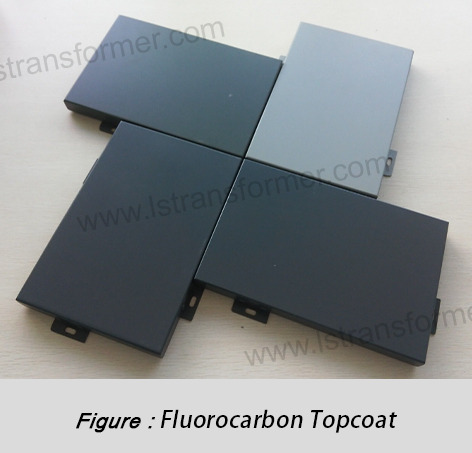
(4)Fluorocarbon Topcoat (65μm):C-F bond energy (485 kJ/mol) resists UV degradation.
Accelerated Aging Test: Certified to ISO 12944 C5-M standard, lifespan >25 years.
● Structural-Level Protection: Sealing and Pressure Control
● IP68 Sealing: Physical Isolation Principle
Dual silicone rubber seals (30%±5% compression) enable dynamic sealing via Pascal’s principle:
(1)Formula:ΔP = ρgΔh + σ(1/R₁ + 1/R₂)
(ρ: seawater density, σ: surface tension, R: curvature radius)
(2)Example:Siemens offshore transformers use triple labyrinth seals, passing IEC 60529 tests (1m depth/72h).
● Nitrogen Sealing System: Oxidation Suppression
Inject 99.95% pure nitrogen into the oil conservator to reduce oxygen concentration to <0.5%:Reaction Inhibition: 4Fe + 3O₂ → 2Fe₂O₃ (reaction rate ≈0 at O₂ <1%)
● Monitoring-Level Protection: Quantitative Corrosion Diagnostics
Monitoring Technology | Principle | Accuracy & Response Time |
Electrochemical Noise (EN) | Measures corrosion current fluctuations (ΔI<10nA/cm²) | Sensitivity: 0.01% corrosion |
Terahertz Wave Imaging | 0.1-10THz band penetrates salt layers to detect defects | Spatial resolution: 0.5mm |
Machine Learning Alerts | LSTM models analyze historical corrosion data for lifespan prediction | Error <7% |
3. International Standards and Cutting-Edge Technologies
● Key Standard Requirements Comparison
Standard | Salt Spray Test Requirements | Protection Level |
IEC 61400-3 | 500h neutral salt spray (5% NaCl, 35°C) | Corrosion area <0.1% |
IEEE C57.12.01 | Cyclic corrosion (salt spray + humidity + drying) | Coating adhesion >5MPa |
DNVGL-RP-0416 | Full-scale turbine exposure (>1 year) | Annual corrosion rate <0.01mm |
● Technological Breakthroughs
(1)Self-Healing Coatings:Microcapsules release corrosion inhibitors (e.g., benzotriazole) upon damage; repairs 200μm scratches within 24h.
(2)Nano-Composite Insulators: Al₂O₃/SiO₂ nanoparticles in silicone rubber increase salt fog flashover voltage by 60%.
In Summary
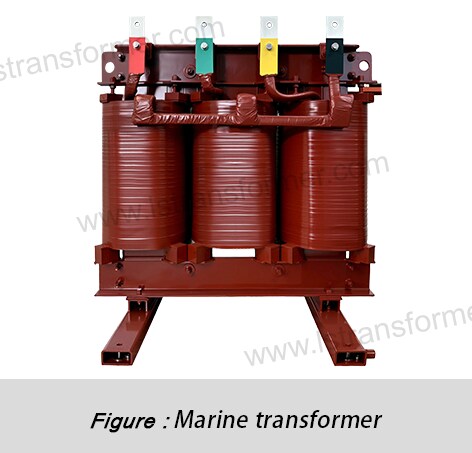
Protecting offshore wind transformers from salt spray corrosion requires a systematic approach integrating materials, structural design, and smart monitoring. Key strategies include:
(1)High-corrosion-resistant alloys (PREN >40).
(2)Multi-layer coatings compliant with ISO 12944 C5-M.
(3)IP68 sealing and nitrogen inerting systems.
(4)Real-time monitoring via electrochemical noise and AI.
This lifecycle strategy extends transformer lifespan from 12 to over 25 years, reducing levelized cost of energy (LCOE) by 18-22%. With advancements like self-healing coatings and stricter standards (e.g., IEC 61400-3), future offshore transformers will achieve even greater corrosion resistance, supporting global energy transition goals.
Contact Us
LuShan, est.1975, is a Chinese professional manufacturer specializing in power transformers and reactors for50+ years. Leading products are single-phase transformer, three-phase isolation transformers,electrical transformer,distribution transformer, step down and step up transformer, low voltage transformer, high voltage transformer, control transformer, toroidal transformer, R-core transformer;DC inductors, AC reactors, filtering reactor, line and load reactor, chokes, filtering reactor, and intermediate,high-frequency products.
Our power transformers and reactors are widely used in 10 application areas: rapid transit, construction machinery, renewable energy, intelligent manufacturing, medical equipment, coal mine explosion prevention , excitation system, vacuum sintering(furnace), central air conditioning.
Know more about power transformer and reactor :www.lstransformer.com.
If you would like to obtain customized solutions for transformers or reactors, please contact us.
WhatsApp:+86 17267488565
Email:[email protected]