





How to Reduce Transformer Core Losses?

Home > FAQ > Page 27
FAQ

How to Reduce Transformer Core Losses?

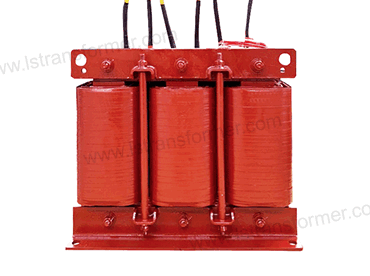
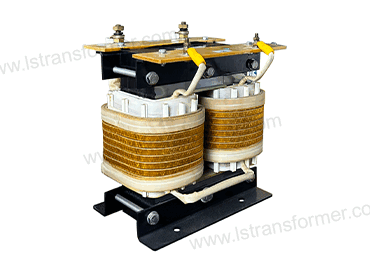
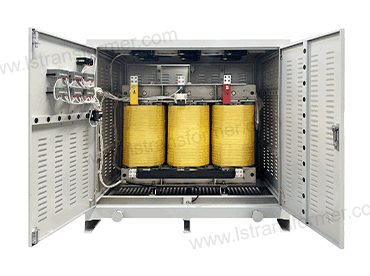
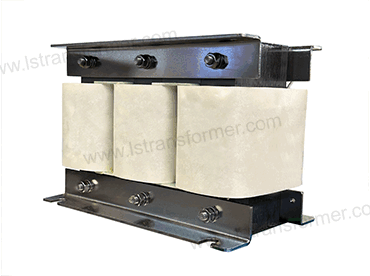
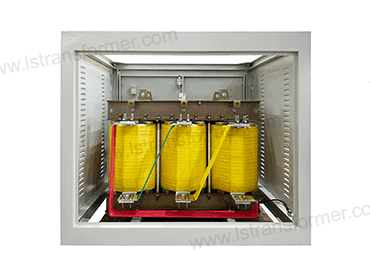
How to Reduce Transformer Core Losses? Transformer core losses primarily include eddy current losses and hysteresis losses. Here is an elaboration on methods to decrease core losses: (1) Optimize core material: To minimize losses, selecting core materials with low losses and high saturation magnetic induction is crucial. Silicon steel is currently one of the most
FAQ

What Causes Winding Breakage?

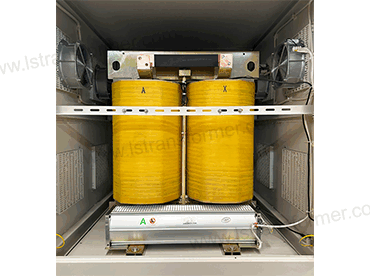
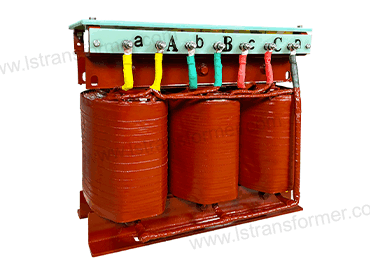
What Causes Winding Breakage? There are several reasons that can lead to winding breakage in transformers: (1) Unstable Line Connections: When the winding connections in a transformer are problematic, such as poor welding, inadequate contact, or loosening, it may result in concentrated currents or localized overheating at the connection points. Prolonged overheating can accelerate the

FAQ

What Causes Overheating of Transformer Core?

What Causes Overheating of Transformer Core? The overheating of a transformer core can be attributed to several factors: (1) Overload: When a transformer operates under excessive load, the current passing through the core increases, generating additional Joule heating. This can result in an elevated temperature of the core, surpassing the design temperature. (2) Iron Loss:

FAQ

How is the understanding of withstand voltage and test voltage?

How is the understanding of withstand voltage and test voltage? In practical operation, transformers and choke coils are exposed to transient overvoltages due to various reasons. Content 1. Illustrate For instance, when a transformer’s power supply is closed, it may generate a transient overvoltage twice the normal operating voltage. Similarly, when the power supply is

FAQ

Why does excitation inrush current occur when a transformer is energized with no load?

Why does excitation inrush current occur when a transformer is energized with no load? When a transformer is energized with no load, the excitation current immediately undergoes a transient phase, and its peak value may exceed several times the rated load current. Compared to the normal excitation current, the steady-state no-load current of the transformer

FAQ

What are the inspection tasks for dry-type transformers?

What are the inspection tasks for dry-type transformers? Check for abnormal sounds and vibrations. Look for signs of local overheating, such as insulation surface tracking and discoloration caused by harmful gas corrosion and carbonization. Verify if the transformer’s air-cooling system is operating correctly. Ensure that there is no overheating at high and low voltage connections

FAQ

How to analyze and dissect three-phase transformers?

How to analyze and dissectthree-phasetransformers? A transformer is a device that transforms AC voltage, current, and impedance. When an AC current flows through the primary coil, an alternating magnetic flux is generated in the core (or magnetic core), inducing voltage (or current) in the secondary coil. With the continuous development of the transformer industry, more

FAQ

What protective devices does a three-phase transformer have?

What protective devices does a three-phase transformer have? Microcomputer Protection Device: The microcomputer protection device for three-phase transformers consists of highly integrated components, chip-on-bus single-chip micro-controllers, high-precision current-voltage transformers, high-insulation-strength output intermediate relays, high-reliability switch power modules, etc. The microcomputer protection device is mainly used for power plants, substations, distribution stations with voltage levels of

FAQ

How to choose the cooling method for oil-immersed and dry-type forced air-cooled transformers?

How to choose the cooling method for oil-immersed and dry-type forced air-cooled transformers? Oil-immersed forced air-cooled transformers offer two selectable cooling methods: oil-immersed forced air cooling (ONAF) and oil-immersed self-cooling (ONAN). Generally, ONAF cooling is chosen when the transformer operates at 100% rated capacity, while ONAN cooling can be selected when operating at 67% (or

WhatsApp QR WeChat QR sales@hnlsdz.com
Scroll to Top