
 EN
EN
 FR
FR DE
DE ES
ES
¿Cómo detectar el envejecimiento del aislamiento en los cables de salida de transformadores y reactores?
¿Cómo detectar el envejecimiento del aislamiento en los cables de salida de transformadores y reactores?
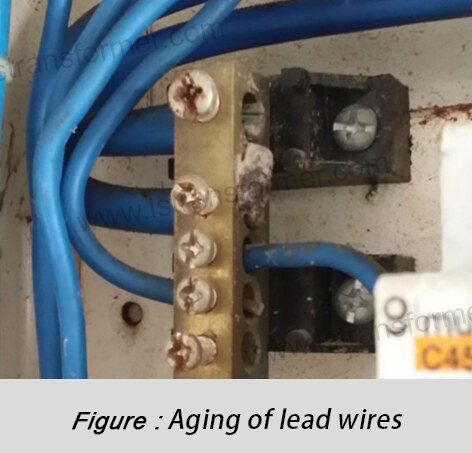
En sistemas eléctricos y aplicaciones industriales, los transformadores y reactancias son equipos críticos para la transmisión y distribución eficiente de energía. Con el tiempo, los materiales aislantes de sus cables de salida envejecen inevitablemente, lo que afecta significativamente la seguridad y confiabilidad de los equipos. La Comisión Electrotécnica Internacional (IEC) y las normas IEEE identifican explícitamente el envejecimiento del aislamiento como una de las principales causas de fallas en transformadores y reactancias. Este artículo ofrece una guía detallada sobre cómo detectar científica y eficazmente el envejecimiento del aislamiento en los cables de salida, abarcando desde los principios fundamentales hasta las técnicas prácticas de detección.
La detección eficaz del envejecimiento del aislamiento no solo previene fallos en los equipos, sino que también prolonga su vida útil y reduce las pérdidas económicas causadas por paradas imprevistas. Gracias a los avances en la tecnología de detección, los métodos de diagnóstico modernos permiten evaluar con precisión el estado del aislamiento sin desmontar el equipo, lo que facilita enormemente el mantenimiento. A continuación, analizaremos las causas del envejecimiento del aislamiento y presentaremos diversos métodos y estándares de detección.
Contenido
1. Causas principales del envejecimiento del aislamiento
Los materiales aislantes experimentan múltiples mecanismos de envejecimiento durante su uso a largo plazo, que se clasifican principalmente en envejecimiento térmico, envejecimiento eléctrico, envejecimiento mecánico y envejecimiento ambiental. Comprender estos mecanismos es esencial para un diagnóstico preciso, ya que los diferentes tipos de envejecimiento suelen requerir métodos de detección distintos.
● Envejecimiento térmico
El envejecimiento térmico es la forma más común. Según el principio de Arrhenius, la vida útil de los materiales aislantes está relacionada exponencialmente con la temperatura. La norma IEEE C57.91-2011 establece que por cada 6 °C de aumento en la temperatura del devanado del transformador, la vida útil del papel aislante se reduce a la mitad. El envejecimiento térmico provoca la rotura de la cadena molecular en los materiales aislantes, lo que produce subproductos de bajo peso molecular y reduce gradualmente la resistencia mecánica y el rendimiento dieléctrico. Cabe destacar que las temperaturas de los puntos calientes tienen un impacto más pronunciado, ya que estas áreas localizadas de alta temperatura suelen ser las primeras en mostrar signos de envejecimiento.
● Envejecimiento eléctrico
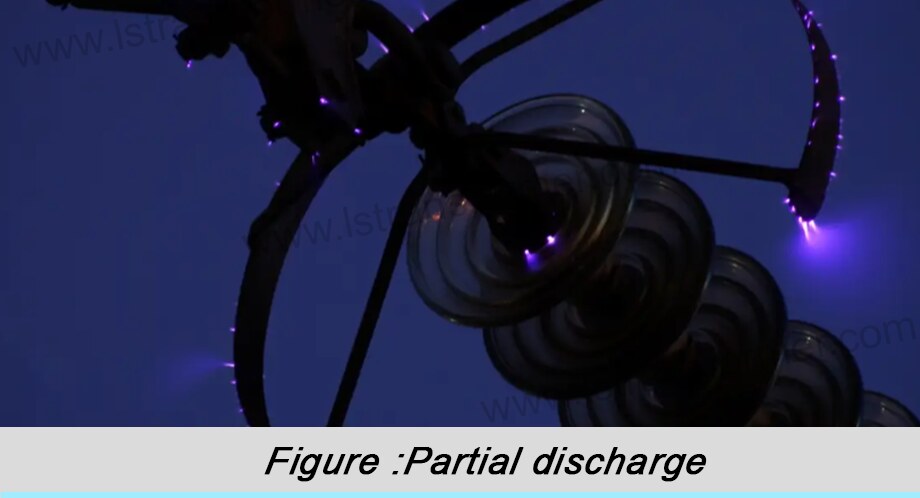
El envejecimiento eléctrico incluye fenómenos como las descargas parciales y la arborización eléctrica. Cuando existen defectos o entrehierros en el aislamiento, la distribución desigual del campo eléctrico puede provocar descargas parciales en zonas de alta intensidad de campo. Aunque la energía de estas descargas es pequeña, sus efectos a largo plazo erosionan los materiales aislantes y forman canales conductores. Investigaciones del Consejo Internacional de Grandes Sistemas Eléctricos (CIGRE) indican que más del 60 % de las fallas en transformadores de alta tensión están relacionadas con descargas parciales.
● Envejecimiento mecánico
El envejecimiento mecánico se debe a las fuerzas electromagnéticas de las corrientes de cortocircuito y a la expansión/contracción térmica debida a las fluctuaciones de temperatura. La tensión mecánica repetida crea microfisuras y delaminación en las capas de aislamiento, acelerando otros procesos de envejecimiento. Esto es especialmente evidente en los reactores, que soportan fuerzas electromagnéticas significativas.
● Envejecimiento ambiental
El envejecimiento ambiental se refiere al impacto de factores externos como la humedad, el oxígeno y los contaminantes. La humedad reduce la tensión de ruptura del aceite y promueve la degradación de la celulosa, mientras que el oxígeno provoca la oxidación del aceite, produciendo sustancias ácidas que corroen los materiales aislantes. La norma IEC 60599 especifica los límites de humedad y subproductos de oxidación en equipos sumergidos en aceite.
Tipo de envejecimiento |
Causas primarias |
Características típicas |
Parámetros más afectados |
Envejecimiento termico |
Temperaturas altas a largo plazo |
Fragilidad del material, oscurecimiento |
Temperatura, contenido de oxígeno |
Envejecimiento eléctrico |
Alta intensidad de campo, descarga parcial |
Trazas de carbono, canales de descarga con forma de árbol |
Intensidad de campo, pérdida dieléctrica |
Envejecimiento mecánico |
Fuerzas electromagnéticas, vibración |
Separación de capas, grietas |
Corriente de cortocircuito, fuerza de fijación |
Envejecimiento ambiental |
Humedad, contaminantes |
Formación de lodos, aumento de la acidez. |
Humedad, nivel de contaminación |
Tabla 1: Tipos de envejecimiento del aislamiento y características clave
2. Métodos y principios clave de detección
Existen diversos métodos para detectar el envejecimiento del aislamiento en cables de salida, cada uno con aplicaciones y ventajas específicas. Un plan de detección ideal combina múltiples métodos para validar los resultados. A continuación, se presentan algunas de las técnicas más reconocidas y aceptadas internacionalmente.
● Prueba de tangente de pérdida dieléctrica (Tanδ)
(1)Concepto:La prueba del factor de pérdida dieléctrica (Tanδ o DF) es uno de los métodos más clásicos para evaluar las condiciones de aislamiento, ampliamente adoptado por normas como la IEC 60247. Esta prueba aplica una tensión de CA al aislamiento y mide la tangente del ángulo de desfase (δ) entre la corriente y la tensión. En un aislante ideal, la corriente debería adelantarse 90° respecto a la tensión, pero debido a la pérdida dieléctrica, la diferencia de fase es ligeramente menor.
(2)Principio:La pérdida dieléctrica surge de la disipación de energía causada por la relajación de la polarización y la conductividad en campos eléctricos alternos. El envejecimiento daña la estructura del material, aumentando la pérdida de polarización, mientras que los subproductos del envejecimiento (p. ej., carburos conductores) incrementan la pérdida de conductividad; ambos se reflejan en valores de Tanδ más altos. La norma IEEE 286-2000 recomienda que los valores de Tanδ superiores al 0.5 % para el aislamiento de papel-aceite sean objeto de atención, mientras que los valores superiores al 1 % indican una degradación grave.
(3)Pruebas:Se realizan comúnmente con un puente Schering o comprobadores digitales de pérdida dieléctrica modernos a frecuencia industrial (50/60 Hz) o baja frecuencia (0.1 Hz). Las pruebas de baja frecuencia son más sensibles a los procesos de polarización lenta, lo que las hace eficaces para detectar humedad y envejecimiento. Las tensiones de prueba suelen oscilar entre 2 y 10 kV, dependiendo de la tensión nominal del equipo.
Nota: Los valores de Tanδ son sensibles a la temperatura y deben corregirse a una referencia de 20 °C utilizando la fórmula:
tanδ₂₀ = tanδₜ × e^(-α(t-20))
donde α es el coeficiente de temperatura (~0.017-0.022/°C para aislamiento de aceite-papel).
● Detección de descargas parciales (PD)
(1)Concepto:La detección de descargas parciales, según la norma IEC 60270, es uno de los métodos más sensibles para diagnosticar defectos de aislamiento en sus etapas iniciales. Las descargas parciales (DP) se refieren a descargas no penetrantes en áreas localizadas del sistema de aislamiento que, con el tiempo, degradan su rendimiento.
(2)Métodos: Tres técnicas comunes son:
–Método eléctrico:Mide corrientes de pulso (máxima precisión pero requiere apagado).
–Método ultrasónico:Detecta ondas acústicas de descargas (adecuado para monitorización online).
–Método de frecuencia ultraalta (UHF):Detecta ondas electromagnéticas en el rango de 300 MHz a 3 GHz (también adecuado para monitoreo en línea).
(3)Parámetros clave:
–Magnitud de descarga aparente (q, en pC).
–Tasa de repetición de descarga (n).
–Tensión de inicio de descarga (Vi) y tensión de extinción (Ve).
Las normas internacionales suelen limitar la descarga aparente a ≤10 pC a 1.5 veces la tensión de fase nominal. Las técnicas avanzadas de localización de DP combinan señales eléctricas y ultrasónicas para localizar las fuentes de descarga con precisión centimétrica, ideal para transformadores y reactancias de gran tamaño.
● Análisis de gases disueltos (DGA)
(1)Concepto: Para equipos sumergidos en aceite, el análisis de gases disueltos (basado en las normas IEC 60599 e IEEE Std C57.104) es muy eficaz para monitorear el envejecimiento del aislamiento. Los materiales aislantes se descomponen bajo tensión térmica y eléctrica, produciendo gases característicos cuya composición y concentración revelan las condiciones internas del aislamiento.
(2)Gases clave:H₂, CH₄, C₂H₂, C₂H₄, C₂H₆, CO, CO₂, O₂ y N₂. Los diferentes procesos de envejecimiento producen distintas combinaciones de gases:
–Descargas parciales: H₂ y CH₄.
–Sobrecalentamiento del aceite (<300°C): CH₄ y C₂H₄.
–Sobrecalentamiento del aceite a alta temperatura (>700°C): C₂H₂.
–Sobrecalentamiento del aislamiento sólido: CO y CO₂.
(3)Relaciones críticas:
–Relación metano (CH₄/H₂).
–Relación de acetileno (C₂H₂/C₂H₄).
–Relación etileno (C₂H₄/C₂H₆).
Tipo de falla |
Gases primarios |
Gases secundarios |
Rango de relación típico |
Descargo parcial |
H₂, CH₄ |
C₂H₂, CO |
CH₄/H₂ >0.1 |
Sobrecalentamiento del aceite a baja temperatura |
CH₄, C₂H₆ |
H₂, C₂H₄ |
C₂H₄/C₂H₆ 1-3 |
Sobrecalentamiento del aceite a alta temperatura |
C₂H₄, H₂ |
CH₄, C₂H₆ |
C₂H₂/C₂H₄ <0.1 |
Descarga de arco |
C₂H₂, H₂ |
CH₄, C₂H₄ |
C₂H₂/C₂H₄ >3 |
Tabla 2: Estándares de identificación de fallas DGA (IEC 60599)
Las técnicas modernas de DGA incluyen monitoreo en línea mediante cromatografía de gases o espectroscopia fotoacústica, lo que proporciona un seguimiento de la concentración de gas en tiempo real, especialmente útil para reactores con altas intensidades de campo.
3. Análisis y evaluación de la vida útil
Tras recopilar los datos de detección, el análisis y la evaluación científica de las condiciones de aislamiento son cruciales para un funcionamiento fiable. A nivel internacional, los resultados multiparamétricos se comparan con datos históricos, datos de equipos similares y límites estándar, utilizando modelos matemáticos para predecir la vida útil restante.
● Diagnóstico multiparamétrico
Los indicadores individuales a menudo no reflejan completamente las condiciones del aislamiento. Una evaluación integral podría incluir:
(1)Un Tanδ elevado sin un aumento de PD sugiere un envejecimiento uniforme.
(2)Tanδ normal pero PD alto indica defectos localizados.
(3)Las altas relaciones CO/CO₂ en DGA indican un envejecimiento del aislamiento sólido.
CIGRE recomienda un sistema de puntuación para un diagnóstico integral, que asigna puntos según las desviaciones respecto a los valores basales. Los sistemas avanzados utilizan lógica difusa o redes neuronales para procesar datos multidimensionales y realizar una evaluación holística.
● Modelos de predicción de vida útil
La predicción de la vida útil se basa en modelos de envejecimiento térmico y la teoría del daño acumulativo. La clásica ecuación de Montsinger describe la relación entre la temperatura y la vida útil:
L = Ae^(-Bθ)
donde L es la vida útil, θ es la temperatura y A/B son constantes del material.
Un modelo más preciso de la norma IEC 60076-7 tiene en cuenta múltiples tensiones:
L = L₀ × 2^[(θ₀-θ)/6] × (1/PD)^n × (1/M)^p
donde PD es la intensidad de descarga parcial, M es la tensión mecánica y n/p son exponentes empíricos.
En la práctica, la "vida útil relativa" compara la vida útil restante actual con la vida útil inicial. Por ejemplo, cuando Tanδ se triplica o el grado de polimerización (GP) cae por debajo de 200, se considera que el aislamiento ha llegado al final de su vida útil.
4. Mantenimiento preventivo y nuevas tecnologías
El mantenimiento preventivo científico basado en los resultados de detección puede prolongar significativamente la vida útil de los equipos. A nivel internacional, se ha demostrado que las estrategias de mantenimiento basado en la condición (CBM) prolongan la vida útil de transformadores y reactores en más de un 30 %, a la vez que reducen las fallas repentinas en un 60 %.
● Mantenimiento específico
Adapte las medidas al tipo y gravedad del envejecimiento:
(1)Envejecimiento térmico uniforme:Optimizar la refrigeración o reducir la carga.
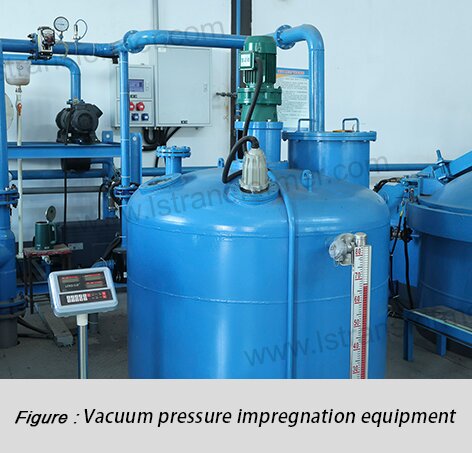
(2)Descarga parcial:Localizar y reparar las fuentes de descarga (por ejemplo, llenado de aceite al vacío).
(3)Envejecimiento inducido por la humedad:Secar con circulación de aceite al vacío y sustituir los desecantes.
(4)Envejecimiento severo:Plan de reemplazo o jubilación.
En el caso de los reactores, las comprobaciones periódicas de la integridad de los sujetadores y del soporte de aislamiento son cruciales debido a las altas intensidades de campo. Las normas recomiendan inspecciones mecánicas completas cada 3 a 5 años o después de cortocircuitos graves.
● Monitoreo avanzado
Las tecnologías emergentes como IoT e IA están revolucionando la monitorización del aislamiento:
(1)Detección de temperatura distribuida (DTS): mapeo de temperatura en tiempo real.
(2)Transformadores de corriente de alta frecuencia (HFCT): detectan pulsos de PD de nanosegundos.
(3)Sensores de puntos cuánticos: monitorean la humedad y la acidez del aceite en línea.
(4)Tecnología Digital Twin: Duplicación virtual de equipos en tiempo real.
La combinación de estos métodos con los tradicionales crea un sistema de monitoreo integral. Por ejemplo, un fabricante informó que extendió la duración de la falla de 72 horas a más de 30 días mediante monitoreo inteligente.
En resumen
Detectar el envejecimiento del aislamiento en los cables de salida es una tarea sistemática que requiere experiencia y equipo especializado. Una detección eficaz debe cumplir con:
(1)Integración de múltiples métodos: combine Tanδ, PD, DGA, etc., para validación cruzada.
(2)Análisis de tendencias: concéntrese en las tendencias de los parámetros a lo largo del tiempo, no en puntos de datos individuales.
(3)Normas internacionales: seguir las pautas IEC/IEEE para el juicio científico.
(4)Adopte nuevas tecnologías: la monitorización inteligente mejora la eficiencia y la precisión.
Al aplicar estos métodos y mantenerse actualizados sobre las tendencias de envejecimiento y las tecnologías de detección, los operadores pueden optimizar el mantenimiento, garantizando la confiabilidad y la rentabilidad del sistema eléctrico.
Contáctenos
lushan, est.1975, es un fabricante profesional chino especializado en transformadores de potencia y reactores para50+ años. Los productos líderes son transformador monofásico, trifásico solo transformadores,transformador eléctrico,transformador de distribución, transformador reductor y elevador, transformador de baja tensión, transformador de alta tensión, transformador de control, transformador toroidal, transformador de núcleo R;Inductores de CC, reactores de CA, reactores de filtrado, reactores de línea y carga, bobinas, reactores de filtrado y productos intermedios de alta frecuencia.
Nuestro poder Los transformadores y reactores se utilizan ampliamente en 10 áreas de aplicación: tránsito rápido, maquinaria de construcción, energía renovable, fabricación inteligente, equipos médicos, prevención de explosiones en minas de carbón, sistema de excitación, sinterización al vacío (horno), aire acondicionado central.
Conozca más sobre transformadores de potencia y reactores:www.lstransformer.com.
Si desea obtener soluciones personalizadas para transformadores o reactancias, póngase en contacto con nosotros.
WhatsApp:+86 13787095096
Correo electrónico:[email protected]