
 EN
EN
 FR
FR DE
DE ES
ES
¿Cuál es el grado de protección típico para reactores exteriores?
¿Cuál es el grado de protección típico para reactores exteriores?
En la infraestructura eléctrica global, los reactores al aire libre son equipos clave para la compensación de potencia reactiva y la limitación de corriente de cortocircuito. Su grado de protección influye directamente en la fiabilidad a largo plazo y la seguridad operativa. Este artículo analiza las normas internacionales para los grados de protección de los reactores al aire libre, los criterios de selección y los métodos de implementación, con el fin de proporcionar una guía técnica integral para ingenieros eléctricos, responsables de adquisiciones y personal de mantenimiento.
Contenido
1. Comprensión de la norma internacional para clasificaciones de protección – Código IP
La Comisión Electrotécnica Internacional (IEC) estableció el código IP como un estándar reconocido mundialmente para evaluar la capacidad de protección de las envolventes eléctricas. Este estándar es ampliamente adoptado por importantes organizaciones como IEEE y ANSI. El código IP consta de dos dígitos característicos:
•El primer dígito indica la protección contra objetos sólidos (incluido el polvo).
•El segundo dígito indica protección contra líquidos (principalmente agua).
Para reactores exteriores, el requisito típico esIP54 o superior,Debido a las condiciones exteriores variables y adversas. Esto es lo que significa IP54:
•Primer dígito "5": Protegido contra el polvo: no se impide por completo la entrada de polvo, pero no debería interferir con un funcionamiento satisfactorio.
•Segundo dígito "4": Resistente al agua contra salpicaduras desde cualquier dirección.
Índice de protección IP |
Protección contra el polvo |
Protección del agua |
Escenario de aplicación típico |
IP54 |
Protección limitada contra el polvo |
Resistencia a salpicaduras de agua |
Áreas exteriores generales con algo de refugio. |
IP55 |
Protección limitada contra el polvo |
Chorros de agua a baja presión |
Lugares al aire libre expuestos a la lluvia |
IP65 |
Totalmente hermético al polvo |
Chorros de agua a baja presión |
Regiones polvorientas o costeras |
IP66 |
Totalmente hermético al polvo |
Fuertes chorros de agua |
Entornos industriales adversos o zonas marinas |
IP67 |
Totalmente hermético al polvo |
inmersión temporal |
Zonas propensas a inundaciones o lluvias intensas |
Tabla 1: Clasificaciones IP comunes para equipos eléctricos de exterior
Es importante señalar que en América del Norte, elNEMA 250 El estándar es el más utilizado. Cabe destacar la correspondencia entre los códigos NEMA e IP; por ejemplo, NEMA 3R se corresponde aproximadamente con IP54, mientras que NEMA 4X se corresponde con IP66.
2. Cuatro factores ambientales clave que influyen en la selección del nivel de protección
● Condiciones climáticas y su impacto en los niveles de protección
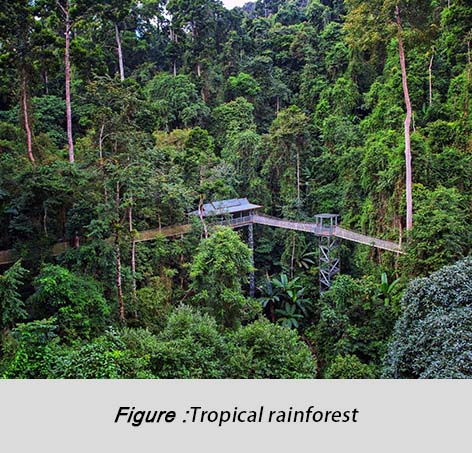
Los climas de selva tropical con alta humedad (a menudo superior al 80% de HR) y fuertes lluvias (precipitaciones anuales superiores a 2000 mm) aceleran el envejecimiento de los materiales aislantes del reactor. La entrada de humedad aumenta el factor de pérdida dieléctrica (tanδ), expresado como:
broncearseδ= (1/ωC)×(1/R)
Lugar:
•ω = frecuencia angular (2πf)
•C = capacitancia de aislamiento
•R = resistencia de aislamiento
Cuando la humedad reduce la reflectancia térmica (R), la tangente de pérdidas (tanδ) aumenta significativamente, lo que incrementa el calentamiento del aislamiento. Por lo tanto, en regiones como el sudeste asiático, se requiere al menos un grado de protección IP55, mientras que en zonas propensas a tifones se debería considerar un grado IP56 para la protección contra lluvias intensas impulsadas por el viento.
● Niveles de contaminación y requisitos de protección asociados
Según la norma IEC 60721-3-3, la contaminación industrial se clasifica en cuatro niveles. En zonas muy contaminadas (por ejemplo, plantas químicas, fábricas de cemento, niveles de contaminación 3 o 4), el polvo conductor puede depositarse en las superficies de los reactores, creando vías de fuga. Los datos de las pruebas muestran que cuando la densidad de depósitos no solubles (NSDD) alcanza los 0.1 mg/cm², la tensión de descarga disruptiva del aislador puede disminuir hasta un 30 %. Esto explica por qué se requiere un grado de protección IP65 o superior en entornos costeros (con niebla salina), donde la prevención total del polvo evita la acumulación de partículas conductoras.
● Consideraciones especiales Consideraciones especiales para gran altitud
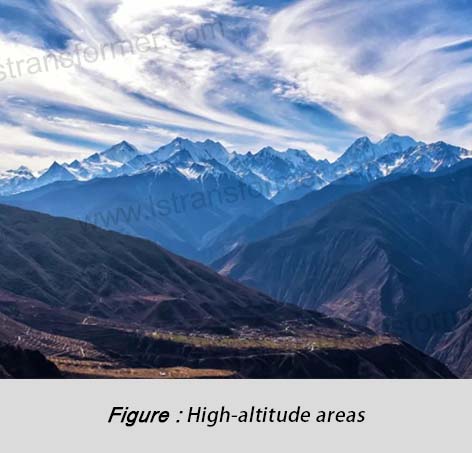
Cada aumento de 1000 metros en la altitud reduce la densidad del aire en aproximadamente un 10%, disminuyendo la resistencia del aislamiento externo. Si bien esto afecta principalmente adiseño de separación eléctricaLas zonas de gran altitud suelen experimentar grandes diferencias de temperatura entre el día y la noche (más de 40 K). Esto provoca un efecto de respiración, intensificando la tensión en los sellos de la carcasa. Para instalaciones por encima de los 2000 metros, se recomienda:aumentar el nivel de protección en un nivel más allá del requisito básico.
● Factores biológicos que afectan al diseño protector
Según la norma IEEE C57.12.00, las mordeduras de roedores son responsables de aproximadamente el 7 % de las fallas en las subestaciones eléctricas. Para solucionar este problema, se recomienda combinar la protección contra el polvo con medidas mecánicas; por ejemplo, una malla de acero inoxidable (con una abertura de ≤ 5 mm) puede cumplir con los requisitos de protección contra el polvo y prevención de plagas IP5X. En climas tropicales, insectos como las hormigas pueden invadir las conexiones de los terminales, lo que exige que los conectores alcancen al menos la protección IP6X.
3. Medidas técnicas clave para lograr altos niveles de protección
● Principios del diseño de sistemas de sellado
Un sellado de alta calidad se basa en la ciencia de los materiales y la ingeniería mecánica. Las juntas de etileno propileno dieno monómero (EPDM) son las preferidas debido a su excelente resistencia a la intemperie (-50 °C a 150 °C) y su baja deformación permanente por compresión (<25 %). El rendimiento del sellado se puede evaluar mediante:
Q = K×(ΔP)^n×A/d
Lugar:
•Q = tasa de fuga
•K = coeficiente de permeabilidad del material
•ΔP = diferencia de presión
•A = área de sellado
•d = espesor del sello
•n = coeficiente empírico (generalmente 1 < n < 2)
El uso de un diseño de doble sellado (sellos primario y secundario) puede reducir las tasas de fuga en dos órdenes de magnitud, lo cual es fundamental para lograr la clasificación IP66. Además, las válvulas de ventilación con desecantes de tamiz molecular equilibran las diferencias de presión internas y externas, evitando así la falla del sello debido a una presión negativa prolongada.
● Protección mejorada mediante tratamiento de superficie.
Las envolventes de los reactores suelen estar hechas de acero laminado en frío (SECC) y se someten a múltiples tratamientos:
•Fosfatado: El recubrimiento de conversión química forma una capa de fosfato cristalino de 5 a 10 μm, lo que mejora la adherencia de la pintura.
•Electrorecubrimiento catódico: Proceso electroquímico que deposita resina epoxi (de 20 a 30 μm de espesor) sobre la superficie del metal, proporcionando una resistencia básica a la corrosión.
•Recubrimiento en polvo: Aplicación electrostática de polvo de poliéster/poliuretano, curado a 180–200 °C, formando una capa de poliéster resistente a los rayos UV de 50–80 μm.
Proceso de tratamiento |
Horas de prueba de niebla salina |
Resistencia a la humedad |
Resistencia UV |
Clasificación IP adecuada |
Pintura convencional |
500 h |
Suficientemente bueno |
grado 2 |
Por debajo de IP54 |
Galvanizado en caliente |
1000 h |
Bueno |
grado 3 |
IP55 |
Recubrimiento electroforético + recubrimiento en polvo |
2000 h |
Excelente |
grado 5 |
IP65 y superior |
Acero inoxidable |
5000 h |
Excepcional |
grado 5 |
IP68 |
Tabla 2: Comparación de soluciones de tratamiento de superficies
● Detalles de diseño de protección para componentes especiales
Los terminales de salida utilizan doble sellado:
•Sello primario: El caucho de silicona moldeado garantiza el sellado de la interfaz.
•Sellado secundario: Un compuesto de encapsulado (poliuretano o epoxi) rellena todos los huecos.
La disipación del calor debe equilibrar las necesidades de protección y refrigeración:
•Para grados IP55: Ventilación natural (con mosquiteras).
•Para IP65 y superior:
–Fundición a presión con aletas y carcasa integradas
–Tubos de calor internos + aletas corrugadas externas
•Refrigeración por aire forzado (requiere un ventilador adicional con clasificación IP54).
4. Equilibrio entre el nivel de protección y los costos de mantenimiento
Si bien aumentar el nivel de protección reduce las tasas de falla, los costos aumentan exponencialmente. Las estadísticas indican un aumento de costos de aproximadamente el 40 % de IP55 a IP65, y otro 25 % de IP65 a IP66. Basado enAnálisis del costo del ciclo de vida (LCC)La elección óptima considera:
LCC = Coste inicial +Σ(Costo de mantenimiento)/(1+r)^t +Σ(Pérdida por fallo)/(1+r)^t
Las simulaciones de Monte Carlo revelan que, en condiciones moderadamente severas, el cambio en el ciclo de vida entre IP55 e IP65 suele producirse en un plazo de 8 a 10 años. Por lo tanto, para reactores con una vida útil prevista superior a 15 años, seleccionar un grado de protección más alto resulta más económico.
5. Comparación de las normas internacionales sobre niveles de protección
•IEC-60076 6 especifica un mínimo deIP54 para reactores exteriores.
•IEEE 1277 Recomienda la selección en función del escenario de aplicación:
–Clase de distribución: NEMA 3R (≈IP54)
–Clase de transmisión: NEMA 4X (≈IP66)
•China'La norma GB/T 1094.6 se ajusta a la IEC, pero exige específicamente un nivel de protección superior en las regiones costeras.
Cabe destacar que el marcado CE de la UE incluye la Directiva de Baja Tensión (LVD) y la Directiva de Compatibilidad Electromagnética (CEM), pero las clasificaciones de protección se refieren principalmente a la Directiva de Maquinaria (MD). La certificación UL en EE. UU. se centra más en la seguridad contra incendios y debe considerarse junto con las normas NEMA.
Conclusión
La selección de un grado de protección adecuado para reactores exteriores implica una optimización multiobjetivo, equilibrando la viabilidad técnica, la racionalidad económica y la facilidad de mantenimiento. Es probable que los diseños futuros incorporen soluciones más inteligentes, como sellos autorreparables y sistemas de monitoreo de condición. Se recomienda a los usuarios que consulten los parámetros ambientales segúnIEC-60721 3 clasificar y especificar la certificación de terceros (por ejemplo, las pruebas de validación de propiedad intelectual de SGS) en los documentos de licitación para garantizar un desempeño genuino.
Contáctenos
lushan, est.1975, es un fabricante profesional chino especializado en transformadores de potencia y reactores para50+ años. Los productos líderes son transformador monofásico, trifásico solo transformadores,transformador eléctrico,transformador de distribución, transformador reductor y elevador, transformador de baja tensión, transformador de alta tensión, transformador de control, transformador toroidal, transformador de núcleo R;Inductores de CC, reactores de CA, reactores de filtrado, reactores de línea y carga, bobinas, reactores de filtrado y productos intermedios de alta frecuencia.
Nuestro poder Los transformadores y reactores se utilizan ampliamente en 10 áreas de aplicación: tránsito rápido, maquinaria de construcción, energía renovable, fabricación inteligente, equipos médicos, prevención de explosiones en minas de carbón, sistema de excitación, sinterización al vacío (horno), aire acondicionado central.
Conozca más sobre transformadores de potencia y reactores:www.lstransformer.com.