
 EN
EN
 FR
FR DE
DE ES
ES
Comment effectuer une surveillance en ligne des décharges partielles dans les enroulements ? — Conception d’une solution de capteur UHF
Comment effectuer une surveillance en ligne des décharges partielles dans les enroulements ?
—Conception de solutions de capteurs UHF
Les transformateurs sont des équipements essentiels des réseaux électriques, et l'état de l'isolation de leurs enroulements détermine directement la sécurité d'exploitation du réseau. Les statistiques du Conseil international des grands réseaux électriques (CIGRE) montrent que la dégradation de l'isolation est la principale cause de défaillance des transformateurs, représentant plus de 70 % des cas. Les décharges partielles (DP) constituent l'indicateur précoce le plus sensible de cette dégradation. Les méthodes de détection hors ligne traditionnelles (telles que la méthode du courant pulsé normalisée par la norme CEI 60270) ne permettent pas de saisir les caractéristiques réelles des décharges en fonctionnement.
Contenu
1.Limites des méthodes de surveillance en ligne traditionnelles et essor de la technologie UHF
● Défis de la méthode du courant pulsé dans les applications en ligne :
Cette méthode, basée sur la norme CEI 60270, mesure les tensions transitoires aux bornes d'une impédance de détection afin de quantifier l'amplitude de la décharge (en picocoulombs, pC). Cependant, dans les postes électriques, les transformateurs et les équipements connectés forment un vaste réseau générant des interférences électromagnétiques à large bande (par exemple, effet corona, manœuvres de commutation, bruit des systèmes électroniques de puissance) dont les fréquences s'étendent de quelques dizaines de kHz à plusieurs centaines de MHz. Ces signaux parasites masquent souvent les signaux de décharges partielles (DP) légitimes, ce qui entraîne une faible valeur du rapport signal/bruit et une réduction significative de la sensibilité et de la fiabilité de la détection.
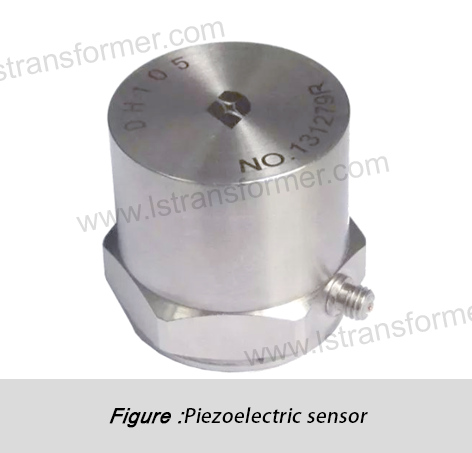
● Les défis rencontrés sur le terrain avec la méthode acoustique :
La méthode acoustique détecte les ondes ultrasonores (20 kHz–300 kHz) générées par les décharges partielles (DP) afin de localiser les sources de décharge. Cependant, à l'intérieur d'un transformateur en fonctionnement, des structures complexes telles que l'huile isolante, le carton et les enroulements provoquent une forte atténuation des ondes sonores, notamment aux hautes fréquences. De plus, le bruit de fonctionnement (par exemple, la magnétostriction du noyau, les ventilateurs de refroidissement) se superpose souvent aux signaux des DP, ce qui rend l'extraction et la localisation précise difficiles.
● Avantages révolutionnaires de la méthode UHF (couche physique) :
La méthode UHF détecte les ondes électromagnétiques (300 MHz–3 GHz) émises par les photodétecteurs. Ses principaux avantages sont les suivants :
(1)Immunité naturelle au bruit :Les interférences des sous-stations (par exemple, effet corona, commutation) sont concentrées en dessous de 100 MHz, tandis que les signaux UHF subissent des interférences minimales en raison de l'effet de cage de Faraday du transformateur.
(2)Faible perte de propagation :Les ondes UHF s'atténuent moins dans l'isolation papier-huile que les ondes ultrasonores, permettant une détection sur plusieurs mètres.
2. Considérations fondamentales relatives à la conception des capteurs UHF
● Sélection et optimisation des bandes de fréquences (principaux compromis) :
Le choix de la bande de fréquence UHF influe sur la sensibilité, l'immunité au bruit et la faisabilité du capteur. Les principaux facteurs sont les suivants :
(1)Sensibilité vs. Bruit :L'énergie des décharges partielles atteint son maximum entre 300 MHz et 1.5 GHz. Les fréquences plus élevées (> 1.5 GHz) subissent une plus grande atténuation.
(2)Taille de l'antenne:Les dimensions de l'antenne doivent correspondre à la longueur d'onde (λ = c / (f × √εr)). Pour 800 MHz dans un milieu huilé (εr ≈ 2.3), λ ≈ 0.22 m, ce qui permet des conceptions compactes (5 à 10 cm).
Facteur |
Bande basse (300–500 MHz) |
Bande haute (700–1500 MHz) |
Gamme recommandée |
Atténuation du signal |
portée inférieure et plus longue |
Plus élevé (∝ f²), portée plus courte |
300 à 800 MHz |
Immunité au bruit |
Sensible au bruit de commutation |
bruit de fond plus faible |
500 à 1500 MHz |
Taille d'antenne |
Plus grand (λ/4 ≈ 0.58 m pour 300 MHz) |
Compact (λ/4 ≈ 0.055 m pour 1.5 GHz) |
700 à 1500 MHz |
Résolution d'impulsion |
résolution temporelle inférieure |
Plus la valeur est élevée, mieux c'est pour l'analyse des formes d'onde |
> 500 MHz |
Portée optimale |
500 MHz à 1 GHz |
● Types de capteurs et emplacements d'installation :
(1)Capteurs internes (solution optimale, mais nécessite une planification) :
Intégré dans l'huile isolante ou à proximité des enroulements pour une perte de signal minimale. Idéal pour les transformateurs neufs ou les rénovations. Emplacements : plaques de pression des enroulements, brides de colonne montante.
(2)Capteurs externes (Solutions pratiques) :
- Capteurs de soupapes d'huile : Installés sur des vannes d'échantillonnage, ils les utilisent comme guides d'ondes.
- Capteurs de prise de buse ou GIS : Utiliser un couplage capacitif au niveau des conducteurs de terre de la traversée.
- Capteurs montés sur le réservoir :Non invasif mais moins sensible en raison du blindage métallique.
● Optimisation de la sensibilité et de la directionnalité :
(1)Gain et adaptation d'antenne :Maximisez le gain/la bande passante avec des conceptions comme les antennes fractales ou patch (VSWR < 2:1).
(2)Modèles directionnels: Concentrez-vous sur les zones à haut risque (par exemple, les extrémités des enroulements haute tension) en utilisant des réseaux phasés ou des réflecteurs.
(3)Amplification à faible bruit :Les LNA intégrés (NF < 3 dB, gain de 20 à 40 dB) améliorent les rapports signal/bruit.
3. Architecture et technologies clés du système de surveillance en ligne UHF
● Pipeline de traitement du signal (couche physique à couche informationnelle) :
(1)Capture du signal UHF :Convertir les ondes EM en signaux électriques (µV–mV).
(2)Amplification à faible bruit : Amplifiez les signaux avant toute intrusion de bruit.
(3)Filtrage passe-bande : Supprimer les interférences hors bande (par exemple, les signaux radio).
(4)CAN haute vitesse :Échantillonner à ≥1GSPS pour préserver les détails de l'impulsion (Nyquist : 3–5× la fréquence la plus élevée).
(5)Traitement numérique du signal (DSP) :
–Réduction du bruit par transformation en ondelettes.
–Extraction des caractéristiques : amplitude, largeur d’impulsion, phase, temps de montée.
(6)Diagnostic IA :Classer les types de PD (par exemple, corona, vides) à l'aide de SVM, CNN, etc.
● Localisation multi-capteurs (méthode TDOA) :
Pour les transformateurs de grande taille, utilisez au moins 4 capteurs.
résoudre :
√[(x−xᵢ)² + (y−yᵢ)² + (z−zᵢ)²] − √[(x−x₁)² + (y−y₁)² + (z−z₁)²] = v × Δtᵢ₁
Nécessite une synchronisation temporelle à la nanoseconde (IEEE 1588 PTP) et
vitesse de propagation du pétrole connue (~1.5e8 m/s).
● Intégration des systèmes et conformité aux normes :
(1)matériel:Capteurs intelligents, réseaux PTP, serveurs périphériques.
(2)Logiciel: Traitement numérique du signal en temps réel, diagnostics par IA, interfaces IEC 61850/Modbus.
Métrique |
Objectif |
Standard |
Remarques |
PD minimale détectable (pC) |
<100 pC (interne), <500 pC (externe) |
CEI TS 62478 |
La sensibilité dépend de l'emplacement du capteur. |
Plage dynamique |
> 60 dB |
IEEE C57.127 |
Essentiel pour la détection des PD fortes/faibles |
Gamme de fréquences |
300 MHz à 1.5 GHz |
CIGRE WG D1.11 |
Couvre l'énergie primaire des décharges partielles |
Précision de la synchronisation horaire |
<±1 ns (TDOA) |
Norme IEEE 1588 (PTP) |
Essentiel pour la localisation multi-capteurs |
4. Valeur et mise en œuvre de la surveillance en ligne UHF
La surveillance des décharges partielles UHF permet :
(1)Alerte précoce: Détecter les défauts d'isolation avant qu'ils ne provoquent des défaillances catastrophiques.
(2)Diagnostic précis :Classer les types de PD via les modèles PRPD et la localisation.
(3)Maintenance prédictive: Réduisez les pannes imprévues et prolongez la durée de vie de vos équipements.
En résumé
Les capteurs UHF constituent une solution performante pour la surveillance en ligne des décharges partielles, alliant haute sensibilité, immunité au bruit et diagnostics basés sur l'IA. Des leaders mondiaux comme Siemens et Hitachi Energy déploient des systèmes UHF pour renforcer la résilience des réseaux électriques intelligents. Les progrès de l'informatique de périphérie et de l'apprentissage automatique optimiseront encore cette technologie, garantissant des réseaux électriques plus sûrs et plus fiables à l'échelle mondiale.
Contactez-Nous
LuShan , fondée en 1975 , est un fabricant chinois spécialisé depuis plus de 50 ans dans les transformateurs et réacteurs de puissance. Ses principaux produits sont les transformateurs monophasés, les transformateurs d'isolement triphasés , les transformateurs électriques , les transformateurs de distribution, les transformateurs abaisseurs et élévateurs, les transformateurs basse tension, les transformateurs haute tension, les transformateurs de commande, les transformateurs toroïdaux, les transformateurs à noyau R ; les inductances CC, les réacteurs CA, les réacteurs de filtrage, les réacteurs de ligne et de charge, les selfs, ainsi que les produits moyenne et haute fréquence.
Nos transformateurs et réacteurs de puissance sont largement utilisés dans 10 domaines d'application : transport rapide, engins de construction, énergies renouvelables, fabrication intelligente, équipements médicaux, prévention des explosions dans les mines de charbon, systèmes d'excitation, frittage sous vide (four), climatisation centrale.
Pour en savoir plus sur les transformateurs de puissance et les réacteurs : www.lstransformer.com.
Si vous souhaitez obtenir des solutions personnalisées pour les transformateurs ou les réacteurs, veuillez nous contacter.
WhatsApp:+86 17267488565
Courriel : [email protected]