
 EN
EN
 FR
FR DE
DE ES
ES
Comment résoudre les problèmes de résistance de contact excessive aux points de connexion des fils ? — Analyse complète et solutions systématiques
Comment résoudre le problème de la résistance de contact excessive aux points de connexion des fils ?
—Analyse complète et solutions systématiques
Dans les systèmes électriques et les équipements électroniques modernes, les performances des transformateurs et des réacteurs dépendent directement de la qualité de leurs connexions électriques. Une résistance de contact excessive, un problème apparemment mineur, est en réalité une cause majeure de défaillance des équipements, de baisse d'efficacité énergétique, voire d'accidents. Cet article analyse systématiquement les mécanismes à l'origine de cette résistance excessive et propose un ensemble complet de solutions. En intégrant les dernières normes de la Commission électrotechnique internationale (CEI) et de l'IEEE, ainsi que notre expérience pratique en ingénierie, nous avons pour objectif de vous aider à résoudre efficacement ce problème technique courant, mais particulièrement dangereux.
Contenu
1. Causes et impact global de la résistance de contact
La résistance de contact correspond à l'impédance supplémentaire rencontrée lors du passage du courant à l'interface des connexions conductrices. Son mécanisme de formation peut être résumé en trois aspects principaux :
● Matériaux d'interface et facteurs de condition
L'oxydation et la contamination des surfaces conductrices sont les principales causes de l'augmentation de la résistance de contact. Les conducteurs en cuivre forment des couches d'oxyde composites de Cu₂O (résistivité ~10³Ω·cm) et de CuO (résistivité ~10⁸Ω·cm) à l'air libre, tandis que les conducteurs en aluminium développent un film d'Al₂O₃ dont la résistivité peut atteindre 10¹⁴Ω·cm. Ces couches d'oxyde agissent comme des barrières isolantes, transformant un contact métal-métal idéal en chemins de courant via quelques points conducteurs microscopiques. Les recherches montrent qu'en présence d'une couche d'oxyde, la surface conductrice effective peut ne représenter que 1 à 5 % de la surface de contact apparente.
L'état mécanique de la surface de contact est également crucial. Une rugosité, une planéité ou un parallélisme insuffisants peuvent réduire considérablement la surface de contact réelle. Selon la théorie du contact de Greenwood-Williamson, lorsque deux surfaces rugueuses entrent en contact, seules quelques micro-aspérités supportent la charge, créant une résistance de constriction notable. En pratique, un écart de planéité supérieur à 0.1 mm peut augmenter la résistance de contact de plus de 30 %.
● Structure de connexion et facteurs mécaniques
La pression de contact est un autre paramètre clé déterminant la qualité de la connexion. Idéalement, la résistance de contact suit la relation R ∝ F⁻ⁿ (où n est généralement compris entre 0.5 et 0.7), ce qui signifie qu'une pression insuffisante entraîne une augmentation non linéaire de la résistance. En pratique, les problèmes courants liés à la pression incluent :
(1)Couple de serrage insuffisant des boulons : Par exemple, un boulon M10 reliant des barres omnibus en cuivre nécessite un couple de 25 à 30 Nm, mais l'installation réelle peut n'atteindre que 15 à 20 Nm.
(2)vieillissement du connecteur à ressort : Après une longue période de service, la relaxation des contraintes du ressort peut réduire la pression initiale de 20 à 40 %.
(3)Effets des cycles thermiques :Les coefficients de dilatation différents du cuivre (17×10⁻⁶/℃) et de l'aluminium (23×10⁻⁶/℃) provoquent des fluctuations de la pression de raccordement en fonction des variations de température.
Une pression insuffisante aggrave également l'usure par micromouvements. Les vibrations mécaniques ou les forces électromagnétiques en fonctionnement peuvent provoquer de minuscules mouvements relatifs (<100 μm) au niveau des surfaces de contact, usant de façon répétée les couches d'oxyde protectrices, exposant ainsi du métal frais et accélérant l'oxydation – un cercle vicieux.
● Facteurs environnementaux et électrochimiques
La corrosion électrochimique est particulièrement sévère en milieu humide. Lorsque deux métaux différents (par exemple, des connexions cuivre-aluminium) entrent en contact, une pile galvanique se forme, présentant une différence de potentiel de 0.65 V. L'aluminium, constituant l'anode, se corrode alors préférentiellement. Le produit de corrosion Al(OH)₃ possède une résistivité extrêmement élevée, et son expansion volumique affaiblit encore la pression de contact. Les données montrent que, dans un environnement humide, la résistance de contact des connexions cuivre-aluminium non protégées peut être multipliée par 10 à 20 en seulement deux ans.
Les polluants environnementaux tels que les embruns salés, les gaz industriels (SO₂, H₂S) et les poussières accélèrent également la dégradation. Par exemple, les connecteurs de sous-stations dans les zones côtières présentent un taux de défaillance 3 à 5 fois supérieur en raison des dépôts de sel par rapport aux zones intérieures. Des normes telles que la CEI 61238 et la norme IEEE 837 définissent des exigences de protection détaillées pour faire face à ces problèmes.
Condition environnementale |
Augmentation annuelle typique de la résistance |
Mécanisme de dégradation primaire |
Intérieur sec |
2%-5% |
légère oxydation |
Extérieur standard |
10%-20% |
Oxydation + contamination |
Zone industrielle |
25%-40% |
Corrosion chimique |
Région côtière |
50%-100% |
Corrosion électrochimique |
Environnement à haute température |
15%-30% |
Vieillissement thermique |
Tableau 1 : Comparaison des taux de croissance de la résistance de contact dans différentes conditions environnementales
2. Solutions systématiques : de la prévention à la réparation
● Optimisation des processus de connexion
Le traitement de surface est fondamental pour garantir de bonnes connexions. Nous recommandons un processus en trois étapes :
(1) Abrasion mécanique pour enlever les couches d'oxyde (utiliser du papier de verre de grain 120-180 pour le cuivre, des brosses en acier inoxydable pour l'aluminium).
(2) Nettoyage chimique pour éliminer la graisse (utiliser des nettoyants spécialisés au lieu de solvants courants).
(3) Application de pâte conductrice (pâte anti-oxydante à base de poudre de zinc pour le cuivre, pâte spéciale à base de charges métalliques pour l'aluminium). Cette combinaison permet de réduire la résistance de contact initiale de 40 à 60 %.
Le contrôle du processus d'assemblage exige le strict respect des procédures normalisées. Pour les assemblages boulonnés, utilisez une séquence de serrage croisée et appliquez le couple par paliers (par exemple, 30 % → 60 % → 100 % du couple standard). L'utilisation de clés dynamométriques étalonnées est essentielle ; des études montrent que les clés manuelles peuvent présenter des erreurs de couple allant jusqu'à ±30 %. Pour les assemblages sertis, assurez-vous que :
(1) Adaptation précise des matrices aux sections transversales des conducteurs.
(2)Position de sertissage correcte (3-5 mm des extrémités isolantes).
(3) Déformation hexagonale ou ovale complète après sertissage.
Le choix des matériaux doit respecter le principe « métaux similaires privilégiés, métaux différents isolés ». Pour les connexions inévitables entre métaux différents, utilisez des joints de transition (par exemple, des adaptateurs cuivre-aluminium) ou des traitements spéciaux (par exemple, de l'aluminium étamé). En milieu corrosif, les connecteurs en cuivre argenté ou étamé sont recommandés, offrant une stabilité de résistance de contact 3 à 5 fois supérieure à celle du cuivre nu.
● Surveillance avancée et évaluation de l'état
Pour plus de précision, utilisez un micro-ohmmètre à quatre fils avec un courant de test ≥ 100 A. Étapes recommandées :
(1)Mesurer et enregistrer la température ambiante.
(2)Appliquer un courant de test stable pendant 30 à 60 secondes.
(3)Chute de tension enregistrée.
(4)Calculer la résistance (R=V/I) et appliquer la correction de température.
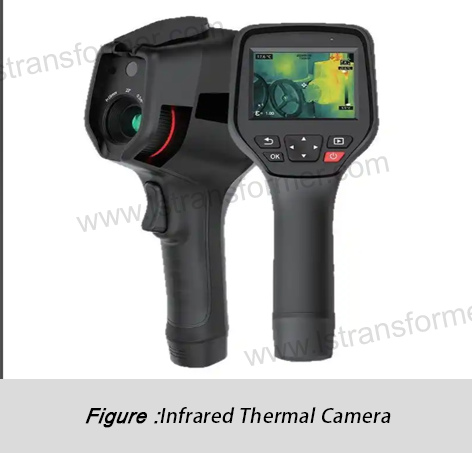
● Thermographie infrarouge
La thermographie infrarouge est un outil essentiel pour la maintenance préventive. Des relevés réguliers permettent d'établir des distributions de température de référence et de détecter les anomalies. Conformément à la norme IEC 60502, l'élévation de température au point de connexion ne doit pas dépasser 30 K au-dessus de la température ambiante. Intégrez des inspections infrarouges dans vos plans de maintenance trimestriels, en portant une attention particulière aux points suivants :
(1)Points d'intérêt locaux avec >10K
(2)>15K parmi les connexions du même lot.
(3)Tendances persistantes à la hausse des températures.
● Systèmes de surveillance intelligents
Les systèmes de surveillance intelligents représentent l'avenir. Les capteurs de température sans fil (avec échantillonnage toutes les 1 à 5 minutes) placés à des points critiques, associés aux plateformes de mégadonnées, permettent :
(1)Suivi en temps réel de la résistance/température.
(2)Prédiction des tendances de dégradation.
(3)Alertes automatiques en cas d'anomalie.
(4)Aide à la décision en matière de maintenance.
● Stratégies de maintenance et de réparation
Pour les connexions présentant une résistance accrue, nous recommandons des actions progressives :
● Dégradation précoce (augmentation de la résistance < 50 %) :
(1)Resserrer les connexions (augmenter le couple de 10 à 15 %).
(2)Nettoyer et réappliquer la pâte conductrice.
(3)Augmenter la fréquence de surveillance (par exemple, mensuelle).
● Dégradation en phase intermédiaire (augmentation de la résistance de 50 % à 200 %) :
(1)Démontez complètement la connexion.
(2)Nettoyez soigneusement les surfaces (poncez légèrement si nécessaire).
(3)Remplacer les pièces endommagées (par exemple, les rondelles déformées, les boulons corrodés).
(4)Utilisez des matériaux conducteurs améliorés (par exemple, des pâtes de nano-charge).
(5)Réassemblez et serrez au couple standard.
● Dégradation sévère (augmentation de la résistance > 200 % ou signes de surchauffe) :
(1)Remplacez l'ensemble de connexion.
(2)Évaluer les composants adjacents pour détecter les dommages.
(3)Méthode de connexion améliorée (par exemple, connecteurs de qualité supérieure).
(4) Analyser les causes profondes et améliorer la conception du système.
Pour les connexions critiques des équipements de grande valeur, un remplacement préventif est recommandé. Par exemple, les connecteurs des transformateurs des parcs éoliens offshore sont généralement remplacés tous les 5 à 7 ans, même s'ils sont fonctionnels. Cette stratégie permet d'éviter des arrêts de production imprévus et coûteux.
En résumé
Résoudre les problèmes de résistance de contact excessive au niveau des connexions de fils nécessite une ingénierie systématique et une gestion du cycle de vie.
Dès la conception, privilégiez les connexions entre métaux similaires offrant une surface de contact supérieure de 20 à 30 % et une accessibilité optimale pour la maintenance. Lors de l'installation, veillez au respect de trois impératifs : outils calibrés, traitement de surface (abrasion + nettoyage + pâte conductrice) et enregistrement précis des mesures (couple de serrage, résistance, température). En exploitation, mettez en place un cycle « détection-analyse-prévention » comprenant des contrôles infrarouges trimestriels (augmentation de résistance ≤ 30 kΩ) et des tests annuels au micro-ohmmètre (augmentation de résistance ≤ 15 %). En cas de dégradation intermédiaire (augmentation de 50 à 200 %), appliquez des solutions progressives : resserrage → rénovation de surface → remplacement de pièces → mise à niveau des connexions.
Le respect des normes IEC 61238 et IEEE Std 837 permet de réduire les pertes de connexion de 0.5 % à 1.5 % (soit des milliers de kWh d'économies par an dans les grands postes électriques) et de diminuer les taux de défaillance de plus de 25 %. L'association d'une maintenance préventive (par exemple, des cycles de remplacement de 5 à 7 ans) et d'une surveillance intelligente (capteurs sans fil et analyse par intelligence artificielle) prolonge la durée de vie des équipements de 30 % à 50 % et permet de maîtriser les risques liés à la sécurité.
Contactez-Nous
LuShan, HNE.1975, est un fabricant professionnel chinois spécialisé dans les transformateurs de puissance et les réacteurs pour50 années. Les produits phares sont transformateur monophasé, triphasé seul transformateurs, transformateur électrique,transformateur de distribution, transformateur abaisseur et élévateur, transformateur basse tension, transformateur haute tension, transformateur de contrôle, transformateur toroïdal, transformateur à noyau R ;Inductances CC, réacteurs CA, réacteurs filtrants, réacteurs de ligne et de charge, selfs, réacteurs filtrants et produits intermédiaires à haute fréquence.
Notre pouvoir Les transformateurs et les réacteurs sont largement utilisés dans 10 domaines d'application : transport rapide, engins de chantier, énergie renouvelable, fabrication intelligente, équipement médical, prévention des explosions dans les mines de charbon, système d'excitation, frittage sous vide (four), climatisation centrale.
En savoir plus sur le transformateur de puissance et le réacteur :www.lstransformer.com.
Si vous souhaitez obtenir des solutions personnalisées pour les transformateurs ou les réacteurs, veuillez nous contacter.
WhatsApp:+86 17267488565
Courriel : [email protected]