
 EN
EN
 FR
FR DE
DE ES
ES
Un grand « bruit sourd » lors de la mise en marche d'un transformateur : est-il endommagé ?
Les transformateurs sont des composants essentiels des réseaux électriques, et leur bon fonctionnement est crucial. Lors de la mise sous tension d'un transformateur après son installation ou une opération de maintenance, il arrive parfois d'entendre un bourdonnement important ou une forte détonation. Ce phénomène, possible dans les réseaux électriques du monde entier, suscite souvent des inquiétudes chez les opérateurs : indique-t-il un défaut ou un dommage au transformateur ? Cet article explore les causes profondes de ce phénomène, vous aidant ainsi à distinguer un événement physique normal d'un signe avant-coureur potentiel.
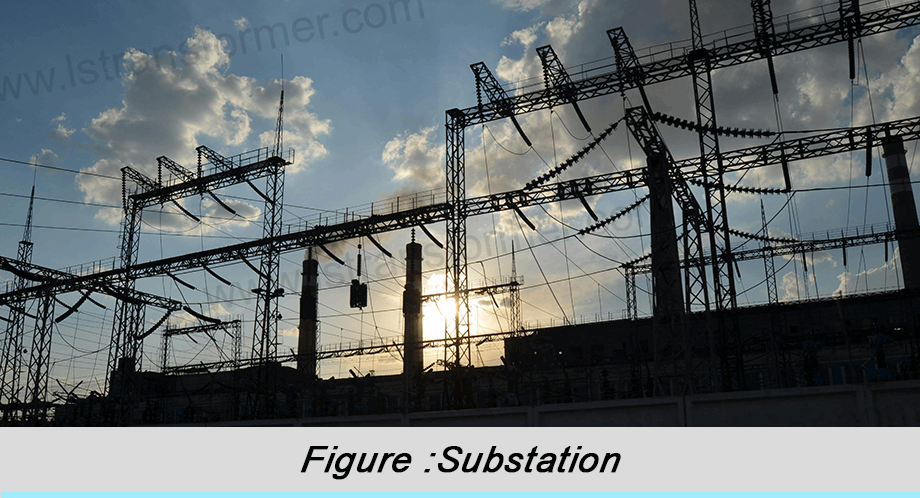
1. Cause principale du bruit de commutation : courant d’appel
La cause la plus fréquente de ce bruit important est le courant d'appel, aussi appelé courant de magnétisation. Il s'agit d'une surtension transitoire de forte amplitude — bien supérieure au courant nominal — qui circule dans l'enroulement primaire lorsqu'un transformateur est mis en service sur le réseau électrique à vide (sans charge connectée).
1.1 Comment se produit le courant d'appel
Les transformateurs fonctionnent selon le principe de l'induction électromagnétique. En régime permanent, le flux magnétique (Φ) dans le noyau suit de près la tension appliquée (V). Cependant, au moment précis de la commutation, cet équilibre est rompu.
1.1.1 Le processus transitoire d'établissement du flux
La tension alternative est une onde sinusoïdale. L'instant de commutation (l'angle de phase de la tension) est crucial pour l'établissement initial du flux magnétique. Selon la loi de Faraday :
V = N(dΦ/dt)
où V est la tension instantanée
N est à son tour
dΦ/dt est le taux de variation du flux.
Point clé : Si l’interrupteur se ferme précisément au passage par zéro de la tension (tension instantanée nulle), la variation de flux (dΦ/dt) doit également être nulle. Cependant, le flux magnétique initial doit être nul. Pour s’aligner sur la forme d’onde du flux en régime permanent correspondant à la tension, le système génère un important décalage de flux transitoire. L’établissement de ce décalage nécessite un courant instantané très élevé dans l’enroulement : le courant d’appel.
1.2 Effets physiques et son résultant
Ce courant instantané, qui peut être 6 à 10 fois supérieur au courant nominal, déclenche de puissants effets physiques à l'intérieur du transformateur :
(1) Forces électromagnétiques intenses : Le courant élevé crée un puissant champ magnétique autour des enroulements, soumettant les conducteurs des enroulements et les pièces structurelles du noyau à une contrainte mécanique importante, provoquant de minuscules déplacements ou vibrations instantanés.
(2) Magnétostriction du noyau : Les noyaux des transformateurs sont constitués d’acier au silicium laminé. Sous l’effet d’un champ magnétique intense et variable, le matériau du noyau présente une « magnétostriction », c’est-à-dire que ses dimensions physiques varient légèrement en fonction de l’intensité du champ magnétique.
(3) Génération sonore : Les vibrations structurelles dues aux forces électromagnétiques se combinent aux vibrations de magnétostriction du noyau. Ces vibrations, riches en fréquences, sont amplifiées par le réservoir, les radiateurs, etc., et sont produites sous forme d’un « bang », d’un « boum » ou d’un bourdonnement audible.
Caractéristique |
Valeur typique / Description |
Magnitude maximale |
Jusqu'à 6 à 10 fois le courant nominal |
Durée |
En général, plusieurs cycles d'alimentation (de quelques dizaines à quelques centaines de millisecondes). |
Taux de décroissance |
Décroissance rapide vers le courant à vide en régime permanent (dépend de l'impédance du système et de la conception du transformateur) |
Principaux effets physiques |
Forces électromagnétiques mécaniques, magnétostriction du noyau |
Son typique |
Un seul ou une courte série de sons « bang », « boom » ou « thud » |
Tableau 1 : Caractéristiques et impact du courant d’appel du transformateur
2. Distinguer le bruit d'appel normal des indicateurs de défaut
Si la plupart des bruits forts sont dus au courant d'appel normal d'un transformateur, certains sons anormaux peuvent signaler des problèmes. Savoir les différencier est essentiel.
2.1 Caractéristiques du bruit d'appel normal
(1) Moment : Se produit précisément au moment de la mise en marche. Le son est bref (se termine généralement en 1 à 2 secondes).
(2) Nature : Un seul « boum » ou une brève série de « détonations » qui s’estompent rapidement. Ensuite, le transformateur fonctionne avec un bourdonnement uniforme et régulier.
(3) Absence d'autres symptômes : après le son, il n'y a pas de bruit anormal persistant, pas d'émission de fumée ou de gaz inhabituelle et pas de fonctionnement de dispositif de protection (par exemple, les relais ne se déclenchent pas).
2.2 Caractéristiques des sons anormaux indiquant des défauts potentiels
Si les sons suivants se produisent pendant ou après la commutation, cela peut indiquer un problème :
2.2.1 Bruits provenant de défauts électriques internes
Par exemple, courts-circuits entre spires, décharges internes importantes. Ces sons peuvent se mélanger au bruit d'appel, mais présentent des différences :
(1) Craquements aigus ou bruits d'arc/décharge continus : peuvent accompagner une défaillance de l'isolation interne.
(2) Accompagné de déclenchements de protection : provoque souvent un fonctionnement rapide des relais de surintensité, différentiels ou à gaz (Buchholz), déclenchant le circuit.
(3) Persistance : Le défaut et le son/vibration associé ne disparaissent généralement pas rapidement comme les effets d'appel.
2.2.2 Bruits liés à des problèmes mécaniques
par exemple, une mauvaise mise à la terre du noyau, des structures de serrage desserrées excitées par les fortes forces d'appel.
(1) Bruits de vibration ou de cognement persistants et rythmiques : Un « tic-tac », un « cliquetis » ou un « bourdonnement » anormal et rythmique persiste pendant le fonctionnement en régime permanent après la commutation.
(2) Son localisé : Parfois, la source du son peut être localisée en écoutant près de différentes parties du transformateur, ce qui indique un problème mécanique local.
Aspect |
Bruit d'appel normal |
Bruit de défaut suspecté |
Timing |
Uniquement au moment de la mise en service |
Peut se produire lors de la mise en marche, mais persiste ou réapparaît plus souvent par la suite. |
Qualité sonore |
« Boum » grave, bref |
Crépitement aigu, son d'arc continu, cognement/vibration rythmique |
Durée |
Disparaît complètement en quelques secondes |
Persiste ou survient de façon intermittente |
Enseignes électriques d'accompagnement |
Aucun déclenchement de protection ; les compteurs reviennent à la normale |
Déclenchements de protection fréquents, relevés de compteurs anormaux persistants, changements soudains des données DGA en ligne |
Opération ultérieure |
Le son redevient immédiatement un bourdonnement uniforme et régulier. |
Le bruit de fonctionnement reste anormalement fort ou instable |
Tableau 2 : Guide d'identification des bruits de commutation des transformateurs
3. Comment gérer et atténuer le courant d'appel et ses effets
Même si le bruit est normal, un courant d'appel élevé peut engendrer des contraintes sur le réseau et le transformateur (par exemple, des chutes de tension, un risque de dysfonctionnement du relais). Les mesures suivantes, adoptées à l'échelle internationale, permettent de le maîtriser.
3.1 Mesure opérationnelle : Commutation contrôlée (contrôle de phase)
(1) Principe : Comme expliqué précédemment, l’amplitude du courant d’appel dépend directement de l’angle de phase de la tension à la mise sous tension. Théoriquement, la mise sous tension au pic de tension entraîne le courant d’appel le plus faible.
(2) Action : Utiliser des contrôleurs synchrones (point sur l'onde) ou des disjoncteurs intelligents pour fermer précisément les contacts à un point spécifique de la forme d'onde de tension (près du pic).
(3) Effet : Peut réduire les pics de courant d'appel de plus de 50 %, atténuant considérablement le bruit et la contrainte électromagnétique.
3.2 Mesures au niveau du composant : Gestion de la rémanence ou résistance en série
3.2.1Gestion de la rémanence :
(1) Principe : Après la mise hors tension, le noyau peut conserver un flux magnétique résiduel (rémanence). Si le flux cible généré par la tension de commutation est opposé à la direction de la rémanence, ces flux s’additionnent, aggravant le décalage de flux et le courant d’appel. La gestion active de la rémanence (par exemple, en l’annulant ou en connaissant son état avant la commutation) contribue à une stratégie de commutation optimale.
(2) Effet : Réduit l'imprévisibilité et, combiné au contrôle de phase, optimise la commutation.
3.2.2Résistances de pré-insertion :
(1) Principe : Avant la fermeture des contacts du disjoncteur principal, des contacts auxiliaires reliés à une résistance en série se ferment en premier. La résistance limite le courant initial, permettant ainsi une montée en puissance progressive du flux magnétique. Après un bref délai, les contacts principaux se ferment, court-circuitant la résistance.
(2) Effet : Limite physiquement le pic de courant initial ; une méthode très efficace pour les grands transformateurs HT.
3.3 Mesures de conception du système : Limiteurs de courant d’appel et logique de protection
(1) Limiteurs de courant d'appel : Dispositifs inductifs ou résistifs non linéaires spécialement conçus, connectés temporairement au circuit pour supprimer le pic.
(2) Optimisation du réglage du relais de protection : le réglage des paramètres de limitation harmonique dans les relais différentiels ou de surintensité leur permet de mieux distinguer le courant d'appel (riche en 2e harmonique) du courant de défaut réel, évitant ainsi les déclenchements intempestifs.
Conclusion et recommandation
Entendre une forte détonation lors de la mise sous tension d'un transformateur n'est pas une raison immédiate de paniquer. Il s'agit très probablement d'un courant d'appel, un phénomène physique puissant mais généralement normal. Cependant, un opérateur responsable doit être capable de le distinguer. Surveillez les signes avant-coureurs mentionnés ci-dessus. En cas de doute, ou si des symptômes anormaux persistent, consultez un professionnel qualifié pour une inspection. Une bonne compréhension et une gestion appropriée de la mise sous tension des transformateurs garantissent la sécurité et la fiabilité.
LuShan , fondée en 1975 , est un fabricant chinois spécialisé depuis plus de 50 ans dans les transformateurs et réacteurs de puissance. Ses principaux produits sont les transformateurs monophasés, les transformateurs d'isolement triphasés , les transformateurs électriques , les transformateurs de distribution, les transformateurs abaisseurs et élévateurs, les transformateurs basse tension, les transformateurs haute tension, les transformateurs de commande, les transformateurs toroïdaux, les transformateurs à noyau R ; les inductances CC, les réacteurs CA, les réacteurs de filtrage, les réacteurs de ligne et de charge, les selfs, ainsi que les produits moyenne et haute fréquence.
Contactez-nous
Nos transformateurs et réacteurs de puissance sont largement utilisés dans 10 domaines d'application : transport rapide, engins de construction, énergies renouvelables, fabrication intelligente, équipements médicaux, prévention des explosions dans les mines de charbon, systèmes d'excitation, frittage sous vide (four), climatisation centrale.
Pour en savoir plus sur les transformateurs de puissance et les réacteurs : www.lstransformer.com.
Si vous souhaitez obtenir des solutions personnalisées pour les transformateurs ou les réacteurs, veuillez nous contacter.
WhatsApp:+8613787095096
Courriel : [email protected]