
 EN
EN
 FR
FR DE
DE ES
ES
Que faire lorsque la longueur du câble conducteur est insuffisante lors de l'installation d'un transformateur sur site ?
Que faire lorsque la longueur du câble conducteur est insuffisante lors de l'installation d'un transformateur sur site ?
L'installation de transformateurs sur site est une tâche complexe et méticuleuse, et la longueur insuffisante des câbles de traversée haute tension constitue un problème courant pour les ingénieurs. Ce problème retarde non seulement les projets, mais peut également entraîner une augmentation de la résistance de contact, une surchauffe localisée, voire une panne d'équipement ou des risques pour la sécurité en raison de réparations temporaires inappropriées. Cet article propose une solution systématique, scientifique et conforme aux normes internationales pour relever efficacement ce défi.
Contenu
1. Analyse des causes profondes et des risques potentiels
Une longueur de câble insuffisante peut sembler être un problème de dimensions, mais elle implique en réalité plusieurs étapes, notamment la conception, la fabrication, le transport et l'installation :
(1) Écart de conception/fabrication : Dessins imprécis ou prise en compte insuffisante des conditions sur site pendant la production.
(2) Dommages liés au transport : Déplacement mineur des traversées ou des colonnes montantes dû aux vibrations ou aux chocs lors du transport de gros transformateurs.
(3) Erreur de base d'installation : Mauvais alignement des fondations, des conduits de barres omnibus ou des chemins de câbles, entraînant des écarts cumulatifs au-delà de la tolérance.
(4)Facteurs environnementaux:Dilatation et contraction thermiques des composants métalliques dues à des fluctuations de température extrêmes (en particulier dans les régions où les différences de température entre le jour et la nuit sont importantes).
● Ignorer ce problème peut entraîner de graves conséquences :
(1)Surchauffe mortelle :Des fils trop serrés ou des connecteurs déformés réduisent la surface de contact effective, augmentant considérablement la résistance de contact (selon la loi de Joule, Q=I2Rt), ce qui entraîne une surchauffe au niveau des points de connexion ou même des bagues.
(2) Défaillance de l'isolation : Une traction forcée peut endommager l'isolation du fil ou l'isolation de la queue de la douille ; un dégagement insuffisant dans les espaces confinés peut provoquer un contournement.
(3) Dommages mécaniques : Les conducteurs, les traversées ou les supports subissent des contraintes supplémentaires, ce qui entraîne des fractures de fatigue ou des fuites d'huile dues à la défaillance des joints au fil du temps.
(4) Coûts élevés : Les temps d’arrêt, le démontage, les retouches ou les remplacements de pièces entraînent des pertes financières importantes et des retards de projet.
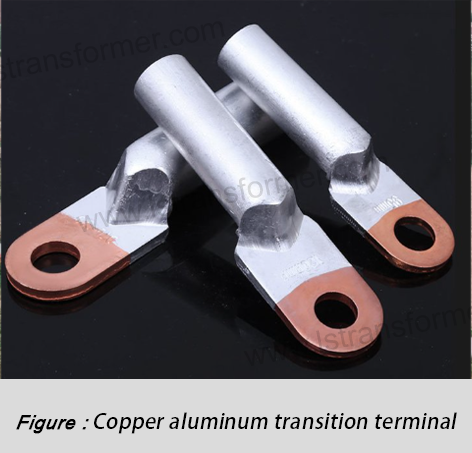
2. Solutions scientifiques : des solutions temporaires aux solutions permanentes
● Connecteurs professionnels/rallonges (méthode privilégiée)
(1) Idée principale : Utiliser des connecteurs de haute qualité conformes à la norme IEC 61238-1 ou IEEE Std 386, tels que des bornes de transition cuivre-aluminium, des pinces d'équipement ou des tubes d'extension.
(2) Mécanisme :
– Connexion non destructive : aucun découpage des fils d’origine ; les segments d’extension sont solidement assemblés par boulonnage ou sertissage hydraulique, assurant une transition de courant en douceur.
–Garantie de performance : Les connecteurs de haute qualité utilisent des techniques spécialisées (soudage par friction, brasage, etc.) pour une liaison au niveau moléculaire, minimisant ainsi la corrosion électrochimique. La résistance de contact est largement inférieure aux exigences de la norme IEC 61238-1 (généralement ≤ 1.1 fois la résistance d’un conducteur de même longueur).
– Flexibilité : Disponible en différentes longueurs et angles pour s'adapter aux contraintes d'espace.
(3) Étapes clés :
–Préparation des surfaces : Nettoyer soigneusement les surfaces de contact et appliquer une pâte conductrice antioxydante.
–Contrôle du couple : Utilisez une clé dynamométrique calibrée pour serrer les boulons conformément aux spécifications du fabricant afin d’obtenir une répartition uniforme de la pression.
–Tests : Mesurer la résistance de contact à l'aide d'un micro-ohmmètre après l'installation pour vérifier la qualité (la norme IEC 60599 recommande des valeurs stables nettement inférieures à la résistance du conducteur adjacent).
(4) Avantages : Fiabilité maximale, aucun dommage à l'équipement et conformité totale aux normes internationales.
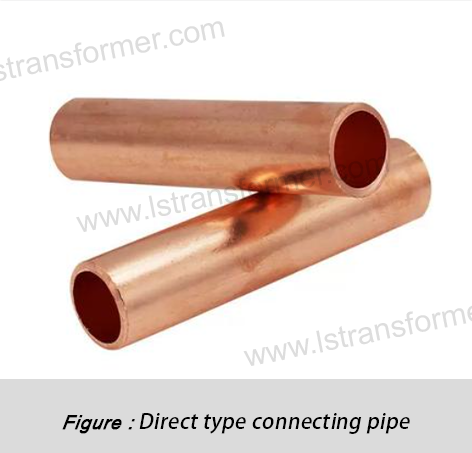
● Épissure de conducteurs (À utiliser avec précaution)
(1) Idée principale : Pour les grandes différences de longueur, coupez le fil d'origine et raccordez un nouveau segment du même matériau et de la même section transversale à l'aide de connecteurs droits ou bout à bout conformes à la norme IEC 61238-1.
(2) Risques et étapes :
–Coupe de précision : Veillez à effectuer des coupes nettes et perpendiculaires pour éviter la séparation des mèches.
–Sertissage/Soudage : Utiliser des matrices et des outils adaptés à la section transversale, conformément à la norme GB/T 14315 ou IEEE Std 1525. Après sertissage, effectuer des tests de traction et de résistance.
–Restauration de l’isolation : Utiliser des gaines thermorétractables, du ruban isolant et des mastics étanches correspondant à la qualité d’isolation d’origine. Valider par des essais de tenue diélectrique.
– Besoins en espace : L’épissure nécessite un dégagement supplémentaire, ce qui peut affecter les marges de sécurité.
(3) Applicabilité : Convient aux espaces spacieux avec des conditions professionnelles.
● Ajuster la position de l'équipement (si la fondation le permet)
(1) Idée principale : repositionner légèrement le transformateur dans des limites sûres (par exemple, en utilisant des cales en acier réglables) pour aligner naturellement les fils conducteurs.
(2) Étapes clés :
– Vérification de faisabilité : Confirmer auprès des ingénieurs en structure que les modifications ne compromettent pas la stabilité.
–Ajustements coordonnés : s’assurer que les tuyaux, les chemins de câbles et les conduits de barres omnibus s’adaptent à la nouvelle position.
–Alignement de précision : Utilisez des niveaux laser pour respecter les normes GB 50148 ou IEEE Std C57.12.00 en matière d’horizontalité et d’alignement.
(3) Avantages : Solution la plus permanente.
(4) Limitations : Limité par la conception de la fondation et la disposition des équipements adjacents (les ajustements sont généralement limités à quelques centimètres).
3. Mieux vaut prévenir que guérir : Contrôles clés lors de la conception et de la construction
Paramètre clé |
Exigences de conception |
Référence des normes |
Marge de conception |
Ajouter 10 à 15 % à la longueur pour tenir compte des erreurs de fondation, de la dilatation thermique et des tolérances d'installation. |
Norme IEEE C57.12.00, CEI 60076 |
Simulation de flux 3D |
Utilisez ANSYS/SolidWorks pour simuler l'emplacement des équipements et les connexions des barres omnibus. |
Simulation ANSYS et SolidWorks |
Vérification sur place |
Mesurer précisément les distances entre la douille et la connexion après l'installation pour la fabrication du câblage. |
GB 50150, norme IEEE C57.152 |
Compatibilité des matériaux |
Spécifiez les matériaux conducteurs/passants (Cu/Al) et tenez compte des différences de dilatation thermique. |
CEI 61238-1 (Connexions Cu-Al) |
Compensation environnementale |
Calculer la dilatation (ΔL = α × L₀ × ΔT) pour les climats extrêmes ; réserver de l'espace pour les joints de dilatation. |
IEC 62271-1 |
4. Formule principale : Ampérage admissible du conducteur et élévation de température
Un dimensionnement inadéquat des conducteurs (même avec une longueur suffisante) constitue un risque courant. Formules clés :
Calcul de l'ampérage :
 I=k×Sθ
Où? :
I : Courant admissible (A)
S : Aire de la section transversale (mm²)
k, θ : Coefficients dépendant du matériau/de l'isolation/de l'environnement.
Conducteur |
Acoustique |
k (A/mm²) |
Remarques |
Copper |
XLPE |
11-15 |
Haute capacité de conduction, résistant à la chaleur. |
Copper |
PVC |
9-12 |
Coût inférieur, performances modérées. |
Aluminium |
XLPE |
7-9 |
Section transversale plus grande nécessaire par rapport au cuivre. |
Aluminium |
PVC |
6-8 |
Élévation de température : P = I² × R
R = ρ × L / S
Veillez à ce que la température d'équilibre reste inférieure à l'isolation.
limites (par exemple, 90°C pour le XLPE).
En résumé
La longueur insuffisante des câbles d'alimentation des transformateurs constitue un risque majeur pour la fiabilité. Il est donc essentiel de privilégier les rallonges normalisées pour des raisons de sécurité et d'efficacité. Le raccordement des équipements doit impérativement respecter les normes CEI/IEEE, et le repositionnement des équipements est une option idéale, mais dépend du contexte. La prévention optimale repose sur des marges de conception suffisantes, des simulations 3D et des mesures précises après installation.
Contactez-Nous
LuShan , fondée en 1975 , est un fabricant chinois spécialisé depuis plus de 50 ans dans les transformateurs et réacteurs de puissance. Ses principaux produits sont les transformateurs monophasés, les transformateurs d'isolement triphasés , les transformateurs électriques , les transformateurs de distribution, les transformateurs abaisseurs et élévateurs, les transformateurs basse tension, les transformateurs haute tension, les transformateurs de commande, les transformateurs toroïdaux, les transformateurs à noyau R ; les inductances CC, les réacteurs CA, les réacteurs de filtrage, les réacteurs de ligne et de charge, les selfs, ainsi que les produits moyenne et haute fréquence.
Nos transformateurs et réacteurs de puissance sont largement utilisés dans 10 domaines d'application : transport rapide, engins de construction, énergies renouvelables, fabrication intelligente, équipements médicaux, prévention des explosions dans les mines de charbon, systèmes d'excitation, frittage sous vide (four), climatisation centrale.
Pour en savoir plus sur les transformateurs de puissance et les réacteurs : www.lstransformer.com.
Si vous souhaitez obtenir des solutions personnalisées pour les transformateurs ou les réacteurs, veuillez nous contacter.
WhatsApp:+86 17267488565
Courriel : [email protected]