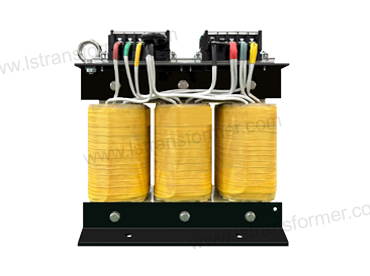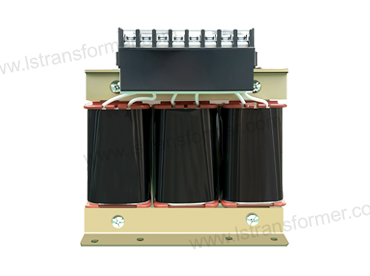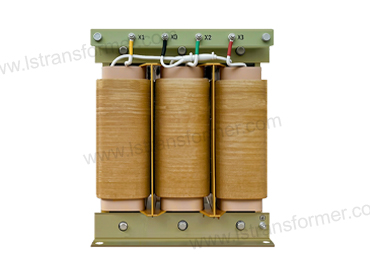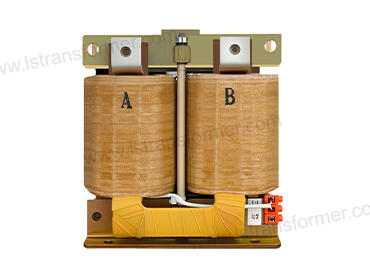






Is Litz Wire Mandatory for High-Frequency Transformers? —An In-Depth Analysis of the Critical Role of Litz Wire in High-Frequency Applications

La maison > Auteur : 369703005 > Page 35
FAQ

Is Litz Wire Mandatory for High-Frequency Transformers? —An In-Depth Analysis of the Critical Role of Litz Wire in High-Frequency Applications

Is Litz Wire Mandatory for High-Frequency Transformers? —An In-Depth Analysis of the Critical Role of Litz Wire in High-Frequency Applications In the global electronic components market, high-frequency transformers, as core components for power conversion and signal transmission, have always been a focus for engineers and procurement specialists. With the widespread adoption of high-frequency applications such […]
FAQ

Does the Shortened Lifespan of Reactors in High-Temperature Environments? —Dual Optimization Strategy: Materials and Heat Dissipation

Does the Shortened Lifespan of Reactors in High-Temperature Environments? —Dual Optimization Strategy: Materials and Heat Dissipation Against the backdrop of global energy transition and accelerated industrial intelligence, reactors, as critical components of power systems, have seen their reliability and lifespan become a growing focus for equipment manufacturers, grid operators, and industrial users. High-temperature environments are

FAQ

Why Might the Temperature Rise Distribution in Reactors Be Non-Uniform?

Why Might the Temperature Rise Distribution in Reactors Be Non-Uniform? In power systems, reactors play an indispensable role in current limiting, filtering, and reactive power compensation. However, engineers and maintenance personnel often observe significant temperature differences at different locations within the same reactor. This non-uniform temperature rise not only affects equipment efficiency but also threatens

FAQ

How to Address Excessive Temperature Rise? —A Triple Approach: Radiator Selection, Airflow Optimization, and Hotspot Suppression

How to Address Excessive Temperature Rise? —A Triple Approach: Radiator Selection, Airflow Optimization, and Hotspot Suppression Excessive temperature rise in transformers is a critical issue faced by many power engineers. High temperatures not only accelerate the aging of insulation materials, significantly shortening equipment lifespan, but can also lead to catastrophic failures such as insulation breakdowns,

FAQ

What is the Role of Vacuum Pressure Impregnation (VPI) Process? — The Key Step to Enhance Insulation Life in Dry-Type Transformers

What is the Role of Vacuum Pressure Impregnation (VPI) Process? — The Key Step to Enhance Insulation Life in Dry-Type Transformers In data centers, commercial buildings, renewable energy power stations, and industrial facilities worldwide, low-voltage dry-type transformers have become critical components of power distribution systems due to their core advantages: oil-free operation, fire resistance, environmental

FAQ

The Smart Grid Era: Evolution of Digital Transformer Technology

The Smart Grid Era: Evolution of Digital Transformer Technology The global energy system is undergoing a profound transformation driven by smart grid technology. According to the International Energy Agency (IEA), global investments in smart grids are projected to exceed $400 billion by 2030. As the “nerve nodes” of power grids, digital transformers are evolving from

FAQ

How to Compensate for Three-Phase Imbalance? —A Step-by-Step Breakdown of Reactor + SVG Hybrid Mitigation Solution

How to Compensate for Three-Phase Imbalance? —A Step-by-Step Breakdown of Reactor + SVG Hybrid Mitigation Solution In industrial plants, data centers, and renewable energy power stations, “three-phase imbalance leading to soaring line losses and equipment damage” has become a core pain point in global power systems. According to IEEE 1159 standards, a 10% three-phase imbalance

FAQ

Lightning and Surge Protection:Innovations in Transformer Insulation Technology

In the context of the accelerating global interconnection of power grids, transformers—as core equipment for energy transmission—face severe challenges related to lightning strikes and surges (transient overvoltages). According to data from the International Energy Agency (IEA), transformer failures caused by lightning strikes result in annual economic losses exceeding $5 billion USD, with tropical regions (e.g.,

FAQ

How to Suppress Reactor Resonance Overvoltage? – Collaborative Design of Damping Resistors and Filters

How to Suppress Reactor Resonance Overvoltage?  – Collaborative Design of Damping Resistors and Filters In power system operation, the LC resonance circuit formed by reactors and distributed capacitance can generate dangerous overvoltage phenomena. According to measured data from IEEE Std. C57.21-2021, the peak resonance overvoltage can reach 2-3 times the rated voltage, posing a serious

FAQ

What to Do When the Lead Wire Length Is Insufficient During On-Site Transformer Installation?

What to Do When the Lead Wire Length Is Insufficient During On-Site Transformer Installation? On-site transformer installation is a complex and meticulous task, and insufficient length of high-voltage bushing lead wires is a common challenge engineers face. This issue not only delays project timelines but may also lead to increased contact resistance, localized overheating, and

WhatsApp QR WeChat QR IVL 0.013mH-610A
Faire défiler vers le Haut