






Have You Chosen the Right “Protective Clothing” for Your Transformer?
Have You Chosen the Right “Protective Clothing” for Your Transformer?
— A Detailed Guide to IP Ratings
In the fields of international electrical engineering and power equipment procurement, “transformer protection level” is a core keyword frequently searched by engineers, buyers, and project planners. When selecting a transformer or reactor for your project, beyond focusing on parameters like capacity, voltage, and efficiency, the protection level—often referred to as the IP rating—is a crucial yet sometimes underestimated factor.
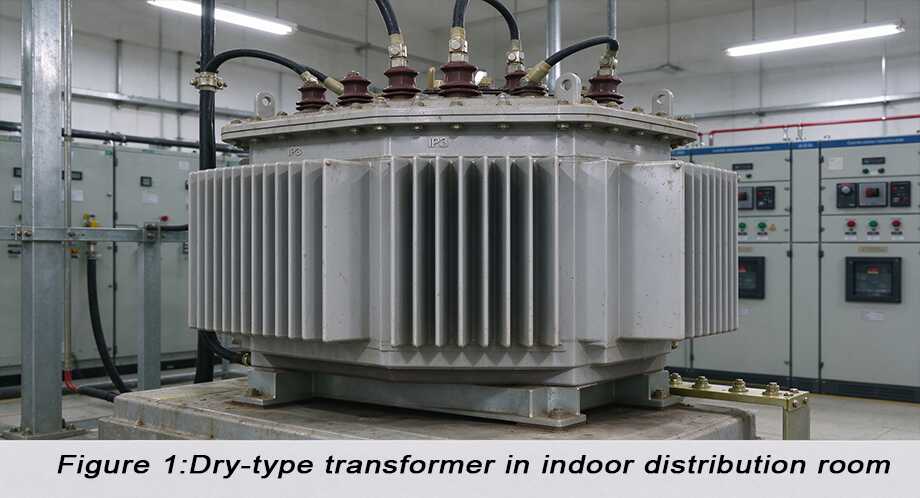
1. IP Rating: The Globally Recognized “ID Card” for Equipment Protection
The IP (Ingress Protection) rating is defined by the international standard IEC 60529 published by the International Electrotechnical Commission (IEC). It provides a clear and unified system for quantifying the ability of an electrical equipment enclosure to protect against the ingress of solid foreign objects (including dust) and liquids (primarily water). This standard has been adopted by the vast majority of countries worldwide, becoming essential international terminology in equipment procurement and technical specifications.
1.1 The key to understanding an IP rating lies in decoding its two-digit code: IPXX.
Each digit has its own independent and clearly defined test standards and rating definitions.
| Code Position | Protects Against | Digit Range | Brief Meaning (Higher digit = Stronger protection) |
| First Digit | Solid objects & Human Contact | 0-6 | From no protection to complete dust-tightness, and prevention of contact with hazardous parts by tools, fingers, etc. |
| Second Digit | Liquid (primarily water) Ingress | 0-9K | From no protection to withstanding harsh washing from high-pressure, high-temperature water jets. |
2. Decoding the First Digit: The Secrets of Dust and Contact Protection
The first digit (0-6) defines the enclosure’s level of protection against solid particles and includes safety requirements to prevent contact with internal hazardous parts by human body parts (e.g., hands, fingers) or tools.
2.1 Core Logic:
Physical Barrier and Sealing The protection principle is based on mechanical isolation. It blocks particles of specific sizes from entering by designing the size of enclosure gaps, mesh openings, or the tightness of sealing structures.
2.2 Key Rating Details (Using Common Transformer Ratings as Examples)
(1) IP2X: Protection against finger contact (≥ Ø12.5mm). This rating prevents a human finger or similarly sized object from contacting hazardous live or moving parts inside the enclosure. This is a basic safety requirement for many indoor distribution transformers (dry-type or oil-immersed).
(2) IP5X: Dust protected. This is a rating often misunderstood in practical applications. It does not permit the entry of dust in quantities that would interfere with the satisfactory operation of the equipment. The principle is not absolute sealing, but rather the use of labyrinth structures, filters, or limited sealing strips to prevent dust from entering critical areas in a straight line or in large quantities. It is suitable for industrial indoor environments with dust presence that are not extremely harsh.
(3) IP6X: Dust tight. This is the highest rating for dust protection. The enclosure must be completely sealed; under standard vacuum testing, no dust ingress is permitted. This typically relies on high-performance gaskets (e.g., silicone, EPDM), welded or bonded continuous seams. Commonly used for outdoor transformers in environments filled with fine dust, such as cement plants, mines, or deserts.
3. Decoding the Second Digit: The Scientific Grading of Water Protection
The second digit defines the enclosure’s effectiveness in protecting against water.
3.1 Key Rating Details (Using Common Transformer Ratings as Examples)
(1) IPX4: Protection against water splashing. The enclosure can withstand water splashed from all directions without harmful effects. This is achieved by ensuring that enclosure joints and openings (e.g., vents) have a specific orientation or baffle structure preventing direct splash ingress. Suitable for outdoor locations under canopies or indoor damp areas potentially exposed to rain splash or light spray.
(2) IPX7: Protection against temporary immersion. When the equipment is temporarily immersed in water under specified conditions (typically 1 meter depth for 30 minutes), no harmful quantity of water shall enter the enclosure. This relies on the compression and deformation of seals to form a tighter seal when submerged. Applicable to installation sites that may face accidental flooding or submersion risks.
(3) IPX9: Protection against high-temperature/high-pressure water jets. This is a very severe rating, withstanding close-range spraying with 80°C hot water at high pressure (80-100 bar, approx. 8-10 MPa) from specific angles. Protection depends on an extremely robust enclosure structure, high-temperature and aging-resistant sealing materials, and fastening mechanisms capable of withstanding high-pressure water impact. Common for transformers in industries like food processing or chemicals where regular cleaning with high-pressure steam or hot water is required.
| IP Rating | Solid Protection Explanation | Liquid Protection Explanation | Recommended Typical Transformer Application Scenario |
| IP23 | Protects against solids ≥Ø12.5mm, finger contact. | Protected against dripping water (≤ 60° from vertical). | Standard indoor switchgear rooms, substations with controlled environments and no direct water spray risk. |
| IP54 | Dust protected (limited ingress). | Protected against water splashing from all directions. | Indoor industrial workshops with light dust/dampness, or outdoor sheltered installation locations. |
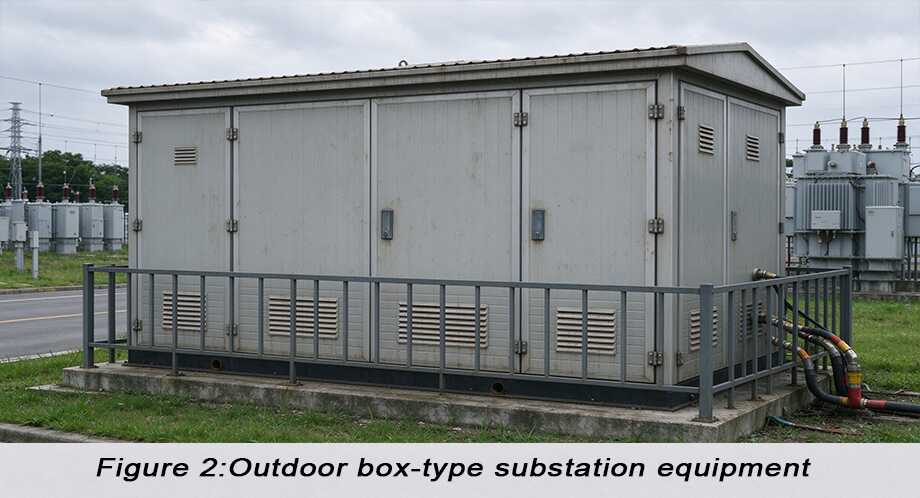
| IP65 | Dust tight (no dust ingress). | Protected against low-pressure water jets (6.3mm nozzle). | Unsheltered outdoor environments; can handle wind, rain, and dust. A common configuration for outdoor compact substations. |
| IP67 | Dust tight (no dust ingress). | Protected against temporary immersion (1m, 30 min). | Extreme industrial or coastal environments prone to accidental flooding or requiring temporary immersion for cleaning. |
4. How to Choose the Right “Protective Clothing” for Your Transformer?
Selection should never simply aim for the highest rating. Follow the principle of “matching the environment, cost-effective suitability”. An excessively high protection level means significantly increased costs (materials, craftsmanship), while a level too low can lead to frequent failures and dramatically higher lifecycle costs.
4.1 Environmental Analysis is the First Step
Before searching “how to choose transformer IP rating,” systematically assess the installation site environment:
(1) Indoor vs. Outdoor: Outdoor installations must consider waterproofing (at least IPX4) and dust protection (recommended IP5X or higher).
(2) Dust Type and Concentration: Ordinary dust (IP5X may suffice) vs. conductive metal dust, fibrous dust (IP6X strongly recommended).
(3) Form of Water Contact: Condensation only (IPX1), rain (IPX3/X4), spray (IPX5/X6), or flooding/washing (IPX7/X9K).
(4) Corrosive Atmosphere: Coastal areas (salt spray), chemical plants. In these cases, also pay extra attention to the enclosure’s corrosion resistance rating (e.g., coating standards), as the IP rating primarily addresses physical ingress.
Conclusion
Choosing the appropriate IP protection rating for your transformer is a strategic decision impacting total lifecycle cost and operational reliability. It is not just two numbers on a spec sheet; it represents a forward-looking assessment of the equipment’s future operating environment and a test of the manufacturer’s design and manufacturing capabilities.
Contact
LuShan, est. 1975, is a Chinese professional manufacturer specializing in power transformers and reactors for 50+ years. Leading products are single-phase transformer, three-phase isolation transformers, electrical transformer, distribution transformer, step down and step up transformer, low voltage transformer, high voltage transformer, control transformer, toroidal transformer, R-core transformer; DC inductors, AC reactors, filtering reactor, line and load reactor, chokes, filtering reactor, and intermediate, high-frequency products.
Our power transformers and reactors are widely used in 10 application areas: rapid transit, construction machinery, renewable energy, intelligent manufacturing, medical equipment, coal mine explosion prevention, excitation system, vacuum sintering(furnace), central air conditioning.
Know more about power transformer and reactor: www.lstransformer.com.
If you would like to obtain customized solutions for transformers or reactors, please contact us.
WhatsApp:+86 13787095096
Email: marketing@hnlsdz.com