
 EN
EN
 FR
FR DE
DE ES
ES
How to Handle Transformer Light Gas Alarm? — An Authoritative Guide by Global Maintenance Experts
How to Handle Transformer Light Gas Alarm?
— An Authoritative Guide by Global Maintenance Experts
The light gas alarm in a transformer is a critical early warning signal in power systems. As one of the most essential non-electrical protections for transformers, the activation of the light gas contact in a Buchholz relay directly indicates abnormal gas generation inside the equipment. Ignoring or mishandling this alarm can lead to accelerated insulation degradation, latent fault expansion, and ultimately costly transformer failures or even catastrophic accidents. This guide, based on the International Electrotechnical Commission (IEC) 60599 and the Institute of Electrical and Electronics Engineers (IEEE) C57.104 standards, provides a clear, actionable global response procedure.
Content
1. Understanding the Core Principle of Light Gas Alarm: Why Are Gases Key Indicators?
When transformer insulation materials (such as insulating oil and solid insulation like paper or pressboard) decompose under electrical, thermal, or mechanical stress, they produce various fault gases (Fault Gases), including hydrogen (H₂), methane (CH₄), ethane (C₂H₆), ethylene (C₂H₄), acetylene (C₂H₂), carbon monoxide (CO), and carbon dioxide (CO₂). The production rate and composition of these gases serve as a "fingerprint" to identify fault types (partial discharge, overheating, arcing) and their severity.
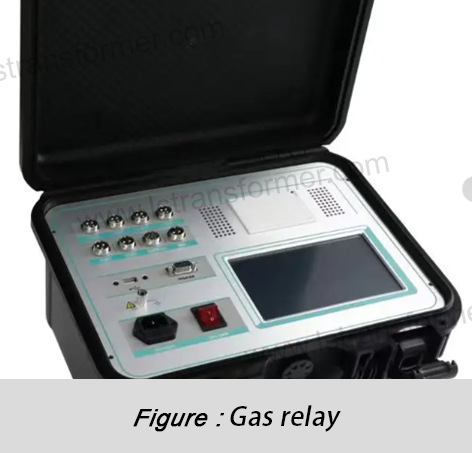
The Buchholz relay is installed on the oil pipe between the transformer tank and the conservator. When gas accumulates slowly in the relay's upper gas chamber, it causes the oil level to drop, eventually triggering the float or reed switch for the light gas alarm. This process primarily targets early-stage or minor faults with low gas generation rates that have not yet caused violent oil flow disturbances.
2. Potential Causes of Light Gas Alarm: From Common to Severe
Understanding the causes is the foundation for formulating countermeasures:
● Non-fault gas accumulation (most common):
(1)Air residue after oil filling/filtration: After commissioning or major maintenance, dissolved air or residual air in the gas chamber may slowly release. Such gases mainly consist of nitrogen (N₂) and oxygen (O₂), with little to no fault gases.
(2)Oil temperature drop or oil level decrease: Reduced load leading to lower oil temperature or normal oil level fluctuations (e.g., due to breather action) can release dissolved air, accumulating in the relay. This is more common in regions with significant day-night or seasonal load variations.
(3)Minor seal leakage: Small negative-pressure leaks may allow air to be slowly drawn into the transformer.
● Early-stage or low-energy faults:
(1)Low-temperature overheating (<150°C):Caused by core circulating currents due to multi-point grounding, structural eddy current heating, or loose bolt connections. Mainly produces H₂, CH₄, and C₂H₆.
(2)Medium-temperature overheating (150°C–300°C):Caused by increased contact resistance in tap changers, loose winding connections, or blocked oil channels. Mainly produces H₂, CH₄, C₂H₄, and C₂H₆.
(3)Low-energy partial discharge:Such as bubble discharge in oil, gas gap discharge in insulation paper, or floating potential discharge. Mainly produces H₂ and small amounts of CH₄.
(4)Minor solid insulation aging:Produces CO and CO₂ (indicative of paper insulation degradation). If accompanied by overheating, hydrocarbon gases may also form.
Cause Category | Typical Examples | Main Fault Gases | Risk Level |
Non-fault | Oil filling residue, oil temperature drop | N₂, O₂ (high ratio) | Low |
Non-fault | Minor seal leakage (air ingress) | N₂, O₂ (high ratio) | Low (needs repair) |
Early fault (electrical/thermal) | Low-temperature overheating (<150°C) | H₂, CH₄, C₂H₆ | Medium |
Early fault (thermal) | Medium-temperature overheating (150°C–300°C) | H₂, CH₄, C₂H₄, C₂H₆ | Medium-high |
Early fault (electrical) | Low-energy partial discharge | H₂, (trace CH₄) | Medium-high |
Early fault (insulation) | Minor solid insulation aging/overheating | CO, CO₂ (higher risk with hydrocarbons) | Medium-high |
Table 1: Common Causes of Transformer Light Gas Alarm and Key Fault Gases
3. Standardized Response Process: Safety, Diagnosis, Decision (Following IEC/IEEE Best Practices)
Core principle: Respond immediately, diagnose cautiously, avoid misjudgment, and never reset blindly!
● Step 1: Confirm the alarm and record critical parameters
(1)Verify the signal: Check the Buchholz relay for a light gas alarm (indicated by local/remote signals) and rule out false alarms (e.g., loose terminals or relay contact chatter).
(2)Record key parameters: Note the alarm time, transformer load current, oil/winding temperatures, ambient temperature, system voltage, and recent operations (e.g., tap changer adjustments).
(3)Inspect the relay: Observe gas volume (typically 250–300 ml for light gas alarms) and color (air is colorless; fault gases may appear gray, black, or flammable). Do not vent immediately!
● Step 2: Comprehensive external inspection and preliminary analysis
(1)Oil level check: Ensure the conservator oil level is normal. Abnormal levels may trigger alarms or worsen faults.
(2)Breather check: Verify silica gel color (blue = effective; pink = moisture-saturated) and breathing function. Blockages can cause negative-pressure air ingress.
(3)Leak inspection:Examine seals, valves, and flanges for oil traces or leaks.
(4)Abnormal noise detection: Use a stethoscope to listen for internal sounds (e.g., "hissing" discharges or "buzzing" overheating).
(5)Review DGA history:Compare recent Dissolved Gas Analysis (DGA) reports to assess gas trends and production rates.
● Step 3: Critical action – Safely collect gas and oil samples
(1)Gas sampling: Use a syringe or gas bag to collect gas from the relay’s vent valve (follow manufacturer guidelines). Avoid air contamination or ignition (acetylene is flammable!). Record sampling time and volume.
(2)Oil sampling:Collect oil from the bottom valve for DGA analysis. Use clean, airtight containers.
(3)Lab testing:Send samples to an IEC 60599 or ASTM D3612-certified lab for gas chromatography (analyzing H₂, CH₄, C₂H₂, etc.).
● Step 4: Decision-making based on diagnostic results
(1)Result 1: Mostly air (N₂, O₂ > 70%, minimal fault gases)Action: Safely vent gas, reset the alarm, address leaks, and monitor closely.
(2)Result 2:Significant fault gases (H₂, hydrocarbons, CO
Action: Reduce load, intensify monitoring, prepare for shutdown, consult experts, and schedule repairs.
4. Preventive Strategies for Light Gas Alarms
(1)Regular DGA monitoring (aligned with
IEC/IEEE standards).
(2)Condition-based maintenance (CBM)using
DGA trends and online monitoring.
(3)Strict1Oilhandling procedures (vacuum degassing / dehydration per IEC 60422).
(4)Seal integrity maintenance (check gaskets, breathers, pressure relief devices).
(5)Enhanced operational monitoring (oil/winding temperatures, load currents).
In Summary
A light gas alarm is a vital "health indicator" for transformers. Following this IEC/IEEE-based process—prompt response, thorough inspection, precise sampling, expert analysis, and data-driven decisions—can prevent minor issues from escalating. Proactive DGA monitoring and preventive maintenance are key to reliability.
Contact Us
LuShan, est.1975, is a Chinese professional manufacturer specializing in power transformers and reactors for50+ years. Leading products are single-phase transformer, three-phase isolation transformers,electrical transformer,distribution transformer, step down and step up transformer, low voltage transformer, high voltage transformer, control transformer, toroidal transformer, R-core transformer;DC inductors, AC reactors, filtering reactor, line and load reactor, chokes, filtering reactor, and intermediate,high-frequency products.
Our power transformers and reactors are widely used in 10 application areas: rapid transit, construction machinery, renewable energy, intelligent manufacturing, medical equipment, coal mine explosion prevention , excitation system, vacuum sintering(furnace), central air conditioning.
Know more about power transformer and reactor :www.lstransformer.com.
If you would like to obtain customized solutions for transformers or reactors, please contact us.
WhatsApp:+86 17267488565
Email:[email protected]