
 EN
EN
 FR
FR DE
DE ES
ES
Why Are Transformer Lead Wire Connections Prone to Oxidation in Humid Environments? — A Scientific Guide to Protective Coating Selection
Why Are Transformer Lead Wire Connections Prone to Oxidation in Humid Environments?
— A Scientific Guide to Protective Coating Selection
Transformer and reactor lead wire connections are critical points in power transmission, and their reliability directly impacts the long-term stable operation of equipment. However, in humid environments (such as coastal areas, tropical climates, or high-humidity industrial zones), these connections are highly susceptible to oxidation and corrosion. This leads to increased contact resistance, localized overheating, and even equipment failures.
According to IEEE C57.152 standards, over 27% of transformer failures are related to corrosion and degradation at connection points. Therefore, selecting the right protective coating to effectively mitigate oxidation in humid environments has become a key consideration in power equipment maintenance and procurement decisions.
Content
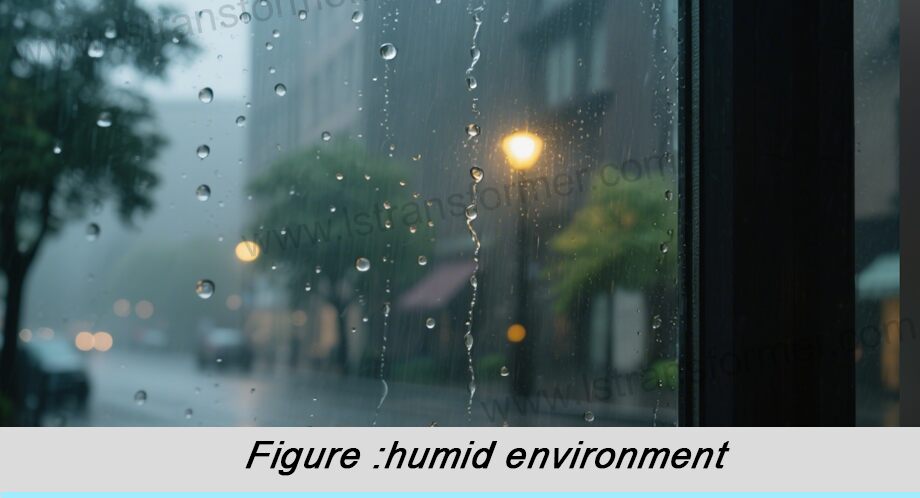
1. Humid Environments: The "Catalyst" for Connection Oxidation
The lead wire connections of transformers or reactors are critical junctions between high and low voltage sides, and their reliability is vital for equipment safety. In humid environments, the oxidation and corrosion rates of these metal connections (typically made of copper, aluminum, or plating) accelerate significantly due to the formation of a complete electrochemical corrosion circuit:
● Formation of Electrolyte Solution:
In humid air, when relative humidity (RH) exceeds 60%, moisture adsorbs and condenses on metal surfaces, forming a thin, nearly invisible liquid film. When pollutants like SO₂ or Cl⁻ (common in coastal or industrial areas) dissolve into this film, its conductivity increases sharply, creating a corrosive electrolyte. According to Faraday’s corrosion current formula:
Icorr = (2.303 × B) / (Rp)
Where:
Icorr = Corrosion current density (μA/cm²)
B = Constant (~26 mV)
Rp = Polarization resistance (Ω·cm²)
As humidity rises, the liquid film thickens, significantly reducing Rp and increasing Icorr, which accelerates corrosion rates. Experimental data show that when RH increases from 60% to 80%, copper corrosion rates can rise by 3-5 times.
● Anodic Oxidation Reaction:
Under the electrolyte film, the connection metal (e.g., Cu) acts as an anode, undergoing oxidation:
Cu → Cu²⁺ + 2e⁻
Copper ions enter the solution, consuming the metal and forming oxide layers (Cu₂O, CuO) or corrosion products (e.g., basic copper carbonate, Cu₂(OH)₂CO₃).
● Cathodic Reduction Reaction:
Nearby areas or impurities (e.g., carbon particles, oxides) act as cathodes, consuming electrons released by the anode. Common reactions include oxygen reduction:
O₂ + 2H₂O + 4e⁻ → 4OH⁻
Or hydrogen ion reduction (in acidic environments):
2H⁺ + 2e⁻ → H₂↑
Consequences: Persistent oxidation increases contact resistance exponentially. According to Joule’s law (Q = I²Rt), higher resistance (R) causes drastic heat generation (Q), leading to localized overheating, accelerated insulation aging, and potential connection failure, arcing, or even transformer explosions (IEEE Std C57.152 notes that 27% of failures originate from connection issues).
2. Protective Coatings: Building a Reliable "Barrier"
Blocking any of the three elements of electrochemical corrosion (anode, cathode, electrolyte) can effectively prevent oxidation. High-quality protective coatings work via these mechanisms:
● Physical Barrier Protection
(1)Mechanism: Forms a continuous, dense, low-porosity film on the metal surface, physically isolating moisture, oxygen, and corrosive ions (Cl⁻, SO₄²⁻).
(2)Key Metrics:
–Water Vapor Transmission Rate (WVTR):Mass of water vapor penetrating per unit area per day (g/m²/day). High-performance coatings (e.g., modified epoxy) have WVTR < 5 g/m²/day.
–Oxygen Transmission Rate (OTR):Fluorinated coatings can achieve ultra-low OTR (10-50 cc/m²/day).
(3)Effect: Raises humidity tolerance (e.g., from RH 60% to 95%+), delaying corrosion.
● Chemical Bonding and Inertness
(1)Mechanism:Chemically stable materials resist reactions with water, oxygen, acids, or bases. Some coatings (e.g., chromate primers) promote passive oxide layers on metals.
(2)Effect:Long-term stability in harsh environments.
● Hydrophobicity and Self-Healing
(1)Hydrophobicity: Low surface energy (e.g., silicone rubber) creates water beading (contact angle >90°), preventing continuous film formation.
(2)Self-Healing: Smart coatings (e.g., modified polyurethane) repair minor scratches via molecular migration or inhibitor release.
(3)Effect: Dynamic protection against condensation, rain, or fog.
3. Scientific Selection: Coating Material Comparison
Coating Type | Advantages | Limitations | Applications | Standards |
Epoxy Resin | Superior adhesion (>5MPa, ASTM D4541), high hardness | Brittle in cold (IEC 60068-2-1) | Indoor, dry/moderate humidity | IEC 60464-3, UL 746C |
Silicone Rubber | Excellent hydrophobicity (CA >110°), flexible | Low mechanical strength (ASTM D4060) | High humidity, outdoor tops | IEC 62073, ASTM D3278 |
Polyurethane | Balanced/weather resistance (QUV 1000hrs ΔE<3) | Moderate resistance (IEC 60068-2-30) | General outdoor | ISO 12944-5, ASTM D4585 |
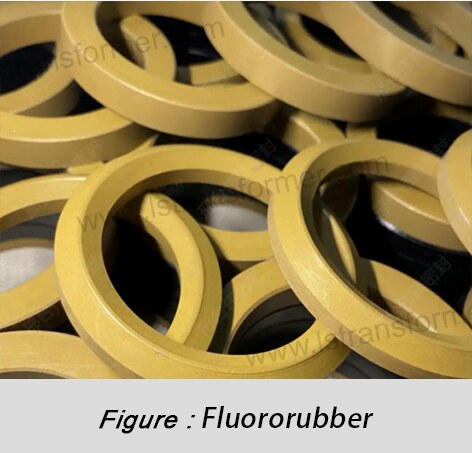
Fluoropolymer | Extreme(QUV 3000hrs ΔE<2), lowest | High cost, strict (ASTM D7234) | Marine/industrial, >15-year lifespan | ISO 12944-9, ASTM D714 |
Selection Guidelines:
(1)High humidity + clean: Silicone for hydrophobicity.
(2)High humidity + pollution/abrasion: Epoxy + polyurethane hybrid.
(3)Extreme corrosion: Fluoropolymer for longevity.
(4)Critical joints: UL 1441 or IEC 60464 certified products.
Proactive Strategies:
(1)Surface prep:Clean to Sa2.5 (ISO 8501-1).
(2)Proper application: Follow TDS for thickness (150-300μm), curing.
(3)Monitoring:Use IR thermography (ASTM C1060) and resistance tests (IEEE Std 62).
(4)Design:Seal with IP65/IP66 (IEC 60529) junction boxes or silicone gaskets.
In Summary
Oxidation in humid environments is a complex electrochemical process, but risks can be managed with the right coatings. Understanding mechanisms (barrier, hydrophobicity, passivation) and selecting materials per international standards (IEC, UL, ISO) ensures long-term reliability. Combined with proper installation and maintenance, this approach minimizes downtime and enhances safety.
Contact Us
LuShan, est.1975, is a Chinese professional manufacturer specializing in power transformers and reactors for50+ years. Leading products are single-phase transformer, three-phase isolation transformers,electrical transformer,distribution transformer, step down and step up transformer, low voltage transformer, high voltage transformer, control transformer, toroidal transformer, R-core transformer;DC inductors, AC reactors, filtering reactor, line and load reactor, chokes, filtering reactor, and intermediate,high-frequency products.
Our power transformers and reactors are widely used in 10 application areas: rapid transit, construction machinery, renewable energy, intelligent manufacturing, medical equipment, coal mine explosion prevention , excitation system, vacuum sintering(furnace), central air conditioning.
Know more about power transformer and reactor :www.lstransformer.com.
If you would like to obtain customized solutions for transformers or reactors, please contact us.
WhatsApp:+86 13787095096
Email:[email protected]