
 EN
EN
 FR
FR DE
DE ES
ES
Why Transformer Temperature Rise Demands Special Attention in Tropical Regions?
Transformer temperature rise is fundamentally a thermodynamic equilibrium process involving multiple physical and chemical dimensions such as energy conversion, heat transfer, and material performance. Under tropical climate conditions, this balanced system faces numerous challenges. According to joint research data from IEC 60076-7 and IEEE Std C57.91, 63% of transformer failures in tropical regions are directly or indirectly related to abnormal temperature rise—significantly higher than the 38% observed in temperate zones. This discrepancy underscores the critical importance of specialized thermal management for transformers in tropical environments.

Content
1. Deep Impact of Tropical Environments on Transformer Thermal Characteristics
● Nonlinear Relationship Between Ambient Temperature and Thermodynamic Properties
Transformer temperature rise (θ) is not merely a simple temperature difference but determined by a complex heat balance equation:
θ= (Pcu + Pfe)/(h·A) +θamb
Where:
•Pcu represents load loss (proportional to the square of the current)
•Pfe represents iron loss (related to voltage and frequency)
•h is the comprehensive heat transfer coefficient
•A is the effective cooling surface area
•θamb is the ambient temperature
In tropical regions, increased θamb fundamentally alters this equation:
•Each 1°C increase in ambient temperature accelerates insulation aging by approximately 1.5 times (based on Arrhenius model).
•At 35°C ambient temperature, the actual hotspot temperature under the same temperature rise limit is 10°C higher compared to 25°C conditions.
•Cooling efficiency decreases exponentially as ambient temperature rises (due to changes in h value).
Impact of Temperature on Transformer Insulation Life (Based on Montsinger’s Rule):
Hotspot Temp (°C) | Relative Aging Rate | Expected Life Reduction |
80 | 0.125 | Extends life by 8 times |
95 | 0.5 | Extends life by 2 times |
110 | 1.0 | Baseline |
120 | 2.0 | Reduces by 50% |
140 | 8.0 | Reduces by 87.5% |
● Electrochemical Mechanisms of Heat-Humidity Synergy
High humidity levels (RH > 80%) in tropical areas exacerbate temperature exacerbate temperature rise through several mechanisms:
•Dielectric Loss Mechanism:
Moisture intrusion into oil-paper insulation systems alters dielectric constant ε′ and loss factor ε″:
ε″=σ/ (ωε₀)₀)
Whereσis conductivity andωis angular frequency. Increased humidity
•Partial Discharge Effects:
Relationship between moisture content and partial discharge inception voltage:
VPD = f(d,εᵣ, Cwater)
Test data show that PDIV drops by 35–45% when moisture in oil increases from 10 ppm to 50 ppm.
•Corrosion Dynamics:
Under Cl⁻ ion influence, corrosion current density icorr follows:
i_corr = B / R_p
Where R_p is polarization resistance.
In tropical marine climates, R_p can decrease by 60–70%.
2. Thermal Design Methodology for Tropical Transformers
● Optimized Material Selection
Entropy Change Analysis of Insulation Materials
Transformers in tropical regions should use insulation materials with high entropy change characteristics:
ΔS = Q_rev / T
For standard Class A insulation (ΔS ≈ 1.2 J/K·mol) vs. Class H (ΔS ≈ 0.8 J/K·mol), H-class materials offer 50% better thermal stability under identical temperature rises.
Comparison of Modern Insulating Fluids
Key parameters of three insulating liquids:
Parameter | Mineral Oil | Silicone Oil | Synthetic Ester |
Flash Point (°C) | 150–170 | 300–300–350 | 250–280 |
Viscosity Index | 90–100 | 200–220 | 130–150 |
Relative Dielectric Constant (25°C) | 2.2 | 2.7 | 3.1 |
Volume Resistivity (Ω·cm) | 10¹⁴ | 10¹⁵ | 10¹³ |
Moisture Absorption (% w/w, 85% RH) | 0.03 | 0.01 | 0.005 |
● Thermodynamic Optimization of Cooling Systems
Advanced Cooling Structure Design
Using multiphysics coupling optimization methods:
•Establish CFD models solving Navier-Stokes equations:
ρ(∂v/∂t + v·∇v) = –∇p + μ∇²v + ρg
•Apply heat conduction equation:
ρc ∂T/∂t = ∇ · (k∇T) + q
•Use topology optimization to achieve optimal radiator fin structures.
Efficiency Comparison of Cooling Methods
Cooling Method | Heat Transfer Coefficient (W/m²·K) | Suitable ΔT Range | Energy Consumption Index |
ONAN | 15–25 | < 55 K | 1.0 |
ONAF | 30–45 | 55–70 K | 1.2 |
OFAF | 50–75 | 70–90 K | 1.8 |
ODWF | 80–120 | > 90 K | 2.5 |
3. Thermodynamic Strategies for Operational Control
● Dynamic Load Thermal Accumulation Model
Derived from Claßen’s theory:
∫(K² –1) dt≤ τ(θ_max)
where K is load factor and τ is thermal time constant. In tropical regions, reduce θ_max by 15–20%.
● Fuzzy Control Algorithm for Intelligent Cooling
Develop fuzzy control rule base using temperature difference and its rate of change (ΔT – dΔT/dt):
•Input variables: Top-oil temp (θ_top-oil), its derivative (dθ/dt), ambient temp (θ_amb).
•Output variables: Fan speed, oil pump flow rate.
•Implement Mamdani inference method for efficient operation.
4. In-Depth Interpretation of International Standards
● Specific Technical Requirements in IEC 60076-11
Comparison with conventional standards:
Item | Standard Requirement | Tropical Requirement | Technical Basis |
Temperature Rise Test Start Temp | 25°C | 40°C | Simulates extreme operating condition |
Humidity Cycle Testing | None | 10 cycles at 85°C / 95% RH | Evaluates material moisture absorption |
Salt Spray Test | Not required | 1000 hours | Verifies anti-corrosion capability |
UV Aging Test | Not required | 3000 hours hours | Assesses external insulation durability |
● Derating Curve per IEEE C57.120-2017 for Tropical Applications
Calculation formula for derating factor F:
F = 1–0.015×(θ_amb–30)–0.002×(RH–70)
Mandatory activation of forced cooling systems when F < 0.85.
5. Cutting-Edge Solutions & Technological Outlook
● Enhanced Thermal Performance Using Nanofluids
Adding Al₂O₃ nanoparticles improves transformer oil’s thermal conductivity:
k_eff / k_f = 1 + 3φ
where φ is volume fraction. A 5% addition increases heat dissipation capacity dissipation capacity by 35%.
● Digital Twin-Based Thermal State Prediction
Build a coupled 3D thermal-electrical-mechanical model:
•Real-time SCADA data acquisition.
•LSTM neural networks predict hotspot evolution.
•Achieve up to 72-hour early failure warning capability.
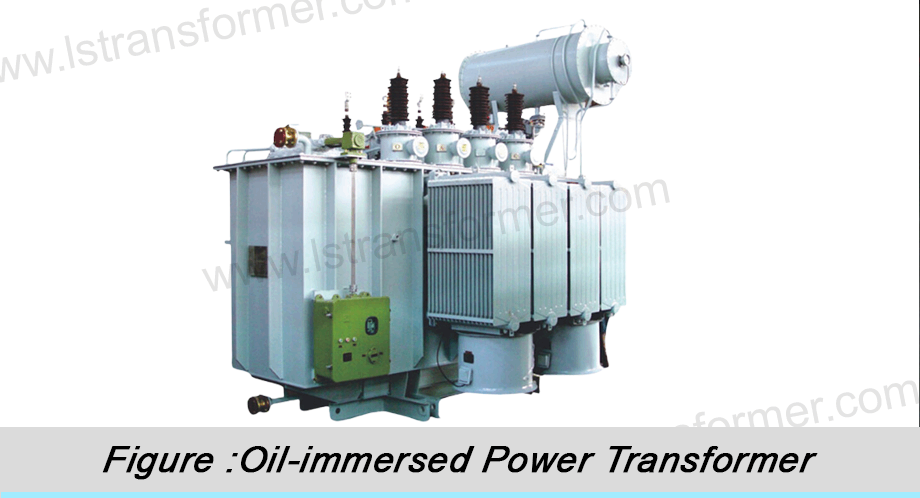
Conclusion: Building a Comprehensive Thermal Management System for Tropical Transformers
Managing transformer temperature rise in tropical regions requires building an all-encompassing technical system—from material selection to intelligent operation and maintenance. On the material level, it's essential to adopt insulation systems with high entropy change properties suitable for hot, humid environments. Structural design must optimize heat dissipation paths and topology via computational fluid dynamics. System operation should implement fuzzy logic-based smart cooling strategies. For maintenance phases, adopting digital twin technology enables real-time prediction of temperature fields.
We strongly recommend users in tropical regions prioritize products certified underIEC TS 60076-14, request detailed hotspot temperature field simulation reports from suppliers, and establish dynamic load models based on local climatic data.
As professional solution providers, we followIEEE C57.155-2012 standards to deliver customized technical services including FEM analysis for tropical scenarios, accelerated aging tests under combined heat-humidity stress, and full lifecycle thermal management plans—ensuring long-term reliability even under harsh climate challenges.
Contact Us
LuShan, est.1975, is a Chinese professional manufacturer specializing in power transformers and reactors for50+ years. Leading products are single-phase transformer, three-phase isolation transformers,electrical transformer,distribution transformer, step down and step up transformer, low voltage transformer, high voltage transformer, control transformer, toroidal transformer, R-core transformer;DC inductors, AC reactors, filtering reactor, line and load reactor, chokes, filtering reactor, and intermediate,high-frequency products.
Our power transformers and reactors are widely used in 10 application areas: rapid transit, construction machinery, renewable energy, intelligent manufacturing, medical equipment, coal mine explosion prevention , excitation system, vacuum sintering(furnace), central air conditioning.
Know more about power transformer and reactor :www.lstransformer.com.
If you would like to obtain customized solutions for transformers or reactors, please contact us.
WhatsApp:+86 13787095096
Email:[email protected]