
 EN
EN
 FR
FR DE
DE ES
ES
Warum erfordert der Temperaturanstieg von Transformatoren in tropischen Regionen besondere Aufmerksamkeit?
Der Temperaturanstieg in Transformatoren ist im Wesentlichen ein thermodynamischer Gleichgewichtsprozess, der mehrere physikalische und chemische Dimensionen wie Energieumwandlung, Wärmeübertragung und Materialeigenschaften umfasst. Unter tropischen Klimabedingungen steht dieses System vor zahlreichen Herausforderungen. Laut gemeinsamen Forschungsergebnissen von IEC 60076-7 und IEEE Std C57.9163 % der Transformatorausfälle in tropischen Regionen stehen in direktem oder indirektem Zusammenhang mit einem ungewöhnlichen Temperaturanstieg – deutlich mehr als die 38 % in gemäßigten Zonen. Diese Diskrepanz unterstreicht die entscheidende Bedeutung eines spezialisierten Wärmemanagements für Transformatoren in tropischen Umgebungen.

Inhalt
1. Tiefgreifender Einfluss tropischer Umgebungen auf die thermischen Eigenschaften von Transformatoren
● Nichtlinearer Zusammenhang zwischen Umgebungstemperatur und thermodynamischen Eigenschaften
Der Temperaturanstieg (θ) des Transformators ist nicht einfach eine Temperaturdifferenz, sondern wird durch eine komplexe Wärmebilanzgleichung bestimmt:
θ= (Pcu + Pfe)/(h·A) +θmit
Kennzahlen:
•Pcu stellt den Lastverlust dar (proportional zum Quadrat des Stroms).
•Pfe repräsentiert den Eisenverlust (abhängig von Spannung und Frequenz).
•h ist der umfassende Wärmeübergangskoeffizient
•A ist die effektive Kühlfläche
•θamb ist die Umgebungstemperatur
In tropischen Regionen verändert ein erhöhter θamb diese Gleichung grundlegend:
•Mit jedem Anstieg der Umgebungstemperatur um 1°C beschleunigt sich die Alterung der Isolierung um etwa das 1.5-fache (nach dem Arrhenius-Modell).
•Bei einer Umgebungstemperatur von 35°C ist die tatsächliche Hotspot-Temperatur unter der gleichen Temperaturanstiegsgrenze um 10°C höher als unter 25°C-Bedingungen.
•Die Kühlleistung nimmt mit steigender Umgebungstemperatur exponentiell ab (aufgrund von Änderungen des h-Wertes).
Einfluss der Temperatur auf die Lebensdauer der Transformatorisolierung (basierend auf der Montsinger-Regel):
Hotspot-Temperatur (°C) |
Relative Alterungsrate |
Erwartete Lebensdauerverkürzung |
80 |
0.125 |
Verlängert die Lebensdauer um das Achtfache |
95 |
0.5 |
Verlängert die Lebensdauer um das Achtfache |
110 |
1.0 |
Baseline |
120 |
2.0 |
Reduziert um 50% |
140 |
8.0 |
Reduziert um 87.5% |
● Elektrochemische Mechanismen der Wärme-Feuchtigkeits-Synergie
Hohe Luftfeuchtigkeitswerte (RH > 80%) in tropischen Gebieten verschärfen den Temperaturanstieg durch verschiedene Mechanismen:
•Mechanismus des dielektrischen Verlusts:
Das Eindringen von Feuchtigkeit in Öl-Papier-Isoliersysteme verändert die Dielektrizitätskonstante ε′ und den Verlustfaktor ε″:
ε″=σ/ (ωε₀)₀)
COHO Expo bei derσist Leitfähigkeit undωist die Kreisfrequenz. Erhöhte Luftfeuchtigkeit
•Auswirkungen von Teilentladungen:
Zusammenhang zwischen Feuchtigkeitsgehalt und Teilentladungs-Einsatzspannung:
VPD = f(d,εᵣ, Cwater)
Testdaten zeigen, dass der PDIV-Wert um 35–45 % sinkt, wenn der Feuchtigkeitsgehalt im Öl von 10 ppm auf 50 ppm ansteigt.
•Korrosionsdynamik:
Unter dem Einfluss von Cl⁻-Ionen ergibt sich folgende Korrosionsstromdichte icorr:
i_corr = B / R_p
Hierbei ist R_p der Polarisationswiderstand.
In tropischen Meeresklimaten kann R_p um 60–70 % sinken.
2. Thermische Auslegungsmethodik für tropische Transformatoren
● Optimierte Materialauswahl
Entropieänderungsanalyse von Dämmstoffen
Transformatoren in tropischen Regionen sollten Isoliermaterialien mit hoher Entropieänderungsrate verwenden:
ΔS = Q_rev / T
Bei Standardisolierungen der Klasse A (ΔS ≈ 1.2 J/K·mol) im Vergleich zur Klasse H (ΔS ≈ 0.8 J/K·mol) bieten Materialien der Klasse H eine um 50 % bessere thermische Stabilität bei identischen Temperaturerhöhungen.
Vergleich moderner Isolierflüssigkeiten
Wichtigste Parameter dreier Isolierflüssigkeiten:
Parameter |
Mineralöl |
Silikonöl |
Synthetischer Ester |
Flammpunkt (°C) |
150-170 |
300-300-350 |
250-280 |
Viskositätsindex |
90-100 |
200-220 |
130-150 |
Relative Dielektrizitätskonstante (25°C) |
2.2 |
2.7 |
3.1 |
Volumenwiderstand (Ω·cm) |
10¹⁴ |
10¹⁵ |
10¹³ |
Feuchtigkeitsaufnahme (% w/w, 85% relative Luftfeuchtigkeit) |
0.03 |
0.01 |
0.005 |
● Thermodynamische Optimierung von Kühlsystemen
Fortschrittliches Kühlstrukturdesign
Anwendung von Methoden zur Optimierung der Multiphysikkopplung:
•Erstellung von CFD-Modellen zur Lösung der Navier-Stokes-Gleichungen:
ρ(∂v/∂t + v·∇v) = –∇p + μ∇²v + ρg
•Wärmeleitungsgleichung anwenden:
ρc ∂T/∂t = ∇ · (k∇T) + q
•Durch Topologieoptimierung lassen sich optimale Kühlrippenstrukturen erzielen.
Effizienzvergleich von Kühlmethoden
Kühlungsmethode |
Wärmeübergangskoeffizient (W/m²·K) |
Geeigneter ΔT-Bereich |
Energieverbrauchsindex |
ONAN |
15-25 |
< 55 K |
1.0 |
ONAF |
30-45 |
55–70 K. |
1.2 |
OFAF |
50-75 |
70–90 K. |
1.8 |
ODWF |
80-120 |
> 90 K |
2.5 |
3. Thermodynamische Strategien zur Betriebssteuerung
● Dynamisches Modell zur thermischen Lastakkumulation
Abgeleitet von Claßens Theorie:
∫(K² –1) dt≤ τ(θ_max)
Dabei ist K der Lastfaktor und τ die thermische Zeitkonstante. In tropischen Regionen sollte θ_max um 15–20 % reduziert werden.
● Fuzzy-Control-Algorithmus für intelligente Kühlung
Entwicklung einer Fuzzy-Control-Regelbasis unter Verwendung der Temperaturdifferenz und ihrer Änderungsrate (ΔT – dΔT/dt):
•Eingabevariablen: Öltemperatur (θ_top-oil), deren Ableitung (dθ/dt), Umgebungstemperatur (θ_amb).
•Ausgabegrößen: Lüfterdrehzahl, Ölpumpenfördermenge.
•Implementieren Sie die Mamdani-Inferenzmethode für einen effizienten Betrieb.
4. Vertiefende Interpretation internationaler Standards
● Spezifische technische Anforderungen in IEC 60076-11
Vergleich mit herkömmlichen Standards:
Artikel |
Standardanforderung |
Tropenanforderungen |
Technische Grundlagen |
Starttemperatur des Temperaturanstiegstests |
25°C |
40°C |
Simuliert extreme Betriebsbedingungen |
Feuchtigkeitszyklusprüfung |
Keine Präsentation |
10 Zyklen bei 85 °C / 95 % relativer Luftfeuchtigkeit |
Bewertet die Feuchtigkeitsaufnahme des Materials |
Salzsprühtest |
Nicht erforderlich |
1000 Stunden |
Prüft die Korrosionsbeständigkeit |
UV-Alterungstest |
Nicht erforderlich |
3000 Stunden |
Bewertet die Haltbarkeit der Außenisolierung |
● Leistungsreduzierungskurve gemäß IEEE C57.120-2017 für tropische Anwendungen
Berechnungsformel für den Reduktionsfaktor F:
F = 1-0.015×(θ_amb-30)-0.002×(RH-70)
Obligatorische Aktivierung der Zwangskühlsysteme bei F < 0.85.
5. Zukunftsweisende Lösungen und technologischer Ausblick
● Verbesserte thermische Leistung durch Nanoflüssigkeiten
Die Zugabe von Al₂O₃-Nanopartikeln verbessert die Wärmeleitfähigkeit von Transformatorenöl:
k_eff / k_f = 1 + 3φ
wobei φ der Volumenanteil ist. Eine Zugabe von 5 % erhöht die Wärmeabfuhrkapazität um 35 %.
● Thermische Zustandsvorhersage auf Basis digitaler Zwillinge
Erstellen Sie ein gekoppeltes 3D-thermisch-elektrisch-mechanisches Modell:
•Echtzeit-SCADA-Datenerfassung.
•LSTM-Neuronale Netze sagen die Entwicklung von Hotspots voraus.
•Erreichen Sie eine Frühwarnfähigkeit von bis zu 72 Stunden bei Ausfällen.
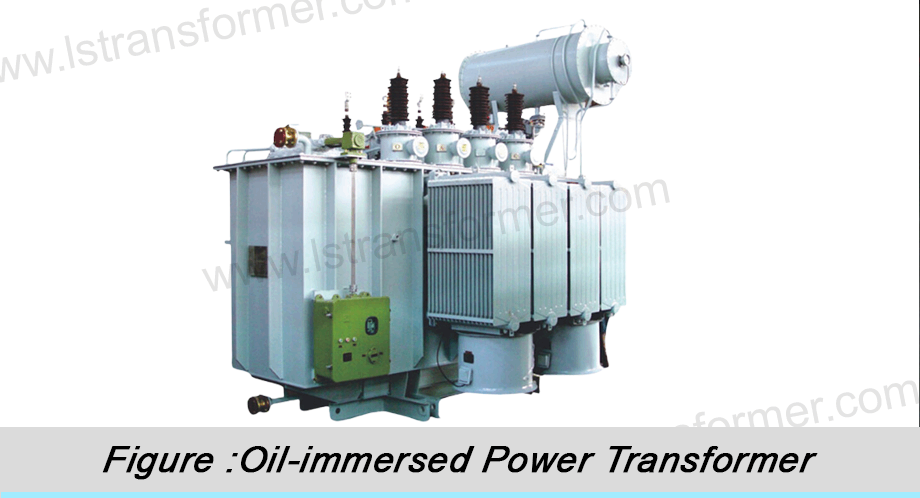
Fazit: Aufbau eines umfassenden Wärmemanagementsystems für tropische Transformatoren
Die Beherrschung des Temperaturanstiegs von Transformatoren in tropischen Regionen erfordert ein umfassendes technisches System – von der Materialauswahl bis hin zu intelligentem Betrieb und Wartung. Auf Materialebene ist der Einsatz von Isolationssystemen mit hoher Entropieänderungsrate, die für heiße und feuchte Umgebungen geeignet sind, unerlässlich. Die Konstruktion muss die Wärmeableitungswege und die Topologie mithilfe von Strömungsmechanik optimieren. Der Systembetrieb sollte auf Fuzzy-Logik basierende intelligente Kühlstrategien implementieren. In Wartungsphasen ermöglicht die Nutzung der Digital-Twin-Technologie die Echtzeitprognose von Temperaturfeldern.
Wir empfehlen Nutzern in tropischen Regionen dringend, Produkte mit folgender Zertifizierung zu bevorzugen:IEC TS 60076-14, detaillierte Simulationsberichte zu Hotspot-Temperaturfeldern von Lieferanten anfordern und dynamische Lastmodelle auf Basis lokaler Klimadaten erstellen.
Als professionelle Lösungsanbieter verfolgen wir folgende Ziele:IEEE C57.155-2012 Standards zur Bereitstellung maßgeschneiderter technischer Dienstleistungen, einschließlich FEM-Analysen für tropische Szenarien, beschleunigter Alterungstests unter kombinierter Hitze-Feuchtigkeits-Belastung und vollständiger Lebenszyklus-Wärmemanagementpläne – um langfristige Zuverlässigkeit auch unter extremen klimatischen Bedingungen zu gewährleisten.
Kontakt
LuShan , gegründet 1975 , ist ein chinesischer Hersteller von Leistungstransformatoren und Drosselspulen mit über 50 Jahren Erfahrung. Zu den Hauptprodukten gehören Einphasentransformatoren, Dreiphasen- Trenntransformatoren , elektrische Transformatoren , Verteiltransformatoren, Abwärts- und Aufwärtstransformatoren, Niederspannungstransformatoren, Hochspannungstransformatoren, Steuertransformatoren, Ringkerntransformatoren, R-Kern-Transformatoren; Gleichstrominduktivitäten, Wechselstromdrosseln, Filterdrosseln, Netz- und Lastdrosseln, Drosseln sowie Produkte für mittlere und hohe Frequenzen.
Unsere Leistungstransformatoren und Drosselspulen werden in zehn Anwendungsbereichen breit eingesetzt: Schnellverkehr, Baumaschinen, erneuerbare Energien, intelligente Fertigung, Medizintechnik, Explosionsschutz in Kohlebergwerken, Erregersysteme, Vakuumsintern (Ofen), zentrale Klimaanlagen.
Erfahren Sie mehr über Leistungstransformatoren und Drosselspulen: www.lstransformer.com.
Wenn Sie maßgeschneiderte Lösungen für Transformatoren oder Drosseln wünschen, kontaktieren Sie uns bitte.
WhatsApp:+86 13787095096
Email:
[E-Mail geschützt]