





How to Overhaul a Transformer Core

Home > Autor: 369703005 > Seite 25
FAQ

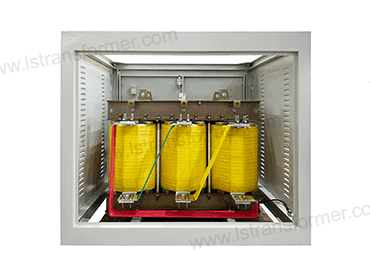
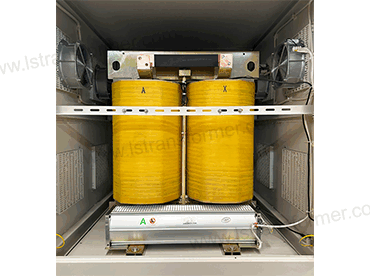
How to Overhaul a Transformer Core

How to Overhaul a Transformer Core The transformer core serves as the mechanical backbone of the entire transformer and is a crucial component that provides the magnetic circuit for the transformer. Therefore, inspecting the transformer core is a key step in ensuring the safe operation of the transformer. The inspection of the core involves the […]
FAQ

When is it not allowed to adjust the on-load tap changer of a transformer?

When is it not allowed to adjust the on-load tap changer of a transformer? During the operation and maintenance of a transformer, the adjustment of the on-load tap changer (OLTC) needs to strictly adhere to regulations to ensure the safe and stable operation of the transformer. Here are several situations in which adjusting the OLTC

FAQ

What reasons can cause abnormal noise in transformers?

What reasons can cause abnormal noise in transformers? During the operation of a transformer, the occurrence of abnormal noise can be attributed to various factors. When the transformer operates under overload conditions, internal copper and iron losses increase, leading to elevated temperatures and reduced heat dissipation. In such situations, the transformer may emit a dull

FAQ

How to Reduce Transformer Core Losses?

How to Reduce Transformer Core Losses? Transformer core losses primarily include eddy current losses and hysteresis losses. Here is an elaboration on methods to decrease core losses: (1) Optimize core material: To minimize losses, selecting core materials with low losses and high saturation magnetic induction is crucial. Silicon steel is currently one of the most

FAQ

What Causes Winding Breakage?

What Causes Winding Breakage? There are several reasons that can lead to winding breakage in transformers: (1) Unstable Line Connections: When the winding connections in a transformer are problematic, such as poor welding, inadequate contact, or loosening, it may result in concentrated currents or localized overheating at the connection points. Prolonged overheating can accelerate the

FAQ

What Causes Overheating of Transformer Core?

What Causes Overheating of Transformer Core? The overheating of a transformer core can be attributed to several factors: (1) Overload: When a transformer operates under excessive load, the current passing through the core increases, generating additional Joule heating. This can result in an elevated temperature of the core, surpassing the design temperature. (2) Iron Loss:

FAQ

How to Approach Transformer Temperature Rise Reasonably?

How to Approach Transformer Temperature Rise Reasonably? Perspectives on temperature rise encompass various aspects essential for the long-term stable operation of transformers, specifically in the following dimensions: (1) Safety: The prudent control of temperature rise aims to ensure that the internal temperature of the transformer does not exceed safety limits. This measure is primarily intended

FAQ

What is the thermal class of a transformer?

What is the thermal class of a transformer? The thermal class of a transformer typically refers to the thermal stability of its insulation system, a crucial factor directly impacting the temperature endurance during prolonged operation. This classification is commonly denoted by letters such as A, E, B, F, H, each representing a specific maximum temperature

FAQ

Maintenance and Fastening of Transformer Body

Maintenance and Fastening of Transformer Body 1. Body Cleaning: Users and manufacturers of transformers have stringent requirements for the cleanliness of the transformer body, making body cleaning crucial. During the assembly process, crucial components, especially insulating parts, require meticulous cleaning. Typically, a vacuum cleaner is used, and clean white cloths are employed for wiping. In

FAQ

How to Look at The Parallel Operation of Transformers?

How to Look at TheParallelOperation of Transformers? The parallel operation of transformers refers to connecting the primary windings of two or more transformers to a common busbar and connecting their secondary windings to a common secondary busbar. Transformers operated in this manner are termed to be in parallel operation. 1. Advantages of parallel operation of transformers include:

WhatsApp QR WeChat QR sales@hnlsdz.com
Scroll to Top