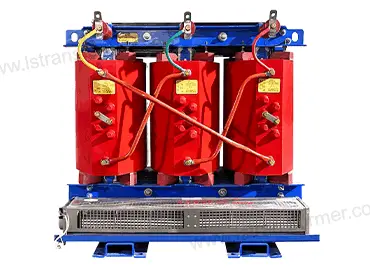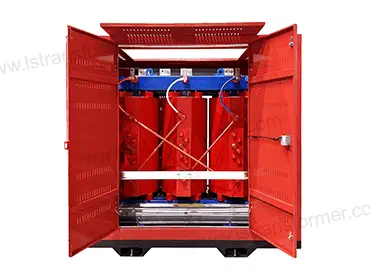






Was Sind die Besonderen Schutz-Anforderungen für Explosion‑Proof Transformers?

Home > FAQ > Seite 2
FAQ

Was Sind die Besonderen Schutz-Anforderungen für Explosion‑Proof Transformers?

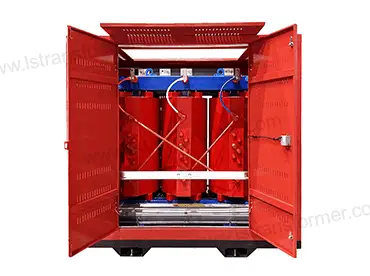
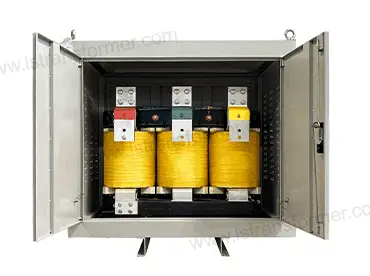
What Are the Special Protection Requirements for Explosion‑Proof Transformers? In high-risk industries such as petrochemicals, mining, and pharmaceutical manufacturing, explosion-proof transformers are core equipment for ensuring safe power supply. These special environments are often laden with flammable gases, vapors, or dust – where even a tiny electrical spark can trigger a catastrophic explosion. Therefore, explosion-proof

FAQ

Der Unterschied Zwischen Autotransformator-und Trenntransformator

Transformers are widely used in electrical systems to transfer electrical energy from one circuit to another. Two common types of transformers are autotransformers and isolation transformers. Although they both perform the same basic function, they have significant differences. An autotransformer is a type of transformer that has only one winding that serves as both the

FAQ

How to Mitigate Skin Effect in High-Frequency Inductors? — Analysis of Litz Wire Braiding and Multi-Layer Winding Design

How to Mitigate Skin Effect in High-Frequency Inductors?  — Analysis of Litz Wire Braiding and Multi-Layer Winding Design In high-frequency power electronic systems such as switching power supplies, new energy inverters, and variable frequency drives, high-frequency inductors are the core magnetic components enabling efficient energy conversion. However, as operating frequencies rise to the kHz or

FAQ

Harmonic Control in Power Systems: Reactor Selection and Configuration

Harmonic Control in Power Systems: Reactor Selection and Configuration With the rapid development of industrial equipment, renewable energy power stations, and data centers, harmonic pollution in power systems has become increasingly severe. Harmonics not only cause transformer overheating and cable insulation aging but may also trigger serious accidents such as capacitor resonance explosions. Reactors, as

FAQ

How Do Power Transformers Work? —A Full Process Analysis from Power Generation to Consumption

How Do Power Transformers Work? —A Full Process Analysis from Power Generation to Consumption Power transformers are the core equipment of grid systems, performing the critical tasks of voltage conversion and energy transmission. Approximately 40% of global energy loss occurs during power transmission and distribution, while high-efficiency transformers can reduce energy waste by 15%-25% (Source:

FAQ

How to Choose a Reactor? — From Theory to Practical Application Matching

How to Choose a Reactor? —From Theory to Practical Application Matching In global industrial and energy systems, reactors are core components for regulating current, suppressing harmonics, and improving power quality. Their selection directly impacts equipment efficiency and system stability. According to Google search data, keywords such as “how to choose a reactor,” “reactor selection guide,”

FAQ

How Does Dust Accelerate Transformer Aging? —Dust Protection Technologies to Extend Equipment Lifespan

How Does Dust Accelerate Transformer Aging? —Dust Protection Technologies to Extend Equipment Lifespan According to the International Energy Agency (IEA), 15% of global transformer failures are caused by dust pollution, with equipment lifespan reduced by 30%-50% in deserts and industrial areas. Dust not only clogs cooling systems but also triggers insulation degradation and partial discharge.

FAQ

Why Do Chemical Plant Transformers Fail Within 2 Years? —Key Solutions for Corrosion & Dust Prevention

Why Do Chemical Plant Transformers Fail Within 2 Years? —Key Solutions for Corrosion & Dust Prevention Under global industrial efficiency upgrades and stricter environmental regulations, transformer lifespan management in chemical plants has become a critical challenge. Statistics from the International Energy Agency (IEA) reveal that chemical plant transformers face an annual scrap rate of 15%–30%—far exceeding the

FAQ

What are the insulation accidents under the working voltage of the transformer?

What are the insulation accidents under the working voltage of the transformer? Transformer is an indispensable and important equipment in the power system, and its insulation performance is directly related to the safe and stable operation of the whole system. At the working voltage, the transformer may be a variety of insulation accidents, the following

FAQ

What are the Advantages of Using Continuous-type Winding in High-voltage Transformers?

What are the Advantages of Using Continuous–type Winding in High–voltage Transformers? In transformer design, the choice of winding type is of vital importance. For high – voltagewinding, continuous – typewinding have unique advantages, which lead to their wide adoption in numerous applications such as the SG10 product. Below, we will discuss their advantages in detail. Content

WhatsApp QR WeChat QR sales@hnlsdz.com
Scroll to Top