






How to Deal with Surface Tracking on Bushing? —Key Considerations for RTV Silicone Coating Application
How to Deal with Surface Tracking on Bushing?
—Key Considerations for RTV Silicone Coating Application
Surface tracking on reactor bushings is a critical cause of power equipment failures. According to the IEEE 1584-2018 standard, 35% of insulation failure cases are directly attributed to tracking phenomena. This article systematically explains solutions for handling surface tracking and details the standardized application process for RTV silicone coatings based on the IEC 62217 international specification.
Inhalt
1. In-Depth Analysis of the Hazards of Surface Tracking
The carbonized conductive channels formed by surface tracking on reactor bushings can trigger a three-level chain reaction of hazards:
(1) Stepwise Decline in Insulation Performance
The carbonized paths increase leakage current by 50%-300% (based on IEC 60507 test data), reducing surface flashover voltage by over 40%. When leakage current density exceeds 3mA/cm², localized temperature rise can reach over 200°C, accelerating thermal aging of insulation materials.
(2) Irreversible Structural Damage
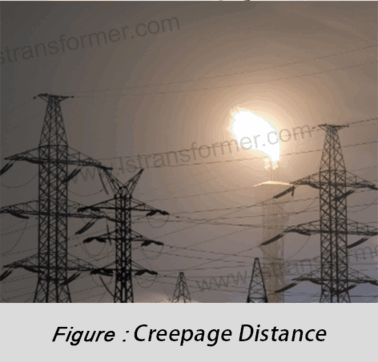
Continuous discharge can erode the silicone rubber or porcelain surface of bushings, creating pits deeper than 2mm (see Figure 1). Experiments show that pits deeper than 0.5mm increase electric field distortion by 80%, raising the risk of internal insulation breakdown.
(3) System-Level Chain Reaction Failures
Single-phase bushing flashover can lead to inter-phase short circuits, generating short-circuit currents exceeding 40kA in 35kV systems (as per the IEC 62271-100 calculation model). This can cause protection device malfunctions, grid oscillations, and other systemic accidents.
Key Data: EPRI research reports indicate that untreated surface tracking increases equipment failure rates by 6.8 times.
2. Methods for Handling Surface Tracking on Reactor Bushings
2.1 Conventional Treatment Methods
| Method | Applicability | Pros and Cons |
| Mechanical Polishing | Minor surface tracking | Removes carbonized layers but may damage insulation materials. |
| Chemical Cleaning | Severe contamination | Cleans pollutants but requires avoiding corrosive solvents. |
| Localized Repair | Localized damage | Uses insulating paint or epoxy resin for filling, but durability is limited. |
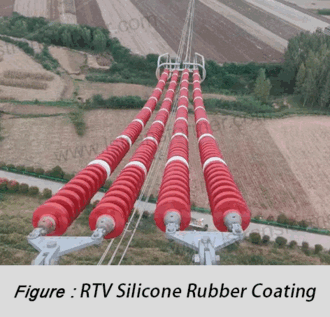
2.2 RTV Silicone Coating Protection Technology
RTV silicone coating is one of the most effective anti-tracking measures, offering the following advantages:
(1)Hydrophobicity: Forms water droplets on the surface, reducing wetting area and leakage current.
(2)Self-Cleaning:Prevents contamination buildup, minimizing conductive layer formation.
(3)Weather Resistance: UV-resistant and high-temperature tolerant (-50°C to 200°C), suitable for outdoor environments.
2.3 Anti-Tracking Mechanism of RTV Coating:
(1)Lowers Surface Energy:Silicone rubber’s hydrophobic properties prevent continuous water film formation, reducing conductive paths.
(2)Suppresses Partial Discharge:High resistivity (>10¹⁴ Ω·cm) reduces leakage current, preventing carbonization.
(3)Elastic Protection:The coating adapts to thermal expansion and contraction of bushings, avoiding cracks.
2.4 Key Considerations for RTV Silicone Coating Application
Pre-Application Preparation
| Element | Technical Standard | Key Steps |
| Surface Cleaning | ASTM D3359 Adhesion Grade B | 1. Sandblasting: 80-100 mesh quartz sand, 0.6MPa pressure.2. Chemical cleaning: Isopropyl alcohol + deionized water (1:3), wipe 3 times. |
| Defect Repair | IEC 62217 Annex C | Fill pits >0.3mm deep with EP-42 epoxy resin; post-curing surface <0.1mm. |
| Environmental Control | IEEE 1523-2018 | Temperature: 5-35°C / Humidity <65% RH, dew point温差 ≥3°C. |
2.5 Critical Control Points During Coating Application
2.5.1 Primer Application
Necessity: Porcelain bushing surface energy (~45mN/m) is lower than RTV silicone (>100mN/m), requiring primer for enhanced adhesion.
Specifications:
(1) Use silane-based primer (e.g., Dow Corning 1200).
(2) Spray thickness: 5-8μm, coverage: 150g/m².
(3) Drying time: 15min (25°C environment).
2.5.2 RTV Main Coating Application
(1) Spraying Formula:

Q: Coating amount (kg)
D: Bushing diameter (m)
L: Spraying length (m)
δ: Design thickness (mm)
ρ: Density (1.2g/cm³)
η: Utilization rate (0.7)
(2) Layered Spraying Process:
| Layer | Thickness Control | Drying Time |
| First Layer | 0.15±0.02mm | 30min (25°C) |
| Second Layer | 0.20±0.03mm | 45min |
| Final Layer | 0.10±0.02mm | – |
(3) Prohibited Conditions:
Wind speed >3m/s prohibits outdoor application.
Relative humidity fluctuations >10%/h require work suspension.
2.6 Curing Quality Verification
Three-Level Inspection Process:
2.6.1 Visual Inspection (2h post-application)
(1) Orange peel texture: Wavelength 0.5-1.5mm qualifies.
(2) No sagging or fish-eye defects.
2.6.2 Electrical Performance Test (24h post-curing)
| Test Item | Standard Value | Method |
| Insulation Resistance | ≥5000MΩ | IEC 60243-1 |
| Hydrophobicity | HC1-HC2 Level | IEC 62073 |
2.6.3 Thickness Verification (7 days post-curing)
(1) Use Elcometer 456 coating thickness gauge.
(2) Allowable deviation: ±0.05mm.
3. Long-Term Maintenance Strategy
(1) Coating Lifespan Prediction Model

L: Predicted lifespan (years)
L₀: Baseline lifespan (15 years)
T: Annual average temperature (°C)
SDD: Equivalent salt density (mg/cm²)
(2) Preventive Maintenance Cycle
| Environment Level | Inspection Cycle | Key Items |
| Light Contamination | 24 months | Hydrophobicity degradation test. |
| Heavy Contamination | 6 months | Coating thickness + salt density test. |
| Coastal Areas | 3 months | Chloride ion corrosion scan. |
(2)工学的な範囲:(0.3~0.5)X_L@fᵣ
RTV silicone coatings can prevent over 95% of surface tracking on reactor bushings (based on CIGRE 338 report data). By following the standardized process of surface preparation → layered spraying → quantitative testing, along with the formulas and parameters provided in this article, the coating’s effective lifespan can exceed 12 years. Maintenance personnel should monitor the environmental adaptability coefficient (K= T×RH/1000) and initiate special protection measures when K >1.2.
Kontakt
がV_peak積の過電圧のピークとt_resに共鳴。 30%マージン推奨を占めるシステムパラメータ化します。
2.2.3の動的応答ソリューション 現代のシステム利用サイリスタ制御による抵抗減衰(TCRD)を検知する共鳴内10ms、配の正確性、切断中の通常の操作は避けます。.
3. 連携機構のアクティブフィルタ
WhatsApp:+86 13787095096
E-Mail: marketing@hnlsdz.com