






Why Do Transformer Standby Costs Surpass Millions? —Transformer Energy Efficiency Optimization & Smart Power-Saving Technologies Explained
Why Do Transformer Standby Costs Surpass Millions?
—Transformer Energy Efficiency Optimization & Smart Power-Saving Technologies Explained
As global energy costs rise and carbon neutrality goals advance, transformer no-load loss has become a significant “hidden energy drain” in industrial sectors. According to the International Energy Agency (IEA), approximately 35% of industrial transformers worldwide exceed no-load loss limits, wasting over 200 billion kWh annually—equivalent to 800 million tons of CO₂ emissions.
Following standards like IEC 60076-27 (transformer efficiency) and IEEE C57.12.90 (no-load loss testing), no-load losses account for 20%-30% of a transformer’s lifecycle costs, with high-consumption industries losing over $1 million annually. This article analyzes the root causes of no-load losses through global case studies and technical standards, offering systematic solutions to achieve 15%-25% annual energy savings while meeting international compliance.
Inhalt
1. Core Causes of High No-Load Loss
(1) Core Material Defects: Dual Impact of Hysteresis & Eddy Current Losses
Traditional silicon steel cores exhibit large hysteresis loops, contributing 60%-70% of no-load losses (Ph=kh*f*B1.6). For example, an S11-type oil-immersed transformer (1000kVA) consumes 15,000 kWh/year, costing ~12,000 annually.
Eddy current losses (Pe=ke*f2*B2) add 30% extra lossat power frequency. A Chinese steel plant found that outdated transformers had 40% higher no-load lossesthan modern ones, costing an extra 50,000/year.

(2) Overdesign & Load Mismatch
To meet peak demand, transformers are often oversized by 30%-50%, leading to 65% no-load loss dominance under low-load (<30%) conditions.
Case Study:A U.S. commercial complex using a 2000kVA transformer at 25% average load wasted 80,000 kWh/year, with no-load costs hitting 65% of total expenses.
(3) Harmonic Pollution & Voltage Fluctuations
Formula: Grid harmonics (THD >5%) and voltage swings (±10%) increase core flux density (B), spiking hysteresis and eddy current losses.
Case Study: A Chinese semiconductor factory faced 18% higher no-load losses due to 5th-order harmonics (250Hz), costing an extra $25,000/year.
2. Systemic Solutions: From Material Innovation to Smart Control
(1) Core Material Revolution: Non-Crystalline Alloy & Laser-Etching Tech
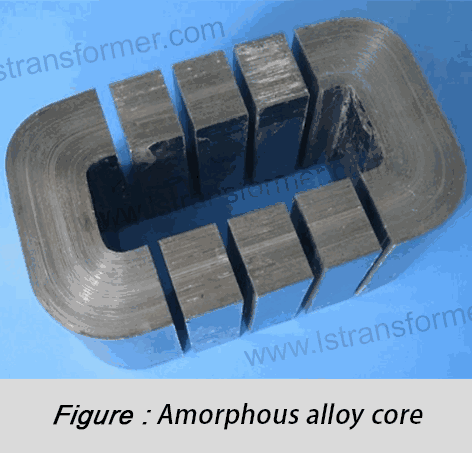
Non-crystalline alloy cores: Reduce hysteresis losses by 70% due to ultra-low magnetostriction (0.5 ppm vs. 5-10 ppm for silicon steel). An Indian pharmaceutical plant saved 2.4 million kWh/year by upgrading 20 transformers, cutting CO₂ by 1,500 tons.
Laser-etched silicon steel:Micro-grooves (20μm) refine magnetic domains, slashing core losses by 20% (certified under IEC 60404-8-7).
(2) Harmonic Mitigation & Voltage Stabilization
Harmonic filter reactors:Customized for 5th-order harmonics (7% reactance) reduce THD from 35% to 5%, lowering no-load losses by 18%-25%.
Automatic Voltage Regulators (AVR):Stabilize output voltage (e.g., 400V ±2%) using the formula
optimizing flux density (B) to minimize losses.
3. Global Case Studies & ROI
| Scenario | Lösung | Results | Payback Period |
| U.S. Pharmaceutical Plant | Non-crystalline cores + AI load prediction | Saved 2.4M kWh/year, 70% loss reduction | 2.5 years |
| German Commercial Complex | Modular capacity-adjustable transformers | No-load costs dropped from 65% to 20% | 1.8 years |
| Chinese Semiconductor Plant | Harmonic filters + AVR systems | Saved $25,000/year | 9 months |

(2)工学的な範囲:(0.3~0.5)X_L@fᵣ
Transformer no-load losses stem from material flaws, design redundancy, and power quality issues. By adopting non-crystalline alloy cores, smart load optimization, and harmonic filters, industries can slash standby costs by 30%-50% while extending equipment lifespan by 20%+. Under global frameworks like IEC and IEEE, this approach is not only economically viable but also critical for achieving carbon neutrality.
Kontakt
がV_peak積の過電圧のピークとt_resに共鳴。 30%マージン推奨を占めるシステムパラメータ化します。
2.2.3の動的応答ソリューション 現代のシステム利用サイリスタ制御による抵抗減衰(TCRD)を検知する共鳴内10ms、配の正確性、切断中の通常の操作は避けます。.
3. 連携機構のアクティブフィルタ
WhatsApp:+86 13787095096
E-Mail: marketing@hnlsdz.com