






Does Transformer Overheating Affect Service Life? — Analyzing Temperature Rise Mechanisms and Intelligent Cooling Solutions
Does Transformer Overheating Affect Service Life?
—Analyzing Temperature Rise Mechanisms and Intelligent Cooling Solutions
Transformer overheating costs global industries over $12 billion annually. According to the International Electrotechnical Commission (IEC), exceeding the rated temperature by 8°C cuts transformer lifespan by 50%. China’s Ministry of Industry and Information Technology has enforced stricter temperature limits (e.g., winding ≤98°C) in its Transformer Energy Efficiency Plan (2023-2025). This article combines the IEEE C57.91 thermal aging model and global case studies to explain how overheating damages transformers and highlights cost-saving strategies through smart cooling technologies.
Content
1.How Overheating Destroys Transformer Lifespan: From Insulation Aging to Thermal Breakdown
(1) Insulation Material Degradation:
Temperature accelerates insulation deterioration. For example, every 6°C increase reduces the lifespan of Class A insulation (e.g., epoxy resin) by 50%. Raising winding temperatures from 90°C to 105°C slashes service life from 20 years to 5 years.
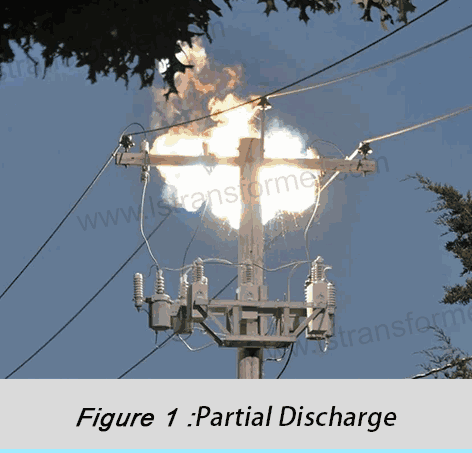
(2) Partial Discharge (PD):
High temperatures trigger micro-cracks in insulation, causing PD.According to IEC 60270, PD activity surges by 300% at 110°C. A Chinese steel plant case study: Cooling system failure led to hotspot temperatures of 118°C, resulting in 180kreplacementcosts and 520k production losses within six months.
(3) Oil Degradation:
In oil-immersed transformers, every 8°C rise in top-oil temperature doubles oxidation rates. Acid buildup reduces cooling efficiency by 30%, creating a vicious cycle of temperature rise.
2.Temperature Rise Mechanisms: Tackling Heat at Its Source
2.1 Copper Losses (I²R)
Copper losses occur due to resistive heating in windings. For a 630kVA transformer (909A rated current) at 85% load (772A):
2.1.1 Daily copper loss: 552 kWh/day (≈$120k annual electricity cost).
2.1.2 Solutions:
(1) Upgrade to Copper Windings: Replacing aluminum reduces resistivity by 68%. A Vietnamese factory saved $85k/year and lowered temperatures by 9°C.
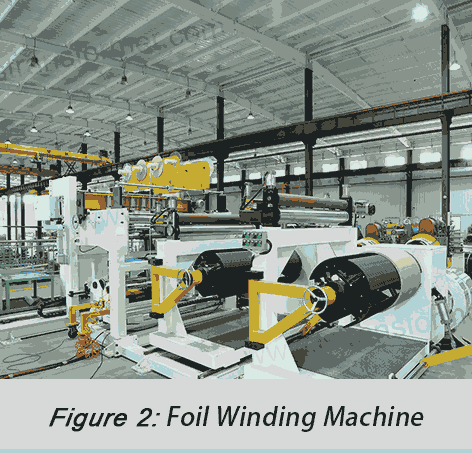
(2) Foil Windings: Flat copper foil reduces theAC resistance via 15% –20% (skin effect formula:Rac=Rdc×(1+ )). A Chinese auto plant achieved a 5°C temperature drop.
(3) Dynamic Load Management: SCADA systems stabilize load rates at 40% – 60%, avoiding nonlinearI2R growth. A chemical plant reduced losses by 9.3%.
| Optimization | Technical Principle | Annual Savings | Temp. Drop |
| Copper windings | 40% lower resistance | $85k | 9°C |
| Foil winding design | 18% lower AC resistance | $32k | 5°C |
| Dynamic load control | Stable 60% load rate | 9.3% loss reduction | 6°C |
| Combined upgrades | Multi-dimensional synergy | $149k | 15°C |
2.2 Harmonic Losses
Harmonics increase skin and eddy current losses. Formula:

2.2.1 Case Study: A data center in Africa with 5th harmonic distortion (THD=32%) saw 25% higher losses, 9°C daily temperature rise, and $48k/year extra costs.
2.2.2 Solutions:
(1) Active Power Filters (APF): Schneider’s AccuSine reduced THD from 32% to 5%, saving $48k/year and extending transformer life by 3–5 years.
(2) Power Quality Monitoring: A Chinese semiconductor plant cut harmonic-related failures by 40%, saving $21k/year.
| Solution | Initial Cost | Annual Savings | ROI Period |
| APF filter | $85k | $48k | 1.8 years |
| Power quality monitoring | $32k | $21k | 1.5 years |
2.3 Core Losses (No-Load Losses)
Traditional silicon steel cores contribute 1.2% of rated power as no-load losses. A 315kVA transformer wastes 20,000 kWh/year, causing 8°C temperature rise.
2.3.1 Solutions:
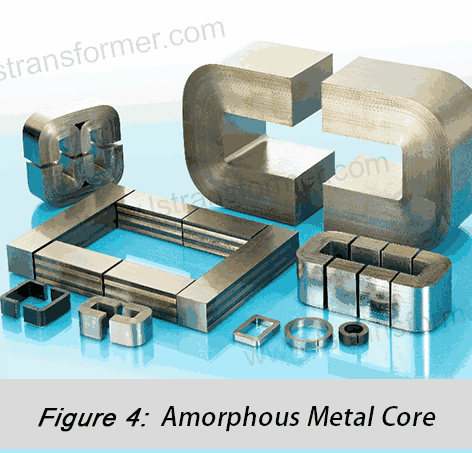
(1) Amorphous Metal Cores: Reduce hysteresis losses by 70–80% and eddy current losses by 60–70%.
(2) Laser-Etched Silicon Steel:Refines magnetic domains, cutting hysteresis losses by 25–35%.
(3) Nitrogen Cooling: Inhibits oil oxidation and improves cooling efficiency by 40%.
3.Smart Cooling Solutions: From Reactive to Proactive Defense
Intelligent systems use IoT and AI to predict and prevent overheating:
(1) Fiber Optic Sensors: Monitor hotspots with ±0.5°C accuracy and predict temperature trends via cloud algorithms.
(2) Cloud-Based AI Models: LSTM neural networks forecast temperature rise (<2°C error) and trigger cooling systems 48 hours in advance.
In Summary
Transformer overheating accelerates insulation aging and risks catastrophic failure. To mitigate:
(1) Reduce losses at the source (copper, core, harmonics).
(2) Adopt smart cooling technologies for proactive temperature control.
(3) Leverage data-driven insights to optimize performance and lifespan.
By integrating these strategies, industries can save millions in energy and replacement costs while ensuring reliable transformer operation.
Contact
LuShan, est. 1975, is a Chinese professional manufacturer specializing in power transformers and reactors for 50+ years. Leading products are single-phase transformer, three-phase isolation transformers, electrical transformer, distribution transformer, step down and step up transformer, low voltage transformer, high voltage transformer, control transformer, toroidal transformer, R-core transformer; DC inductors, AC reactors, filtering reactor, line and load reactor, chokes, filtering reactor, and intermediate, high-frequency products.
Our power transformers and reactors are widely used in 10 application areas: rapid transit, construction machinery, renewable energy, intelligent manufacturing, medical equipment, coal mine explosion prevention, excitation system, vacuum sintering(furnace), central air conditioning.
Know more about power transformer and reactor: www.lstransformer.com.
If you would like to obtain customized solutions for transformers or reactors, please contact us.
WhatsApp:+86 13787095096
Email: marketing@hnlsdz.com

