





Les Paramètres de Performance et Leur Impact sur le Coût

La maison > FAQ > Page 25
FAQ

Les Paramètres de Performance et Leur Impact sur le Coût

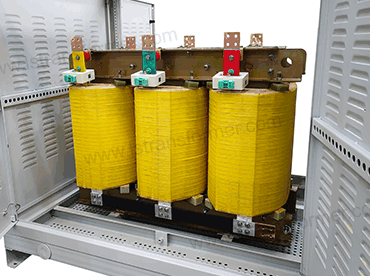
Performance Parameters and Their Impact on Cost 1. Short-Circuit Impedance The short-circuit impedance affects the voltage regulation and reactive power losses of transformers. A higher short-circuit impedance improves voltage regulation but results in a larger short-circuit current magnitude, influencing the power grid and system. For shell-type transformers, the presence of the winding’s ampere-turns allows some
FAQ

Transformateur de puissance de la Classification par la Structure

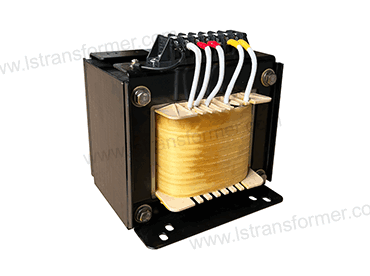
Power transformers can be classified into two types based on their structure: core-type transformers and shell-type transformers. 1. Core-Type Transformers: The winding of a core-type power transformer is cylindrical, and the cross-section of the core column is approximately cylindrical. The high-voltage and low-voltage windings are concentrically arranged, and the body (core and winding) is vertically

FAQ

Avantages pour l'environnement de Vide Époxy de Coulée Transformateur

Vacuum epoxy casting technology has been widely used in the production of transformers, as it offers a range of advantages in terms of performance, safety and cost. However, it is also important to consider the environmental benefits of this technology, which are becoming increasingly important in the modern world. This article will discuss the environmental

FAQ

Comment aborder Transformateur Augmentation de la Température Raisonnable?

How to Approach Transformer Temperature Rise Reasonably? Perspectives on temperature rise encompass various aspects essential for the long-term stable operation of transformers, specifically in the following dimensions: (1) Safety: The prudent control of temperature rise aims to ensure that the internal temperature of the transformer does not exceed safety limits. This measure is primarily intended

FAQ

Qu'est-ce que la classe thermique d'un transformateur?

What is the thermal class of a transformer? The thermal class of a transformer typically refers to the thermal stability of its insulation system, a crucial factor directly impacting the temperature endurance during prolonged operation. This classification is commonly denoted by letters such as A, E, B, F, H, each representing a specific maximum temperature

FAQ

Comment est l'impulsion de la tension de test est réalisé pour les transformateurs?

How is the impulse voltage test conducted for transformers? The impulse voltage test comprises lightning impulse tests (including full-wave and chopped-wave tests) and operating wave impulse tests. In the latest IEC76-3 standard, for transformers with a rated voltage (U) ≤ 40.5kV, both full-wave and chopped-wave impulse tests are considered type tests. For transformers with U

FAQ

L'entretien et la Fixation du Transformateur Corps

Maintenance and Fastening of Transformer Body 1. Body Cleaning: Users and manufacturers of transformers have stringent requirements for the cleanliness of the transformer body, making body cleaning crucial. During the assembly process, crucial components, especially insulating parts, require meticulous cleaning. Typically, a vacuum cleaner is used, and clean white cloths are employed for wiping. In

FAQ

Comment Regarder Le Fonctionnement en Parallèle de Transformateurs?

How to Look at TheParallelOperation of Transformers? The parallel operation of transformers refers to connecting the primary windings of two or more transformers to a common busbar and connecting their secondary windings to a common secondary busbar. Transformers operated in this manner are termed to be in parallel operation. 1. Advantages of parallel operation of transformers include:

WhatsApp QR WeChat QR IVL 0.013mH-610A
Faire défiler vers le Haut