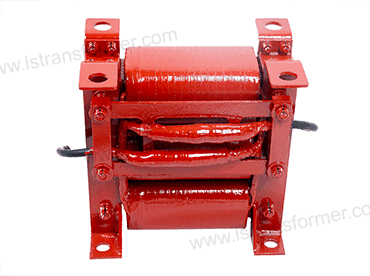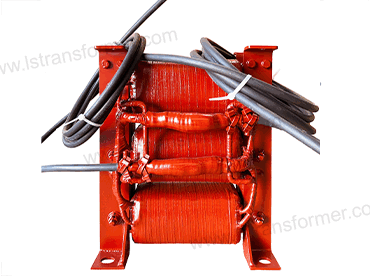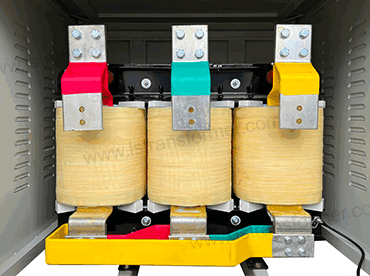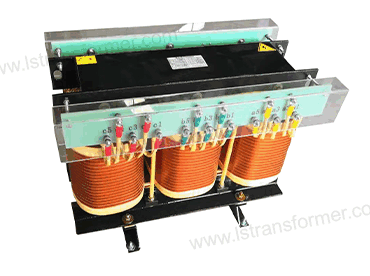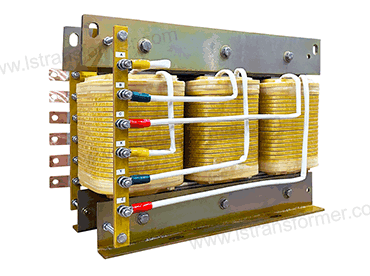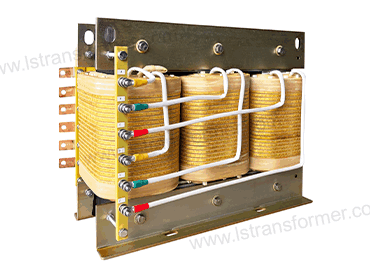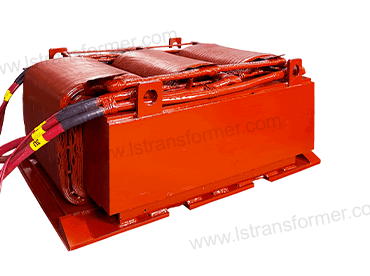






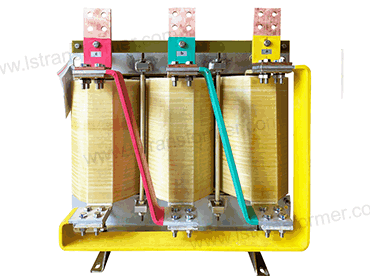
Why is vacuum drying and impregnation necessary for windings?

ホーム > FAQ > ページ 28
FAQ

Why is vacuum drying and impregnation necessary for windings?

Why is vacuum drying and impregnation necessary for windings? Drying the winding helps to remove moisture from the insulation components. This not only enhances the insulation’s withstand voltage level but also causes the insulation to contract to its inherent dimensions, providing accurate and reasonable data about the winding’s axial height and tightening force. During the drying process of the winding, the following points should be considered: a. Windings that do not require vacuum drying can be processed along with those that require vacuum drying. b. For windings with and without electric wood barrels processed in the same container, the processing should follow the requirements for windings with electric wood barrels.
FAQ

What are the main insulation and longitudinal insulation in a winding?

What are the main insulation and longitudinal insulation in a winding? The main insulation in a winding includes components such as the paper cylinder, wooden cylinder, winding end insulation, and the insulation between the static ring and the ground. These elements collectively form the primary insulation system of the winding. Longitudinal insulation in the winding comprises the insulation of the wire outer covering, circular simple winding layer, insulation between the static ring and line segments, and insulation between line segments (layers). These insulation components contribute to the longitudinal insulation system of the winding. When using circular conductors to wind a cylindrical winding, it is necessary to use a rigid insulation

FAQ

What is a split winding? What are its requirements?

What is a split winding? What are its requirements? A split winding refers to the division of the low-voltage winding of a transformer into multiple parts that are electrically independent. These divided low-voltage winding sections are each connected to two generators, allowing each generator to operate independently or simultaneously. In the event of a failure in one generator, the other generator can continue to operate normally. Such a winding is known as a dual split winding, where each split winding section has a capacity equal to half of the transformer’s total capacity. The split winding can also be arranged in a radial split configuration (low-high-low arrangement). If the low-voltage winding

FAQ

In an interleaved manner, how is the leakage flux of the winding distributed, and what kind of electromagnetic force is generated?

In an interleaved manner, how is the leakage flux of the winding distributed, and what kind of electromagnetic force is generated? In the case of a winding arranged in an interleaved manner, the distribution of leakage flux is different from the concentric arrangement mentioned earlier. The predominant type of leakage flux generated in this arrangement is radial leakage flux, and the resulting force is primarily axial. Due to the closely matched radial dimensions of the high-voltage and low-voltage windings, the distribution of turns is essentially uniform. Therefore, not only can axial leakage flux be ignored, but also under normal operating conditions, radial leakage flux is relatively small, resulting in a

FAQ

に同心円状配列はどのように分布の漏れ磁束の巻線の電磁場による説明されていますか。

In concentric arrangement, how is the distribution of leakage flux in the windings and the resulting electromagnetic forces explained? For double-winding concentric arrangement, the leakage flux is generally smaller than in a single concentric arrangement, and it is even further reduced in multi-winding concentric arrangements. Let’s take the example of a double-winding single concentric arrangement to illustrate how the leakage flux is distributed. In a double-winding setup, the current directions are opposite. Assuming the low-voltage winding current flows outward (represented by ⊙) and the high-voltage winding current flows inward (represented by ×), according to the right-hand rule, the leakage flux between them (represented by dashed lines) must go upward. For

FAQ

何がメインの磁束? の漏れ磁束?

What is the main magnetic flux? What is the leakage magnetic flux? When a winding in a transformer is connected to a power source, it generates a magnetic flux in the core. The magnetic flux generated in the core due to the excitation voltage is called the main magnetic flux, and its magnitude depends on the excitation voltage. During rated voltage excitation, the generation of the main magnetic flux should not lead to core saturation, meaning the magnetic flux density should not reach a saturation state. The main magnetic flux is a phasor and is usually expressed in peak values. When a load current flows through a transformer, it generates

FAQ

の異なる巻線配置のためのトランス?

What are the different winding arrangements for transformers? The winding arrangement of a transformer refers to the placement positions of each phase and each coil within the winding. When selecting the winding arrangement, factors such as impedance voltage, convenient lead-out, and a rational insulation structure are considered. Currently, there are two main winding arrangements: concentric and interleaved. In a concentric arrangement, for a double-winding transformer, the low-voltage winding is typically placed inside because it requires a smaller insulation distance from the core. The high-voltage winding is then wrapped around the outside to facilitate the installation of tap changers, which are usually positioned on the high-voltage winding. In an interleaved arrangement,

FAQ

の巻線の巻線?

What is the winding direction of a winding? The winding direction of a winding is closely related to the direction of the magnetic field generated by the current in the winding and the direction of the induced electromotive force in the winding when the magnetic field changes. The winding direction can be divided into two types: left-handed and right-handed. Left-handed winding refers to the counterclockwise rotation of the coil when the wire turns from the start to the middle of the winding; right-handed winding refers to the clockwise rotation of the coil when the wire turns in the winding direction. When winding, facing the winding machine, if the wire enters

FAQ

の電圧。

What is the Voltage Ratio? The voltage ratio indicated on the nameplate of a transformer refers to the voltage ratio of the transformer under no-load conditions. It serves as a parameter used by the manufacturing factory to assess whether the number of turns in the winding meets the specified requirements. The actual voltage ratio during operation is influenced by the type of load (capacitive or inductive), the magnitude of the load current, and the parameters of the transformer itself, such as resistance and inductance. It is essential to emphasize that the voltage ratio is a concept related to the no-load voltage ratio, not the voltage ratio during actual operation. When

FAQ

何が子の再配列の並列導体の?

What is the rearrangement of parallel conductors? After the passage of current through conductors, in addition to resistive losses, there is also eddy current loss. Regarding resistive losses, whether the winding is made with a single conductor or multiple parallel conductors, as long as the cross-sectional area and length are the same, resistive losses remain consistent. However, eddy current losses are related to the thickness of the conductor and are caused by axial leakage flux. When the thickness doubles, the eddy current losses increase fourfold. Therefore, to reduce the thickness of the conductor, it is necessary to use multiple parallel conductors when the current is high. In multiple parallel conductors,

WhatsAppにQR WeChat QR sales@hnlsdz.com
スクロールトップ